


Listen to the article
Alabama’s Childhood Vaccination Rates Fall Below National Averages
Alabama has fallen behind national averages for childhood vaccinations as federal and state efforts to loosen vaccination requirements continue to gain momentum, recent data shows.
The state is particularly trailing in uptake of vaccines for whooping cough and hepatitis B. Meanwhile, immunization rates against measles have fluctuated above and below the 95% threshold experts consider necessary to maintain herd immunity.
While vaccination rates for children aged 13-17 remain high nationwide, Alabama shows a concerning drop as children age. Approximately 70% of 4-10-year-olds statewide are up to date on vaccines, but that figure plummets to just 25% for those aged 11-18.
Medical professionals point to a combination of factors contributing to the decline. Dr. Norma Mobley, president of the Alabama chapter of the American Academy of Pediatrics and a Mobile-based pediatrician, highlighted insurance coverage as one barrier.
“There were several insurance companies that didn’t even cover routine immunizations,” said Dr. Mobley, who has begun seeing cases of whooping cough despite the existence of a vaccine for nearly three decades.
Only 69% of Alabama children aged 19-47 months are up to date on the diphtheria-tetanus-pertussis vaccine, according to the Alabama Department of Public Health. This falls significantly short of the national average, where 80.4% of children were vaccinated against whooping cough by age two in 2021, according to CDC data.
Dr. Mobley has observed increased vaccine hesitancy among younger parents. This reluctance, combined with the extended timeline required for complete vaccination, has contributed to the resurgence of previously controlled diseases.
“If you’re going to give them the vaccines, you might as well just do them the way they’re scheduled,” Dr. Mobley advised. “You’re still going to poke them the same number of times, whether you do them a week apart or not.”
Social media misinformation has further complicated vaccination efforts, particularly regarding flu vaccines. Dr. Mobley cited false claims about combined COVID and flu vaccines circulating online. As of November 25, just 6.3% of Alabamians under 18 had received their flu shot for the 2025-26 season, compared to 13.1% during the previous flu season.
Dr. Wes Stubblefield, district medical officer at the state Health Department, emphasized that strong patient-physician relationships are the best defense against misinformation. “We want to make sure that our providers are having conversations with their patients and parents, especially those that have questions about vaccines or have not received vaccines in the past,” he said.
Political developments in Alabama have added another dimension to vaccination challenges. After a bill allowing parents to declare religious exemptions from vaccines failed in the 2025 legislative session, Rep. Mack Butler, R-Rainbow City, has prefiled a similar measure for 2026.
House Bill 24 would permit parents or guardians to claim religious exemptions from school vaccination requirements with a simple written statement. The bill would prohibit schools from requiring additional forms, fees, or documentation, and would extend these provisions to public colleges and universities.
Sen. Arthur Orr, R-Decatur, who sponsored the previous bill, insisted it would merely streamline existing law. “We didn’t expand the law. All we did was streamline the process, and we took out of the process having to go to the Health Department to get a piece of paper that they have to give you anyway,” Orr stated.
Butler defended his bill to Fox 10 News as a matter of “parental rights and religious liberty,” distinguishing it from Florida’s more expansive ban on school vaccine requirements.
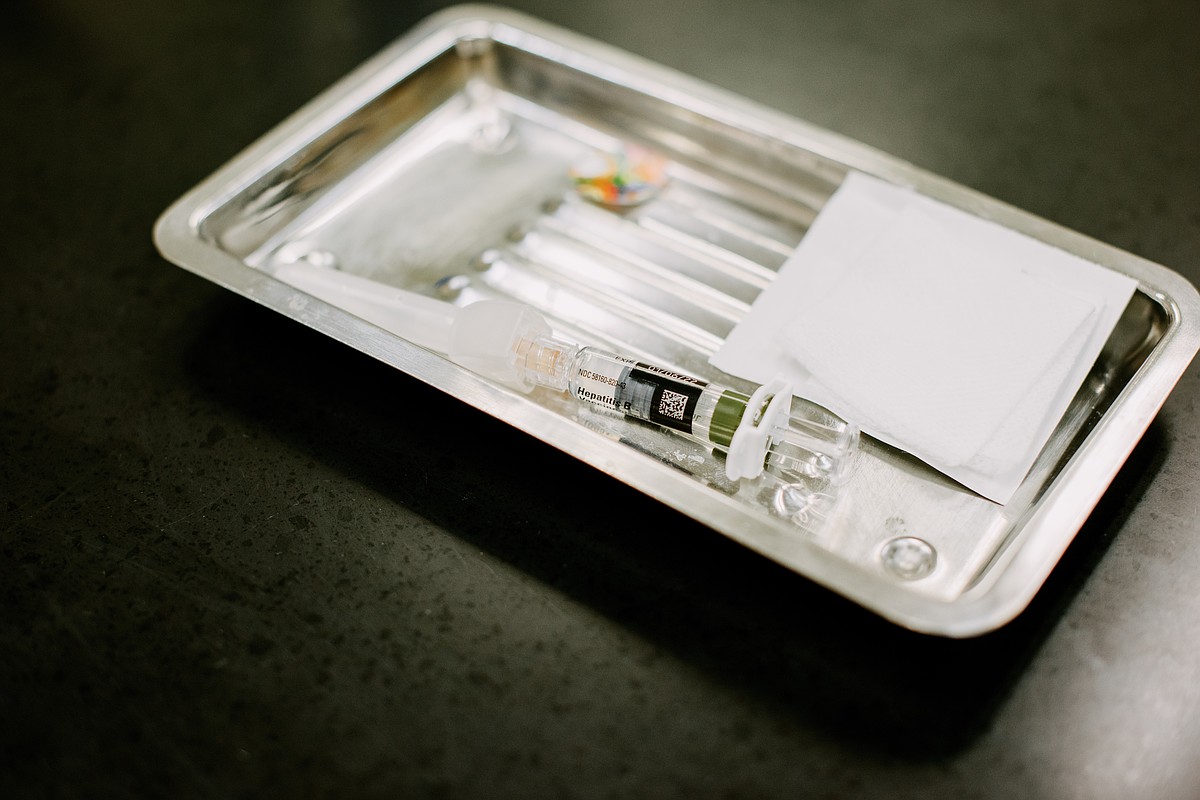
Meanwhile, federal guidance on some vaccines is evolving. The Advisory Committee on Immunization Practices recently ended its 35-year recommendation to universally vaccinate newborns against hepatitis B virus on their birth day. The new guidance recommends birth-day vaccination only for infants whose mothers test positive for the disease or lack testing.
Hepatitis B, a viral liver disease that can cause liver failure, cancer, and cirrhosis, has a 76% vaccination rate among Alabama children aged 19-47 months, well below the national average of 91.4% for two-year-olds.
Measles has also resurfaced as a concern. Alabama reported its first confirmed case since 2002 this year, involving an unvaccinated child under five who contracted the highly contagious disease while traveling internationally. The child has since recovered.
Vaccination rates for measles in Alabama show geographic disparities. While about 95.3% of Alabama kindergarteners were vaccinated against measles in the 2024-25 school year—just above the herd immunity threshold—several counties in the Wiregrass region show significantly lower rates.
Dr. Mobley emphasized the importance of documenting exemptions. “The only thing that we try to make sure they do is go through the Health Department to obtain those exemptions so that it is documented through the registry, so we know who’s not immunized,” she said.
Fact Checker
Verify the accuracy of this article using The Disinformation Commission analysis and real-time sources.

10 Comments
Nice to see insider buying—usually a good signal in this space.
Good point. Watching costs and grades closely.
Good point. Watching costs and grades closely.
Production mix shifting toward News might help margins if metals stay firm.
Good point. Watching costs and grades closely.
The cost guidance is better than expected. If they deliver, the stock could rerate.
If AISC keeps dropping, this becomes investable for me.
Good point. Watching costs and grades closely.
Good point. Watching costs and grades closely.
Uranium names keep pushing higher—supply still tight into 2026.