


Listen to the article
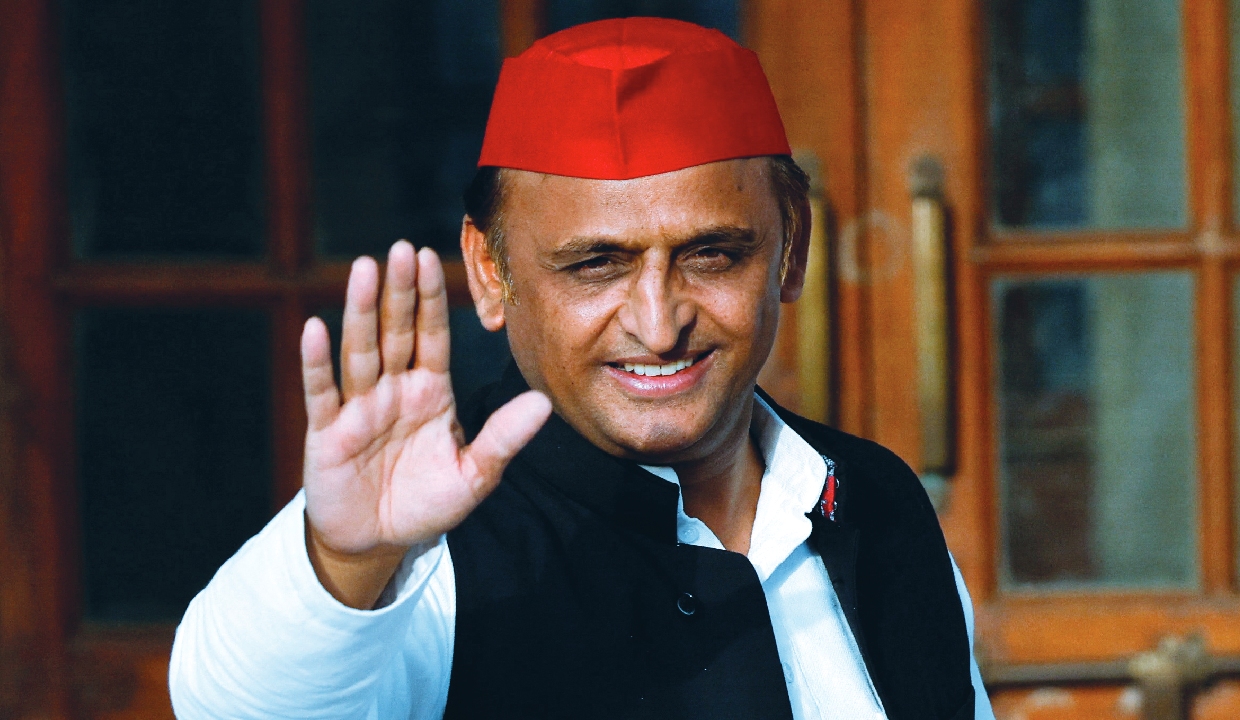
In a fiery address at a ‘Digital Democracy Dialogue’ held at his party headquarters, Samajwadi Party president Akhilesh Yadav launched a scathing critique of the ruling Bharatiya Janata Party (BJP), accusing it of orchestrating a deliberate campaign to tarnish his party’s image through misinformation.
The former Uttar Pradesh chief minister did not mince words, describing the BJP not as a political entity but as “a gang” that he claims is manipulating governmental machinery against political opponents. “The BJP is misusing the government and administration to create challenges for the Samajwadi Party,” Yadav asserted during his address.
Despite these alleged tactics, Yadav expressed confidence that his party stands ready to counter such challenges, predicting that voters in Uttar Pradesh will return the Samajwadi Party to power in the 2027 state elections. This bold claim comes at a time when political tensions in India’s most populous state continue to simmer following the BJP’s continued dominance in recent electoral cycles.
Throughout his speech, Yadav emphasized what he sees as a democratic crisis unfolding across the country. He stressed that meaningful dialogue and social harmony remain essential prerequisites for democracy to function properly. “Citizens are in crisis,” he remarked, suggesting that the political environment has deteriorated under the current administration.
The Samajwadi leader repeatedly referenced his “PDA” concept—an acronym he coined for “Pichhda, Dalit, Alpsankhyak” (Backwards, Dalits, and Minorities)—as the only viable path forward for positive political change. This strategic focus on traditionally marginalized communities has been central to the Samajwadi Party’s platform as it attempts to build a coalition capable of challenging the BJP’s electoral strength.
“In today’s politics, a positive direction can only be achieved through the PDA path. Any campaign without positive thinking or a clear ideology becomes directionless,” Yadav told attendees.
Drawing on historical context, the opposition leader connected his party’s socialist ideology to deeper social values, suggesting that such principles have historically been instrumental in shaping both society and national direction. This philosophical framing appears aimed at positioning the Samajwadi Party as more than just an electoral vehicle, but rather as a movement with ideological substance.
Yadav’s criticism of the BJP extended to its communication strategy, which he characterized as being built on “lies and rumors.” He called on Samajwadi Party workers to actively counter misinformation with factual rebuttals, framing this as part of a larger ideological struggle rather than mere political competition.
The former chief minister also made specific reference to his previous administration’s initiative of distributing laptops to youth, which he described as an effort to promote social equality and development opportunities. In contrast, he accused the BJP of weaponizing digital technology for partisan interests.
While urging his supporters to stand firm against what he described as falsehoods, Yadav also emphasized the importance of discipline within party ranks. He advised party workers to maintain simplicity in both behavior and language, and to avoid unnecessarily provocative actions that might play into their opponents’ hands.
The political landscape in Uttar Pradesh has remained contentious since the BJP displaced the Samajwadi Party from power in 2017. With state elections still three years away, Yadav’s early positioning suggests a lengthy campaign ahead as opposition forces attempt to regroup against the ruling party that has dominated Indian politics both nationally and in Uttar Pradesh for nearly a decade.
Fact Checker
Verify the accuracy of this article using The Disinformation Commission analysis and real-time sources.

7 Comments
Yadav’s comments highlight the intense partisan divides in Indian politics. It’s crucial that all sides engage in respectful, fact-based dialogue to address the concerns of citizens. Resorting to inflammatory rhetoric risks further polarizing the electorate.
While I understand Yadav’s frustration, making unsubstantiated claims of government manipulation is a risky strategy. Voters will want to see concrete evidence to back up such serious allegations. The Samajwadi Party needs a clear, compelling vision to win back power.
Yadav’s claims of the BJP ‘manipulating governmental machinery’ are quite serious. It will be important for independent observers to carefully examine the evidence and verify the accuracy of these allegations. A healthy democracy requires transparency and accountability from all political parties.
Akhilesh Yadav seems determined to stage a political comeback, but he’ll need to present a compelling alternative to the BJP’s continued dominance in Uttar Pradesh. Focusing on grassroots outreach and policy development may be more effective than inflammatory rhetoric.
This is a complex political situation in India’s most populous state. While accusations of misinformation are troubling, I’d caution against rushing to conclusions without a thorough, impartial investigation. Voters deserve the facts to make informed decisions come election time.
The former UP chief minister seems determined to make a comeback in 2027. His confidence is admirable, but voters will ultimately decide the outcome. I wonder what specific policy platforms and reforms the Samajwadi Party plans to champion to win back public support.
Interesting accusations from Akhilesh Yadav. While it’s concerning to hear allegations of misinformation campaigns, it’s important to look at the facts objectively. I’m curious to see how this political dynamic plays out leading up to the 2027 elections in Uttar Pradesh.