


Listen to the article
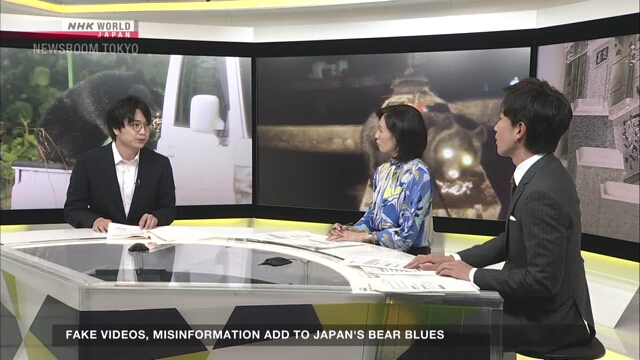
Japanese authorities are grappling with a new challenge in their ongoing battle against bear encounters: artificial intelligence-generated videos spreading misinformation about the country’s growing wildlife problem.
Wildlife officials in Hokkaido, Japan’s northernmost island, have issued warnings about fabricated bear videos circulating on social media platforms. These AI-generated clips show bears in unrealistic scenarios, including animals appearing in urban settings where they’ve never been documented, causing unnecessary public alarm.
“These false videos are creating confusion during an already serious situation,” said Takashi Yamamoto, a wildlife conservation officer with Hokkaido’s Environmental Department. “We need the public to rely on official information channels rather than unverified social media content.”
The timing of this misinformation crisis is particularly problematic as Japan experiences what experts describe as the worst year for bear encounters in decades. Since April, authorities have recorded more than 2,400 bear sightings nationwide – a dramatic increase of 70% compared to the same period last year. The encounters have resulted in 27 injuries and two fatalities so far in 2023.
Several factors have contributed to the surge in bear activity. An unusually poor harvest of beech nuts and acorns, staples of the bear diet, has driven hungry animals into populated areas in search of food. Additionally, aging and shrinking rural populations have left once-cultivated areas abandoned, creating ideal bear habitat closer to human settlements.
Climate change also appears to be disrupting hibernation patterns, according to research from Hokkaido University. “We’re observing bears remaining active for longer periods and venturing further into human territories than ever before,” noted Dr. Haruko Tanaka, wildlife biologist at the university’s Institute of Environmental Sciences.
The bear species most commonly involved in human-wildlife conflicts in Japan are the Asiatic black bear (Ursus thibetanus) on the main islands and the larger brown bear (Ursus arctos) in Hokkaido. Both species are known to avoid humans under normal circumstances, but food scarcity can alter their typical behavior.
Local governments have responded by establishing bear management teams equipped with tranquilizers and traps. In Akita Prefecture, which has seen some of the highest numbers of encounters, officials have implemented an alert system that notifies residents via text message when bears are spotted nearby.
“The situation requires a balanced approach,” explained Kenji Morita, director of the Japan Bear Network, a conservation organization. “While public safety must remain the priority, we need to remember that these animals are responding to environmental pressures, not deliberately targeting humans.”
The AI-generated videos complicate these efforts by spreading false information about bear behavior and location. Some videos show bears performing unlikely actions, such as deliberately approaching homes or displaying aggression without provocation – behaviors that wildlife experts say misrepresent typical bear conduct.
Tech companies including Line, Japan’s most popular messaging platform, have pledged to flag and remove misleading content. However, the rapid spread of these videos through private messaging channels makes comprehensive moderation challenging.
Authorities have urged the public to verify bear information through official sources, including municipal websites and dedicated wildlife hotlines. They also recommend practical safety measures for residents in affected areas, such as securing garbage, avoiding forest areas during dawn and dusk, and making noise when hiking to alert bears of human presence.
“Education is our most effective tool,” said Yamamoto. “Understanding bear behavior and the environmental factors driving these encounters helps residents respond appropriately rather than with panic.”
As winter approaches, officials expect bear activity to decrease as the animals prepare for hibernation. However, long-term solutions will require addressing the underlying environmental challenges and developing more effective human-wildlife coexistence strategies in a country where wilderness and human habitation increasingly overlap.
Fact Checker
Verify the accuracy of this article using The Disinformation Commission analysis and real-time sources.

17 Comments
If AISC keeps dropping, this becomes investable for me.
Production mix shifting toward News might help margins if metals stay firm.
Good point. Watching costs and grades closely.
Good point. Watching costs and grades closely.
Uranium names keep pushing higher—supply still tight into 2026.
Good point. Watching costs and grades closely.
Uranium names keep pushing higher—supply still tight into 2026.
The cost guidance is better than expected. If they deliver, the stock could rerate.
Good point. Watching costs and grades closely.
Good point. Watching costs and grades closely.
Nice to see insider buying—usually a good signal in this space.
Good point. Watching costs and grades closely.
Good point. Watching costs and grades closely.
Uranium names keep pushing higher—supply still tight into 2026.
Good point. Watching costs and grades closely.
Uranium names keep pushing higher—supply still tight into 2026.
The cost guidance is better than expected. If they deliver, the stock could rerate.