


Listen to the article
AI Misinterpretation of Police Scanners Sparks False Alarms Nationwide
In Oregon’s early morning quiet, a routine police radio mention of “Shop with a Cop” — a community outreach program — was transformed by artificial intelligence into something far more alarming: “shot with a cop.” Within minutes, automated alerts warning of an officer-involved shooting spread across social media, causing unnecessary concern among residents.
This incident in Bend, Oregon is not isolated. Across the United States, police departments are raising concerns about AI applications designed to monitor and transcribe police scanner traffic. These apps, meant to provide citizens with real-time updates on local emergencies, are increasingly generating false information based on misinterpreted radio communications.
“We’re not just fighting crime; we’re fighting bad bots,” one police sergeant told reporters, reflecting growing frustration among law enforcement agencies dealing with the fallout from these technological mishaps.
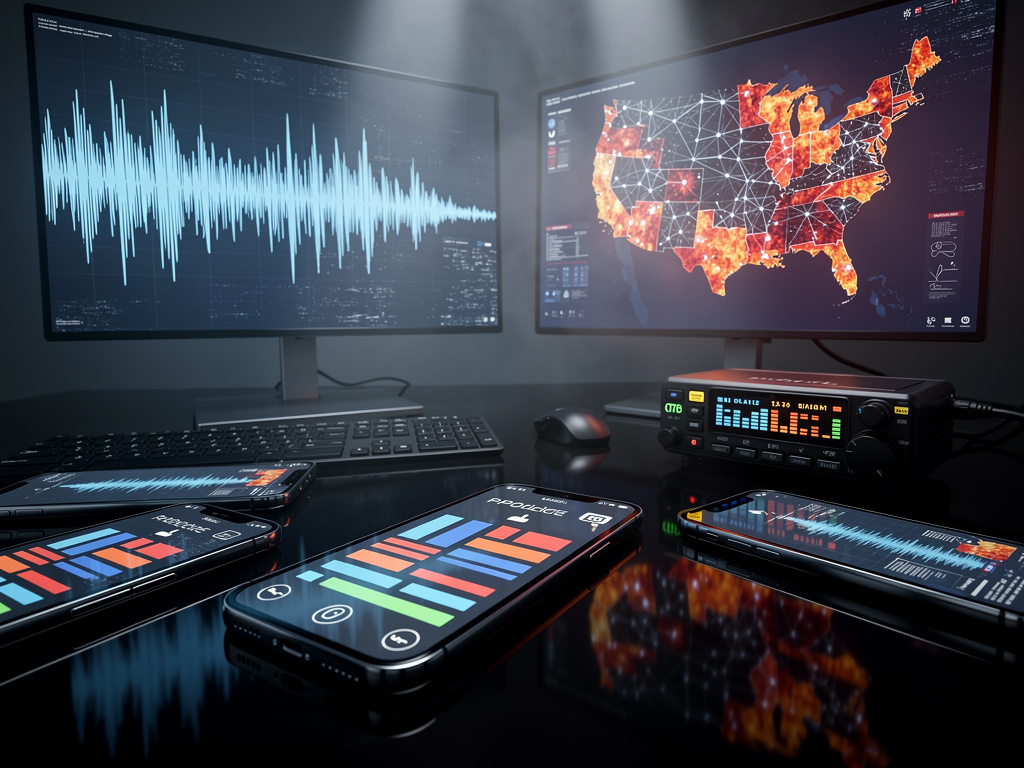
Applications like CrimeRadar use artificial intelligence to process police radio communications in real-time, but the technology struggles with the unique challenges of scanner audio. Police radio chatter typically contains specialized jargon, codes, background noise, and interruptions that confuse AI systems trained primarily on clearer audio sources like podcasts or news broadcasts.
The consequences extend beyond minor confusion. In the Bend case, the AI didn’t just misinterpret a phrase — it generated an entire blog post with fabricated details about a non-existent shooting, potentially triggering panic among local residents who might lock their doors or flood emergency lines with calls.
Law enforcement officials note that these errors create additional work for departments already stretched thin. Before addressing actual emergencies, they must first debunk false narratives spreading online.
“The technology is moving faster than our ability to regulate it or even fully understand its implications,” said Dr. Emily Chen, a digital ethics researcher at Northwestern University. “When AI gets it wrong with police scanner data, the stakes are much higher than in other contexts.”
The problem is compounded by social media integration. Once an AI-generated alert hits platforms like X (formerly Twitter), misinformation can spread virally before corrections can be issued. Studies show false information typically spreads six times faster than accurate corrections on social media platforms.
Industry experts point to fundamental limitations in current AI technology. Real-time applications must balance speed against accuracy, and many scanner apps operate without human oversight, automating everything from transcription to publication of alerts and blog posts.
App developers defend their products, arguing the benefits of alerting communities to genuine dangers outweigh occasional errors. Some apps include disclaimers about potential inaccuracies, but these warnings are often overlooked by users seeking immediate information during perceived emergencies.
The economic incentives driving these applications further complicate matters. Many are venture-backed startups monetizing public data streams, with business models that prioritize user engagement over precision. This environment can reward sensationalism over accuracy.
“It’s the attention economy meets public safety, and safety is losing,” noted tech analyst Marcus Rivera.
The issues with scanner apps parallel concerns about other AI applications in law enforcement, including automated report generation and gunshot detection technologies that have demonstrated high false-positive rates. Critics argue these represent a broader pattern of AI overreach in policing that requires more rigorous oversight.
To address these challenges, some experts recommend mandatory human verification for automated posts derived from police communications. Others suggest improved training datasets that better reflect the unique characteristics of police radio traffic.
Several police departments have begun issuing public warnings about the unreliability of these apps. Some agencies are exploring encrypting their radio communications, though this raises separate concerns about transparency and public access to information.
“We’re trying to find the right balance,” said Lieutenant Sarah Johnson of the Portland Police Bureau. “The public has a right to know what’s happening in their communities, but they also deserve accurate information.”
As AI continues integrating into public safety systems, the need for interdisciplinary oversight combining technical expertise, ethical considerations, and community input becomes increasingly apparent. The challenge lies in harnessing AI’s potential benefits while preventing technology-amplified misinformation from undermining public trust in emergency communications.
“These incidents remind us that AI is still in its infancy when it comes to interpreting the nuances of human communication,” said Chen. “Until these systems improve dramatically, we need guardrails to prevent whispers of error from becoming shouts of panic.”
Fact Checker
Verify the accuracy of this article using The Disinformation Commission analysis and real-time sources.

14 Comments
This is certainly concerning. AI transcription errors could spread misinformation and undermine public trust in law enforcement. Proper safeguards and human oversight seem crucial for these types of automated systems.
I agree, the potential for misunderstandings and false alarms is worrying. Careful testing and validation will be important to address these issues.
This is a sobering reminder of the importance of human oversight and validation when using AI for critical public services. The risks of misinformation and false alarms are simply too high to ignore.
Definitely. Maintaining public trust in law enforcement should be the driving force behind how these AI-powered systems are developed and deployed.
It’s concerning to see how these AI transcription errors can spiral into widespread misinformation. Clearly more work is needed to ensure the reliability and accountability of these public safety technologies.
I agree, the stakes are too high for these kinds of mistakes. Rigorous testing and oversight should be a top priority for any AI-powered public safety applications.
While AI can be a useful tool, the stakes are high when it comes to public safety and emergency communications. Rigorous quality control measures seem essential to prevent these kinds of transcription errors.
Absolutely. The risks of misinformation spreading rapidly on social media make this a serious problem that needs to be addressed proactively by police departments and technology providers.
Relying on AI for real-time emergency communications seems risky given the potential for transcription errors and the speed at which misinformation can spread. More robust safeguards are clearly needed.
Agreed. Ensuring the accuracy and reliability of these systems should be a top priority for both technology providers and law enforcement agencies.
This underscores the need for careful implementation and responsible development of AI systems, especially when they interface with critical public services like law enforcement. Maintaining public trust is paramount.
Absolutely. The potential for these kinds of errors to erode confidence in law enforcement is concerning. Addressing this issue proactively will be crucial.
This highlights the challenges of applying AI to complex, real-world situations like police radio traffic. Transparency about the limitations of the technology and close collaboration with law enforcement will be key.
Good point. Ongoing monitoring and adjustment of these systems will be crucial as they evolve to minimize the potential for harmful errors or misunderstandings.