


Listen to the article
In a stark warning about the challenges posed by artificial intelligence in the digital age, Union Minister Jitin Prasada cautioned Monday that AI-generated misinformation threatens to undermine democratic foundations if left unchecked.
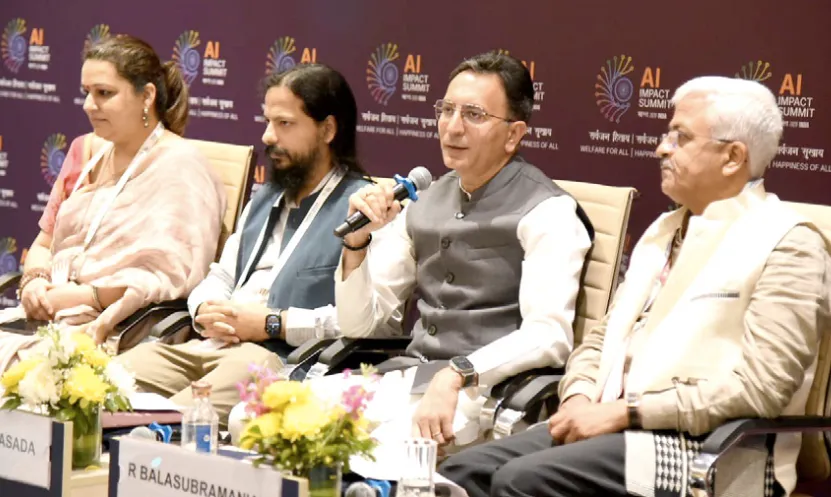
The Minister of State for Electronics and Information Technology, speaking at the AI Impact Summit in New Delhi, emphasized the dual nature of artificial intelligence technologies, highlighting both opportunities and significant risks.
“The spread of misinformation through artificial intelligence has the potential to erode trust in our democratic systems,” Prasada said during his address. His comments come amid growing global concern about deepfakes and AI-generated content that can manipulate public discourse.
The minister’s remarks reflect India’s increasing focus on responsible AI development as the technology rapidly transforms various sectors across the country’s economy. India has been working to position itself as both a major consumer and developer of AI technologies, while navigating complex regulatory challenges.
Prasada acknowledged AI’s transformative potential in education, noting it could significantly enhance learning experiences for both students and teachers. However, he issued a clear warning against viewing the technology as an educational panacea.
“While AI offers tremendous opportunities to enhance the learning experience, it must not become a shortcut that diminishes critical thinking abilities or natural curiosity,” he stated, emphasizing that artificial intelligence should complement rather than replace traditional educational approaches.
The minister’s comments on AI in education come at a critical time, as Indian educational institutions increasingly explore technological solutions following disruptions caused by the COVID-19 pandemic. Educational technology startups across India have been integrating AI tools into learning platforms, raising questions about appropriate implementation and oversight.
Prasada firmly stated that AI cannot and should not replace human teachers, whose role extends beyond information delivery to include mentorship, emotional support, and personalized guidance. This position aligns with broader government messaging that technological advancement should enhance rather than diminish human capabilities.
Industry experts attending the summit noted that Prasada’s comments reflect a nuanced understanding of AI’s double-edged nature. “The government is clearly trying to balance innovation with caution,” said Dr. Rajan Sharma, a technology policy analyst who attended the event. “This approach recognizes that AI development cannot proceed without appropriate guardrails.”
The AI Impact Summit brings together policymakers, technology leaders, and academics to discuss the societal implications of artificial intelligence. This year’s gathering comes as India continues to develop its national AI strategy, with particular focus on data governance, ethical guidelines, and cross-sector applications.
The Ministry of Electronics and Information Technology has been actively involved in formulating policies around emerging technologies, with increased attention to AI given its growing prominence across multiple industries including healthcare, finance, and manufacturing.
Prasada’s cautions about misinformation align with recent government initiatives to combat fake news and digital manipulation. Last year, the ministry introduced guidelines requiring social media platforms to increase efforts to identify and remove deepfakes and misleading AI-generated content.
As India continues its digital transformation, balancing technological advancement with appropriate safeguards remains a central challenge for policymakers. Prasada’s comments suggest that the government is increasingly focused on promoting responsible AI development that serves public interests while mitigating potential harms.
The minister concluded his remarks by calling for collaborative efforts between government, industry, and civil society to ensure AI development in India proceeds with appropriate ethical considerations and risk management frameworks.
Fact Checker
Verify the accuracy of this article using The Disinformation Commission analysis and real-time sources.

12 Comments
It’s good to see India taking a proactive stance on the risks of AI-generated misinformation. Responsible development and deployment of these powerful technologies will be crucial to maintaining public trust.
Absolutely. Establishing clear guidelines and accountability measures for AI systems will be critical to mitigating the potential harms and ensuring they are used for the public good.
Interesting perspective from Minister Prasada on the risks of AI-generated misinformation. It’s crucial that governments and tech companies work together to develop robust safeguards and responsible AI policies to protect the integrity of democratic processes.
I agree, the spread of AI-fueled disinformation is a major threat that needs to be addressed head-on. Ensuring transparency and accountability around AI systems will be key.
It’s encouraging to see India taking a proactive stance on responsible AI development. Addressing the challenges of AI-driven misinformation will require a multi-stakeholder approach across government, industry, and civil society.
Well said. Collaborative efforts to establish guidelines and best practices for trustworthy AI will be crucial going forward.
The minister raises valid concerns about AI’s potential to undermine public trust. As the technology continues to rapidly evolve, proactive regulation and ethical development will be critical to mitigating these risks.
Absolutely. With AI becoming more advanced and ubiquitous, we need robust frameworks to ensure it is deployed responsibly and in service of the public good.
Minister Prasada raises important points about the threats of AI-generated misinformation. As the technology continues to advance, policymakers and tech leaders will need to work closely to develop effective countermeasures.
Agreed. Safeguarding democratic processes from the corrosive effects of AI-fueled disinformation should be a top priority for governments around the world.
The minister’s comments highlight the double-edged nature of AI – tremendous potential, but also serious risks if not managed properly. Striking the right balance between innovation and safeguards will be a key priority.
Absolutely. Robust governance frameworks and public-private partnerships will be essential to ensuring AI is developed and deployed in an ethical, transparent, and accountable manner.