


Listen to the article
Police in Varanasi File Eight Cases Over AI-Generated Images of Manikarnika Ghat
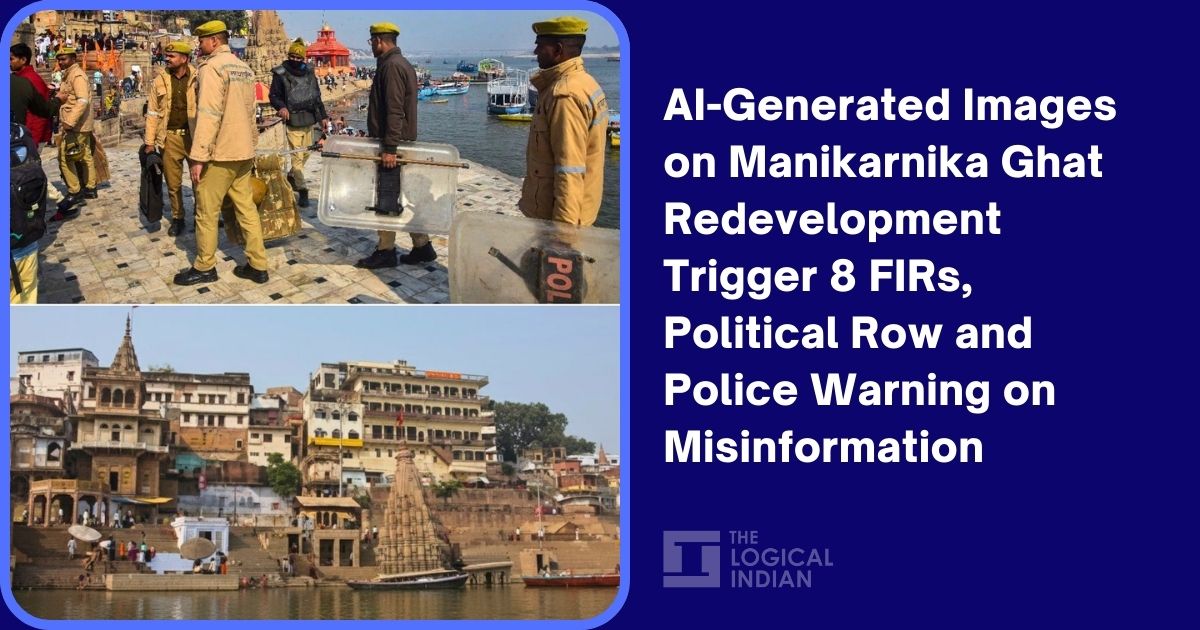
Varanasi police have registered eight FIRs against several individuals and X (formerly Twitter) accounts for allegedly spreading AI-generated images and false information about the redevelopment work at Manikarnika Ghat, one of Hinduism’s most sacred cremation sites.
The cases were filed under various provisions of the Bharatiya Nyaya Sanhita (BNS) following a complaint by a Tamil Nadu-based representative of the company undertaking the renovation project since November 2025.
Deputy Commissioner of Police Gaurav Bansal said the digitally manipulated content, which began circulating on January 16, falsely depicted damage to religious structures at the sacred site, potentially inflaming religious tensions and disturbing social harmony.
“These posts were contrary to the actual facts of the beautification work and were aimed at misleading devotees, hurting religious sentiments and disturbing social harmony,” Bansal stated. He added that the inflammatory content triggered a wave of objectionable comments and reposts, escalating tensions online.
According to police officials, the misleading content appeared designed not only to provoke religious sentiment but also to generate public resentment against government authorities. The authorities warned that legal action would extend to those amplifying the misinformation across social media platforms.
The complainant, identified only as Mano from Tamil Nadu, stated that his company has been engaged in strengthening cremation infrastructure and beautification work at the ghat. He alleged that routine redevelopment activities were misrepresented as destruction or desecration of religious heritage in the manipulated images.
Local officials have repeatedly emphasized that no temple or sacred structure has been damaged during the ongoing work, and all renovation activities are being conducted with appropriate consultations with stakeholders and local authorities.
The controversy has quickly evolved into a political flashpoint. Among those named in the FIRs are opposition figures including Aam Aadmi Party MP Sanjay Singh and independent MP Pappu Yadav. Both have denied spreading false information.
Singh publicly criticized the police action, arguing that raising legitimate concerns about heritage conservation shouldn’t be equated with spreading misinformation. “Questioning the government about potential heritage impacts is not misinformation—it’s democratic accountability,” he reportedly stated in response to the FIR.
Uttar Pradesh Chief Minister Yogi Adityanath has waded into the controversy, accusing opposition parties of deliberately propagating false narratives about temple demolition to mislead the public and tarnish his government’s image. The administration maintains that the visuals in question were manipulated and do not reflect the actual work in progress.
This incident highlights the growing challenges at the intersection of advanced technology and sensitive religious matters. The increasing sophistication of AI-generated imagery makes verification increasingly difficult for ordinary users, while the viral nature of social media can rapidly amplify misleading content before fact-checking occurs.
Heritage experts point out that Manikarnika Ghat holds profound religious significance for millions of Hindus, who believe cremation at this sacred site brings moksha, or liberation from the cycle of rebirth. Any perceived threat to such culturally significant sites naturally evokes strong emotional responses.
Digital rights advocates note that while combating misinformation remains important, authorities must ensure that legitimate criticism and democratic discourse aren’t stifled in the process. The fine line between curbing dangerous falsehoods and suppressing dissent continues to present challenges for law enforcement in the digital age.
As investigations continue, authorities have emphasized their commitment to prosecuting those responsible for creating and disseminating the manipulated content, while calling on the public to verify information through official channels before sharing potentially inflammatory material.
Fact Checker
Verify the accuracy of this article using The Disinformation Commission analysis and real-time sources.

5 Comments
As a mining and commodities enthusiast, I’m curious to learn more about the potential impact of this controversy on the companies involved in the renovation project. Transparency and proactive engagement with the community could help mitigate further issues.
The controversy around the AI-generated images of Manikarnika Ghat is concerning. While digital manipulation can spread misinformation, I hope the authorities handle this situation carefully to maintain religious harmony and respect for sacred sites.
You make a good point. It’s crucial that the authorities investigate this thoroughly and take appropriate action to address the misinformation, without escalating tensions.
The redevelopment of Manikarnika Ghat is a sensitive issue, and I can understand the concerns raised by the local community. However, spreading false information and manipulated images is not the right approach to address this.
I agree. The authorities need to find a balance between the renovation plans and the cultural/religious significance of the site. Open and transparent communication with all stakeholders will be crucial.