


Listen to the article
Media scholars, journalists, civil society actors and young digital innovators gathered in Abeokuta on Monday for a workshop exploring artificial intelligence’s expanding role in fact-checking and democratic governance in Nigeria.
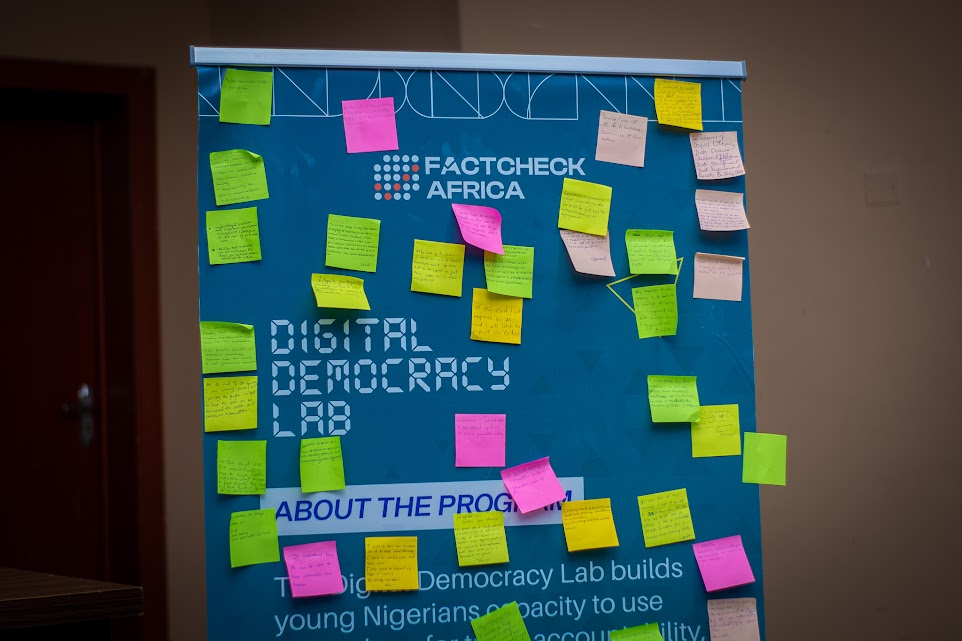
The AI Fundamentals Workshop, held at ABIIS Hotels and Suites, brought together participants from across Nigeria’s media landscape, civic technology sector, and youth advocacy organizations. The event was organized by FactCheckAfrica as part of initiatives supported by the Nigeria Youth Futures Fund (NYFF) Catalyst Grant program.
Professor Dele Odunlami, Dean of the Faculty of Social Sciences at Olabisi Onabanjo University, delivered the keynote address, describing artificial intelligence as “the enemy you cannot hate.” His presentation, titled “Poison as Antidotes: Role of Artificial Intelligence, Fact-Checking in Enhancing Media Accountability and Combating Misinformation,” examined AI’s dual nature in today’s information ecosystem.
Odunlami explained that while AI has intensified misinformation through deepfakes, manipulated imagery and synthetic audio, it simultaneously offers powerful tools for detecting falsehoods and strengthening verification processes. “Just as AI can poison the information ecosystem, it can also serve as an antidote,” he noted, referencing FactCheckAfrica’s MYAIFactchecker among the AI-assisted verification tools being deployed by fact-checking organizations.
The timing of this workshop is particularly significant, coming approximately one year before Nigeria’s 2027 general elections. Odunlami emphasized the constitutional responsibility of Nigerian media to hold power accountable during this critical period, warning that unchecked misinformation could undermine democratic participation, erode public trust, and compromise electoral integrity.
Drawing on lessons from Nigeria’s 2023 elections, which saw unprecedented levels of digital misinformation, Odunlami called for a strategic shift from reactive fact-checking to more proactive approaches. He advocated for stronger collaboration among fact-checking organizations, technology platforms, regulatory agencies, and youth-led initiatives to effectively counter increasingly sophisticated disinformation campaigns.
The professor highlighted the urgent need for investment in locally relevant AI tools capable of detecting AI-generated content, translating fact-checks into Nigeria’s numerous indigenous languages, and supporting media literacy initiatives at scale. He emphasized that these tools should be designed with inclusivity in mind, ensuring accessibility for underserved communities and persons living with disabilities.
Odunlami’s address also broke new ground by connecting digital misinformation to public health concerns. He stressed the importance of integrating “trauma literacy” into digital education programs, noting that prolonged exposure to toxic and misleading online content could contribute to mental health challenges among Nigeria’s population, particularly young people who comprise the majority of internet users in the country.
The workshop provided attendees with hands-on training in AI-assisted verification techniques, digital investigation methodologies, and ethical guidelines for using AI tools in journalistic contexts. These practical sessions aimed to equip participants with skills needed to navigate Nigeria’s increasingly complex information landscape.
This event represents part of FactCheckAfrica’s ongoing efforts to strengthen accountability journalism, empower youth engagement in democratic processes, and build societal resilience against misinformation. The organization has been conducting similar workshops across Nigeria, with a recent session held in Osun State focusing on transparency and accountability.
As Nigeria continues its digital transformation, initiatives like this workshop highlight the growing recognition that addressing misinformation requires a multi-stakeholder approach combining technological innovation, media literacy, and ethical frameworks adapted to the country’s unique social and political context.
Fact Checker
Verify the accuracy of this article using The Disinformation Commission analysis and real-time sources.

11 Comments
Appreciate Professor Odunlami’s framing of AI as both a ‘poison and antidote’ when it comes to misinformation. Developing the ‘antidote’ capabilities of AI, while mitigating the ‘poison,’ will require nuanced policymaking and ethical frameworks.
Well said. Navigating the complexities of AI’s dual nature in the information ecosystem will be critical to strengthening democratic governance and public trust.
This workshop on the role of AI in Nigeria’s media landscape sounds timely and valuable. Exploring both the risks and potential benefits of these emerging technologies is prudent, especially when it comes to sensitive issues like misinformation.
Keen to learn more about the specific AI-powered fact-checking tools and verification processes being explored to combat misinformation. Transparency around these systems’ capabilities and limitations will be vital.
Agreed. Ensuring these AI tools are accurate, unbiased and used ethically is crucial. Engaging diverse stakeholders will help develop holistic solutions.
The description of AI as both ‘poison and antidote’ when it comes to misinformation is a thought-provoking framing. Striking the right balance in developing and deploying these technologies responsibly will be an ongoing challenge.
I’m curious to learn more about the specific AI-powered tools and techniques being explored to enhance media accountability and combat misinformation. Verification processes and transparency around these systems will be crucial.
Yes, the details on how AI is being leveraged for fact-checking will be important. Ensuring these tools are accurate, unbiased and used ethically is essential to upholding journalistic integrity.
The gathering of media scholars, journalists, civil society and youth innovators in Abeokuta is an encouraging sign of cross-sector collaboration to address misinformation challenges. Collective efforts will be key to harnessing AI’s potential while minimizing risks.
Interesting perspective on the dual nature of AI – both a threat and a solution to misinformation. It’s critical that AI tools are developed and used ethically to combat falsehoods while respecting privacy and transparency.
Agreed. Deploying AI responsibly to fact-check and verify claims is key, while also being mindful of potential misuse. Striking the right balance will be an ongoing challenge.