


Listen to the article
AI and Misinformation Reshape Science Journalism in Africa
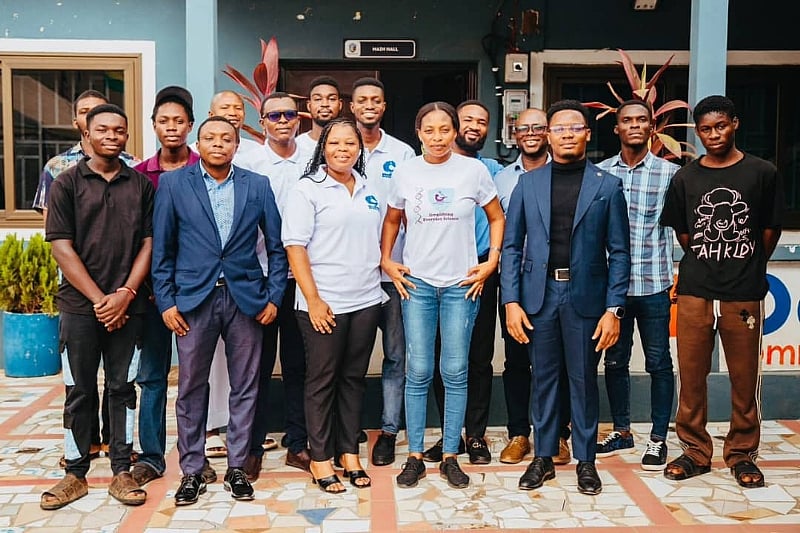
In November 2024, Africa’s fact-checking community gathered in Accra, Ghana for the Africa Facts Summit, addressing the pressing theme of “Countering Misinformation and Disinformation in Africa: Challenges, Innovations and Strategic Responses.” While primarily focused on fact-checking, the summit highlighted critical implications for science journalism across the continent.
The intersection of artificial intelligence, fact-checking, and science reporting has created a new landscape where African journalists face both unprecedented challenges and promising opportunities. This convergence comes at a time when accurate science reporting is increasingly vital for public health, climate policy, and technological development across African nations.
“Science journalism in Africa has traditionally faced significant hurdles,” notes one participant. “Limited resources, contextual barriers, language diversity, and infrastructure constraints have long complicated the field. Now, with AI’s rapid advancement, these challenges are magnified – but so are the possibilities.”
For newsrooms across Ghana and neighboring countries, AI tools present tangible benefits. They can analyze vast datasets of climate statistics, health information, and environmental monitoring that would overwhelm human capacity. Recent studies from Ghanaian newsrooms indicate a gradual, if uneven, adoption of AI technologies to improve reporting efficiency.
The technology also enables innovative storytelling formats. Interactive visualizations, multimedia presentations, and automated translation services help science journalists reach wider audiences across Africa’s linguistically diverse regions. As one summit attendee explained, “We’re seeing AI break down language barriers that have historically limited the reach of critical science information.”
However, the risks are substantial. AI systems can generate deepfakes, falsified scientific claims, and manipulated visuals that appear legitimate but contain dangerous misinformation. A survey presented at the summit revealed widespread concern among journalists about AI producing inaccurate narratives, particularly those lacking local context.
The digital divide poses another significant challenge. “Many African newsrooms simply lack the infrastructure, training, or resources to effectively integrate AI tools,” said a researcher who studied technology adoption in Ghanaian and South African media organizations. “Cost barriers, inadequate data access, and poor internet connectivity mean benefits are unevenly distributed.”
The “Accra Declaration on Information Integrity and Resilience” issued at the summit calls for developing robust digital infrastructure, expanding offline outreach, fostering partnerships with technology platforms, and utilizing AI-driven tools to build resilience against misinformation.
For science journalists specifically, the summit highlighted the critical importance of collaboration across disciplines. Working with scientists, data analysts, fact-checkers, and technologists has become essential to navigating the complex information landscape.
Localization emerged as another crucial theme. AI tools developed in Western contexts often lack relevance in African settings. As one study from Ghana and South Africa noted: “If it’s not an international story, and it’s a local story, AI will not be able to give you the facts you want in your local contexts.”
This reality underscores the need for science journalists to ensure that data, narratives, and tools reflect local realities, including indigenous languages, cultural frameworks, and regional contexts that might be overlooked by global AI systems.
The stakes for accurate science journalism in Africa are particularly high. During health crises like the COVID-19 pandemic, misleading scientific claims can cost lives. In climate adaptation efforts, misrepresented data can lead to poor policy decisions and wasted resources. As African countries increasingly engage with AI technologies in sectors like education, healthcare, and agriculture, journalists play a crucial role in shaping public understanding.
“Science journalism isn’t a niche – it matters deeply for public health, climate resilience, agriculture, technology adoption, and democratic decision-making,” emphasized one speaker. “In Africa’s context, where infrastructure and education face major constraints, trustworthy science journalism has a multiplier effect.”
The summit produced several practical recommendations for science journalists working across the continent. These include investing in specialized training for AI and data journalism, building partnerships with research institutions, maintaining transparency about AI tool usage, focusing on audience literacy, monitoring misinformation trends, prioritizing local language translation, and developing community engagement strategies to build trust.
As Africa deepens its engagement with the fourth industrial revolution, science journalism stands at a critical juncture. The tools and technologies may be evolving rapidly, but the core mission remains unchanged: to inform, explain, question, and serve the public good with accuracy and context that technology alone cannot provide.
Fact Checker
Verify the accuracy of this article using The Disinformation Commission analysis and real-time sources.

9 Comments
The convergence of AI, fact-checking, and science reporting highlighted in this article is a fascinating development. I’m particularly interested in how African newsrooms navigate the balance between leveraging AI capabilities and maintaining journalistic integrity and transparency. It’s a delicate line to walk.
Agreed, this will require a nuanced, ethical approach from African media. The potential benefits of AI are clear, but the risks of misuse or over-reliance on the technology must be carefully managed.
Fact-checking and misinformation are critical issues, especially when it comes to science reporting that can impact public health and policy decisions. I’m glad to see the Africa Facts Summit addressing these concerns head-on. AI tools could be a double-edged sword, so it will be crucial for African journalists to leverage the technology responsibly and transparently.
Agreed. Responsible and transparent use of AI will be key. Journalists will need robust ethical frameworks to ensure the technology enhances, rather than undermines, the integrity of their reporting.
This is an important issue with implications far beyond Africa. Accurate, accessible science journalism is crucial for public understanding and informed decision-making globally. I hope the Africa Facts Summit yields insights and best practices that can be shared internationally to strengthen science reporting worldwide.
The challenges facing science journalism in Africa are significant, but also represent opportunities for innovation. With the right approaches, AI could help African newsrooms overcome resource constraints, language barriers, and infrastructure gaps to deliver high-quality, fact-based science reporting to local communities.
Curious to learn more about the specific AI tools and techniques that African fact-checkers and journalists are exploring. Are there any standout examples of how the technology is being used to tackle misinformation and elevate science reporting in the region?
This is an important discussion at the intersection of technology, journalism, and societal impact. I’m glad to see African media leaders grappling with these issues proactively. Their insights could hold valuable lessons for news organizations around the world as they confront similar challenges.
Interesting insights on the evolving role of AI in African science journalism. The challenges highlighted – limited resources, language barriers, infrastructure gaps – are certainly not new, but AI seems to be both amplifying the issues and offering new solutions. Looking forward to seeing how African newsrooms navigate this dynamic landscape.