


Listen to the article
Artificial Intelligence Aids Ebola Response by Analyzing Local Radio in Uganda
Scientists in Uganda have deployed artificial intelligence technology to analyze thousands of hours of radio broadcasts, providing crucial insights into public perceptions about Ebola outbreaks in communities with limited internet access.
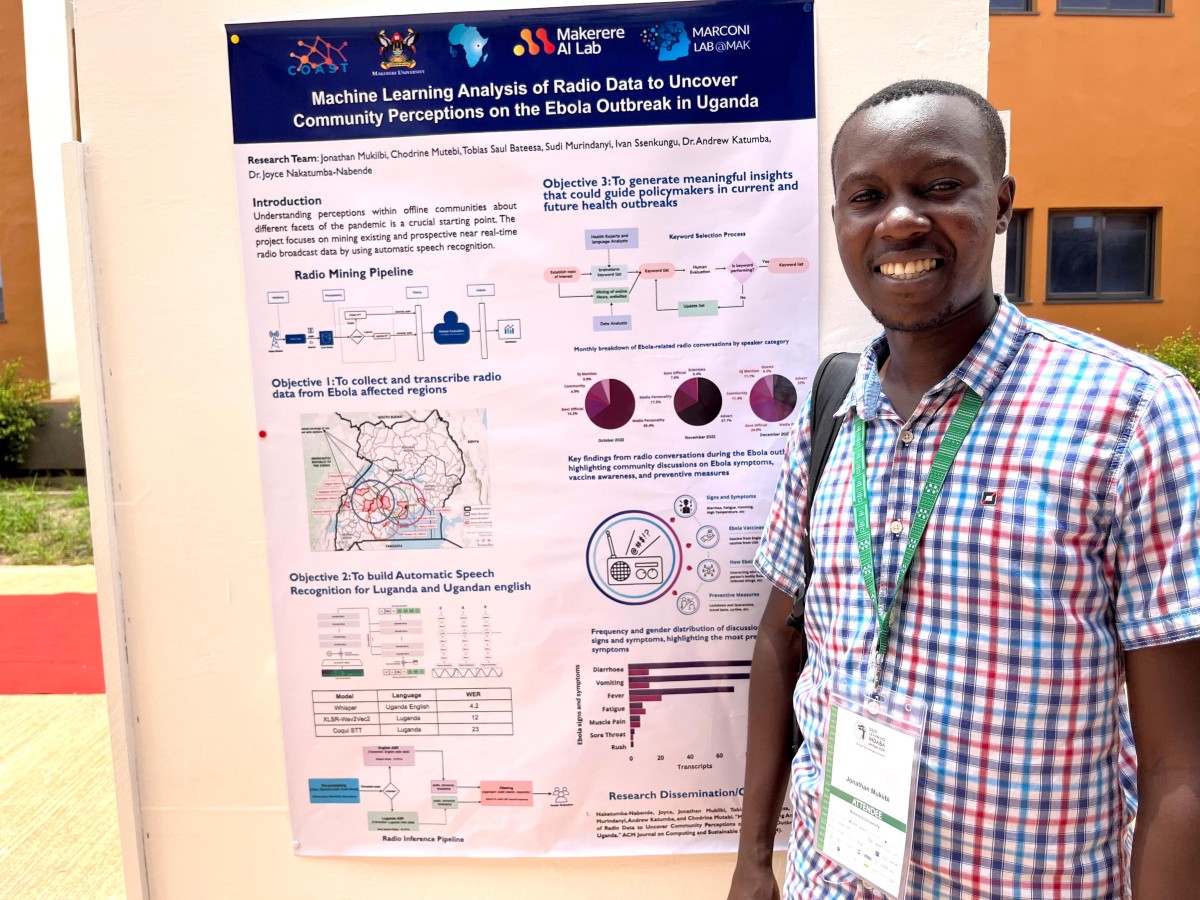
The innovative approach, led by computer scientist Jonathan Mukiibi of the Makerere Artificial Intelligence Lab at Makerere University in Kampala, addresses a critical gap in public health response strategies by capturing voices of the offline population.
“They don’t have access to the internet, so we can’t get their perceptions from social media,” explains Mukiibi, highlighting why understanding these communities is essential for effective disease management.
The project’s significance is underscored by Uganda’s digital divide, where only 27% of the population has internet access, leaving approximately 36.5 million people offline. In contrast, radio penetration exceeds 55%, making it the dominant information source across the country’s diverse regions, with over 200 licensed stations broadcasting nationwide.
During Uganda’s 2022 Ebola outbreak, which claimed 53 lives, public health efforts were hampered by widespread misinformation and conspiracy theories. Many communities expressed distrust of government claims about the epidemic, particularly as it followed a contentious election period, leading to resistance against containment measures.
Mukiibi’s team developed a sophisticated radio monitoring system that captured audio from five community radio stations in Ebola-affected districts, streaming content for 17 hours daily over three months. The team then built custom speech-to-text machine learning models for both English and the local language of Luganda to process this extensive audio data.
Within hours, the AI system generated detailed transcripts with timestamps for each speaker, enabling researchers to analyze conversations through natural language processing tools. The resulting insights highlighted community concerns about symptoms, preventative measures, and vaccine hesitancy, revealing patterns that could inform targeted public health strategies.
A particularly noteworthy finding was that radio discussions during the outbreak were primarily dominated by government officials and media personalities, with limited scientific voices. Mukiibi suggests this contributed to public perceptions linking the Ebola outbreak to political and financial interests rather than treating it as a legitimate public health crisis.
“In Africa, we have a strong oral storytelling tradition, and radio plays a key role in how people receive and share information. That makes it an important source to pay attention to in public health research,” notes Elaine Nsoesie, associate professor of global health at Boston University, who was not involved in the research.
The project’s implications extend beyond disease monitoring. By creating a dashboard to share findings with Uganda’s Ministry of Health and other researchers, the system provides near real-time insights that could transform how officials develop targeted communications and policies during health emergencies.
However, the technology has raised ethical concerns. Nyalleng Moorosi, a computer scientist from Lesotho at the Distributed AI Research Institute (DAIR), warns that such monitoring systems could potentially be misused in oppressive regimes, stating, “It goes beyond health – once a system like this exists, it can be used for other purposes such as monitoring political dissidents.”
Mukiibi emphasizes that his team anonymizes all information before sharing it with government and public health officials to protect individual privacy.
Looking ahead, the Makerere team aims to expand the system to address broader community issues including agriculture and general health concerns. With support from Mozilla and using the Common Voice platform, they’re collecting speech data in additional local languages, though building comprehensive speech recognition models across all Ugandan languages remains a significant technical and financial challenge.
“The hope is that it will allow community development workers and advocates to select specific issues and receive insights and recommendations tailored to their communities,” says Mukiibi, highlighting the potentially transformative impact of bringing AI-powered analysis to traditionally underrepresented voices.
Fact Checker
Verify the accuracy of this article using The Disinformation Commission analysis and real-time sources.

7 Comments
Radio remains a crucial information source in many parts of the world. Leveraging AI to analyze its content is a smart way to capture the voices of populations that are often overlooked in digital health initiatives.
Absolutely, this approach helps bridge the digital divide and ensure no one is left behind in critical disease response efforts.
I wonder how the AI models were trained to accurately interpret local dialects, colloquialisms, and cultural nuances in the radio broadcasts. Ensuring the analysis truly reflects community perspectives will be key to the program’s success.
Combating misinformation is crucial during disease outbreaks. Using AI to monitor radio content is a creative solution, but the team will need to be vigilant about potential biases or blind spots in the technology.
Good point. Rigorous validation and oversight will be essential to ensure the AI analysis is reliable and actionable for public health officials.
This is an impressive interdisciplinary collaboration between computer scientists and public health experts. Leveraging local knowledge and community trust in radio will be vital for driving positive behavior change during Ebola outbreaks.
Fascinating use of AI to monitor local radio broadcasts and understand public perceptions about Ebola in remote communities. This could be a game-changer for public health response and disease management in regions with limited internet access.