


Listen to the article
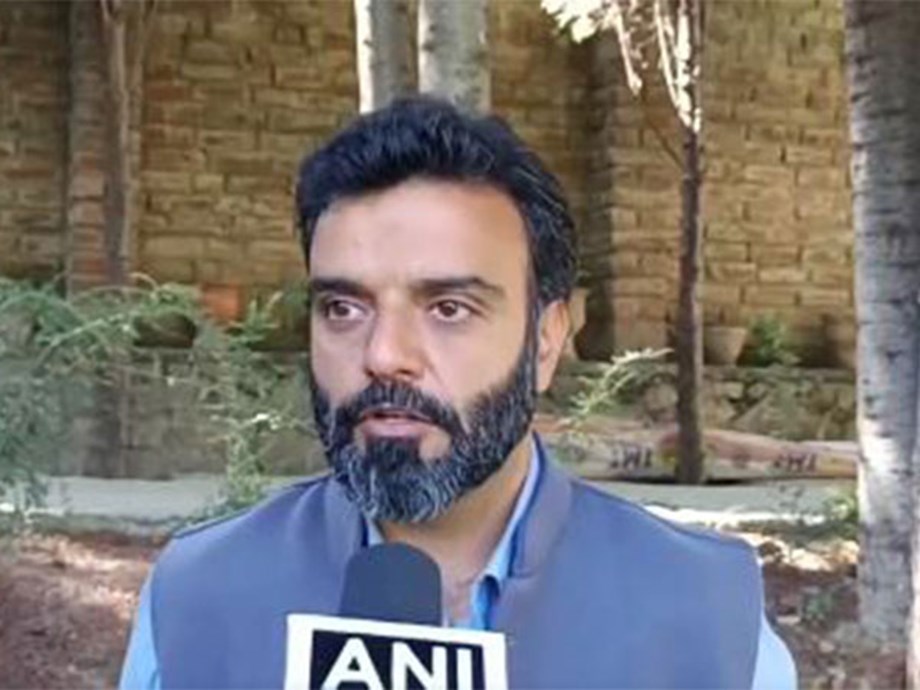
In a defiant stance against mounting legal pressure, Srinagar’s Lok Sabha representative, Aga Syed Ruhullah Mehdi, has vowed to continue speaking what he describes as truth, regardless of the police case recently filed against him.
The prominent parliamentarian faces charges under sections 197(1)(d) and 353(1)(b) of the Bharatiya Nyaya Sanhita (BNS), which replaced the colonial-era Indian Penal Code last year. According to police authorities, Mehdi allegedly circulated misleading content that could potentially disturb public peace and harmony.
“My mandate comes from the people who elected me, not from a government-approved list of statements,” Mehdi declared in response to the charges. His remarks underscore the growing tension between elected representatives and law enforcement in Kashmir, a region with a complex political landscape.
The police complaint specifically accuses the parliamentarian of deliberately spreading false narratives, an allegation Mehdi firmly rejects. Instead, he maintains that his role as an elected representative obligates him to present unfiltered perspectives to his constituents and the wider public.
The case against Mehdi comes amid his outspoken criticism of international events. He has been particularly vocal in condemning the assassination of Ayatollah Ali Khamenei, the Supreme Leader of Iran, and has publicly criticized recent military actions by the United States and Israel in the Middle East. His statements on these matters have resonated with many of his supporters but have also drawn scrutiny from authorities.
Kashmir’s political environment has long been characterized by tight governmental oversight of public discourse. The region, which had its special autonomous status revoked in 2019 when Article 370 was abrogated, has seen increased scrutiny of political speech, particularly regarding international relations and security matters.
Political analysts note that the case against Mehdi reflects broader tensions between freedom of expression and national security concerns in India. Arvind Kumar, a political scientist at Delhi University, explains, “Elected representatives in sensitive regions often walk a tightrope between representing their constituents’ views and navigating national security boundaries.”
In his public statements, Mehdi has criticized what he perceives as a double standard in the administration’s approach. He argues that authorities appear more eager to pursue charges against those speaking uncomfortable truths than to condemn what he describes as international injustices.
The case has drawn attention from civil liberties organizations, with several expressing concern about potential limitations on political speech. The Kashmir Press Club has issued a statement calling for “respect for democratic discourse and the constitutional right to freedom of expression.”
The Bharatiya Nyaya Sanhita, under which Mehdi is charged, was enacted in 2023 as part of India’s comprehensive criminal law reform. The sections cited in his case relate to the dissemination of false information with intent to cause public alarm or disturb public tranquility.
Legal experts suggest the case could become a significant test for the interpretation of these relatively new provisions. Senior advocate Priya Hingorani notes, “These cases often hinge on the fine distinction between protected political speech and content deemed harmful to public order.”
For residents of Srinagar, the constituency Mehdi represents, the case has sparked varied reactions. While some supporters have rallied behind the parliamentarian, others express concern about potential instability in a region that has experienced decades of conflict.
As the legal proceedings unfold, the case is likely to be closely watched by political observers, legal experts, and international organizations monitoring freedom of expression in the region.
Fact Checker
Verify the accuracy of this article using The Disinformation Commission analysis and real-time sources.

14 Comments
This case underscores the challenges of maintaining stability and security while upholding democratic principles of free speech. As an elected official, Mehdi has a duty to share information with his constituents. But authorities must also ensure public order. Finding the right balance will be crucial.
Absolutely, this is a sensitive issue that requires nuanced handling. Mehdi’s role as an elected representative should be respected, but authorities also have valid concerns about potential unrest. Hopefully, open and constructive dialogue can help resolve this impasse.
Mehdi’s defiant stance is understandable given his democratic mandate. However, authorities also have a responsibility to maintain public order, especially in conflict-prone regions like Kashmir. This case highlights the delicate dance between free speech and security that elected officials must navigate.
You make a fair point. Elected representatives have a duty to be transparent and share information, but authorities must also uphold public safety. Finding the right balance will require careful consideration of all perspectives and a commitment to constructive dialogue.
Mehdi’s defiant stance is understandable, but authorities also have legitimate concerns about potential unrest. This case highlights the delicate balance that must be struck between free speech and public order, especially in conflict-prone areas like Kashmir. Constructive dialogue and careful consideration of all perspectives will be key.
Well said. This is a complex issue without easy solutions. Upholding democratic principles while maintaining stability is a constant challenge for governments. Hopefully, the parties involved can find a way forward that respects both Mehdi’s role as an elected representative and the authorities’ responsibility to ensure public safety.
This case underscores the ongoing tensions between elected officials and law enforcement in Kashmir. While Mehdi’s commitment to transparency is admirable, authorities also have a duty to maintain public order. Finding the right balance will require nuanced and open-minded dialogue from all stakeholders.
Absolutely. This is a sensitive issue that demands careful consideration of the various interests and perspectives involved. Upholding democratic principles while ensuring public safety is a delicate balance, and it will be crucial for all parties to engage in constructive dialogue to find a mutually acceptable solution.
This is a complex situation with valid concerns on both sides. As an elected official, Mehdi has a responsibility to share information with his constituents. But authorities also have a duty to maintain public order, especially in sensitive regions like Kashmir. Hopefully, a constructive solution can be found through open dialogue.
Agreed. This case underscores the challenges of preserving democratic principles while ensuring public safety. A nuanced approach that respects both Mehdi’s role as an elected representative and the authorities’ security concerns will be crucial in resolving this matter effectively.
It’s concerning to see elected officials facing legal charges for their speech, even if the content is controversial. Mehdi seems to be taking a principled stand in defense of his mandate from the people. This case highlights the delicate nature of political discourse in conflict-prone areas.
You raise a fair point. Cracking down on elected representatives’ speech sets a dangerous precedent, even if authorities claim the intent is to prevent public unrest. Careful consideration of all perspectives is needed to find an appropriate solution.
This is a complex issue with valid concerns on both sides. As an elected representative, Mehdi has a responsibility to share information with his constituents, even if it challenges the official narrative. But authorities must also maintain public order. Hopefully, a middle ground can be found.
Agreed, finding the right balance between free speech and public order is critical in sensitive regions like Kashmir. Transparency and open dialogue will be key to resolving this matter constructively.