


Listen to the article
The Shocking State of Sex Education in America: What Students Are Really Being Taught
The quality of sexual education and health classes in the United States varies dramatically across regions, with particularly concerning gaps in conservative states. These classes, which shape young people’s understanding of intimacy and their own bodies, often leave students with harmful misconceptions that can impact their lives well into adulthood.
A recent survey of former students revealed troubling patterns in how sex education is taught nationwide. Many respondents described abstinence-only programs that focused on instilling fear rather than providing accurate information.
“I went to public school, but we had an abstinence-only program,” one respondent shared. “We learned that if we ever had sex before marriage, we would get STIs. They even showed us a ton of photos to scare us, and only taught us about male pleasure.”
This approach reflects a broader issue in many American schools, where religious values often overshadow scientific fact. Another former student recalled, “We didn’t have sex ed or health class; instead, we had a chapel assembly in which a pastor came to tell us how desire wasn’t a sin but acting on it was.”
Gender disparities in sex education also emerged as a common theme. Multiple respondents noted that their classes reinforced harmful stereotypes, with one participant sharing, “Our female teacher told all the girls that ‘sex is painful for women.’ It makes me so mad that she set up a room full of young girls to believe that sex is something you can’t expect to enjoy.”
Particularly alarming were the educational disparities between boys and girls. One respondent described how “when I was in fifth grade, the girls and boys were separated for a lesson on our anatomy…or so we thought. The girls got a full lesson on our reproductive organs and the upcoming puberty changes to expect. When the lessons were over, we asked the boys what they learned, and they told us that they just played in class.”
The survey also uncovered a disturbing trend of medical misinformation. One respondent’s health education instructor claimed “that all male human penises have a bone in them.” Another was taught “that cocaine was a non-addictive stimulant” during drug education.
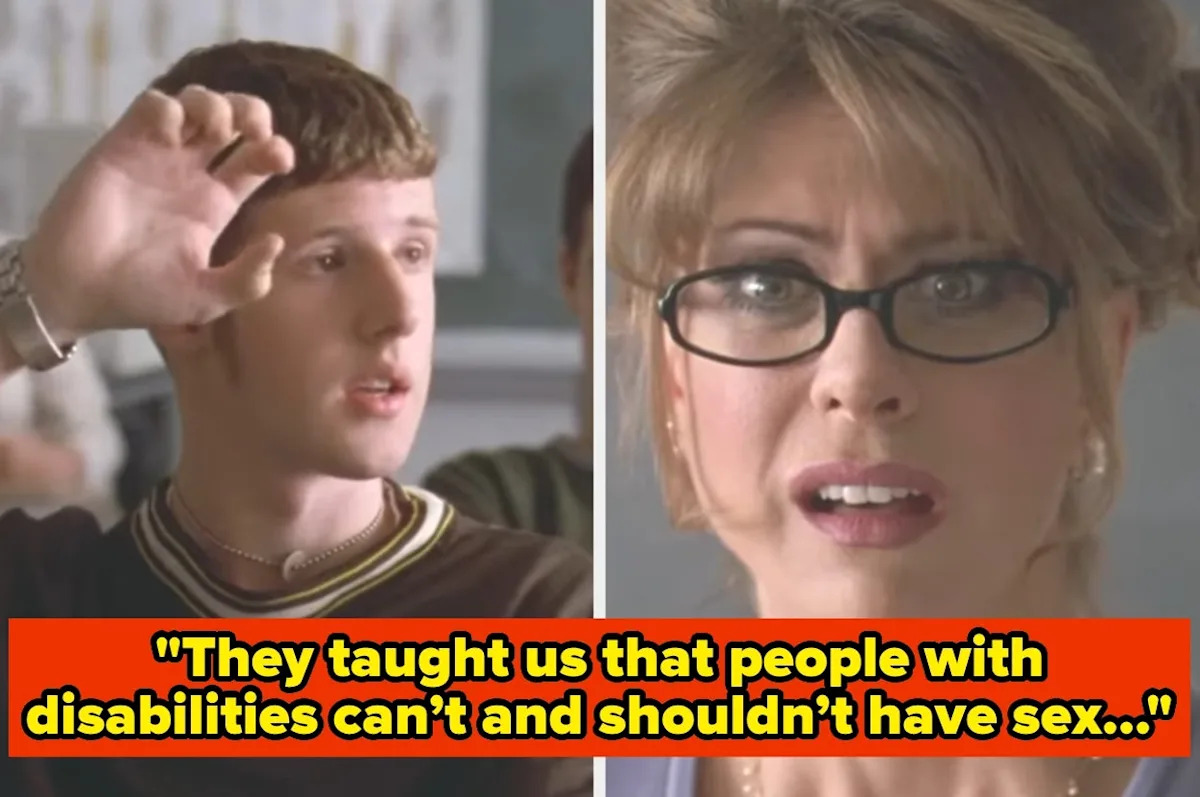
For students with disabilities, the situation was often worse, with some being completely excluded from sex education. “We were taught that people with disabilities can’t and shouldn’t have sex. In fact, my special education classes replaced the sexual education classes, so I never took sex ed,” explained one former student.
During the AIDS crisis of the 1980s, misinformation took a particularly harmful turn. One respondent from the Midwest recalled being taught “that having gay sex would CREATE the AIDS virus, not just pass it along,” reflecting how sex education sometimes reinforced prejudices rather than combating them.
Women’s health education was similarly problematic. Multiple respondents mentioned being given inaccurate information about menstruation, with one noting, “When going over menstruation, they referred to a ‘red fluid’ that would come out,” rather than explaining the reality of period blood. Another was told that “if we were ‘good’ and had a positive attitude, we wouldn’t experience PMS symptoms.”
Pregnancy information was also dangerously incorrect in some cases. One parent overheard a male teacher telling students “that girls cannot get pregnant if they haven’t started menstruation yet,” a dangerous falsehood that could lead to unintended pregnancies.
The consequences of inadequate sex education are visible in teen pregnancy rates, particularly in states with abstinence-only education. One respondent noted, “We had an entire separate campus for the pregnant students when I was in high school. God forbid the other kids see pregnant teens. Of course, the state defunded it, so now they don’t get an education at all, and they’ve made sure to ban abortion as well, so the problem is only getting worse.”
These testimonials highlight an urgent need for comprehensive, medically accurate sex education across America. Without it, young people will continue to make life-altering decisions based on misinformation, perpetuating cycles of shame, unplanned pregnancies, and preventable health issues.
Fact Checker
Verify the accuracy of this article using The Disinformation Commission analysis and real-time sources.

14 Comments
This is a very troubling issue. Abstinence-only sex ed programs that focus on fear and religious ideology rather than facts and science are deeply problematic. All students deserve access to comprehensive, evidence-based sex education.
Absolutely. Factual, inclusive sex ed is a basic right, not a privilege. These survey results highlight an urgent need for reform in many school districts across the country.
It’s disappointing to hear these stories of students being deprived of accurate, inclusive sex education. This kind of misinformation can have long-lasting negative impacts on young people’s understanding of their own bodies and sexuality.
Exactly. We need to ensure all students have access to comprehensive, evidence-based sex ed that empowers them to make informed, healthy choices.
The survey results highlight a major failure in the US education system. Abstinence-only programs that rely on scare tactics rather than science are unacceptable. Comprehensive, inclusive sex ed should be the norm, not the exception.
Completely agree. This kind of misinformation-based approach does real harm to students’ health and development. Reform is long overdue in this critical area.
This is a concerning issue that needs to be addressed. Comprehensive, science-based sex education is crucial for the health and wellbeing of young people. Abstinence-only programs that focus on fear and misinformation do more harm than good.
I agree. Factual, age-appropriate sex education should be the standard, not religious ideology masquerading as science.
The survey results reveal a disturbing pattern of misinformation and fear-mongering in sex ed classes across the country. This kind of approach does a grave disservice to young people and their development.
Absolutely. Comprehensive, medically accurate sex ed should be the standard, not the exception. It’s crucial for students’ health and futures.
Abstinence-only programs are clearly failing students. It’s unacceptable that some schools are prioritizing religious doctrine over science and public health. Comprehensive sex ed is a basic right that all young people deserve.
Agreed. Schools should be teaching facts, not harmful myths that can jeopardize students’ wellbeing. Reform is long overdue in this area.
It’s deeply concerning to hear how many students are being taught harmful abstinence-only programs instead of fact-based sex education. This can have lasting negative impacts on their understanding of their own bodies and sexuality.
This is a really important issue that needs urgent attention. All young people deserve access to comprehensive, evidence-based sex ed, not ideologically driven misinformation.