


Listen to the article
Nigerian Banking Association Resolves Misinformation Crisis, Educates Content Creator on Recapitalization
In a swift move to counter financial misinformation, the Association of Corporate and Marketing Professionals in Banks (ACAMB) has successfully engaged with popular content creator “Unofficial Osas” following his inaccurate claims about the Central Bank of Nigeria’s recapitalization program.
The intervention came after the content creator published misleading information suggesting that 12 Nigerian banks were shutting down due to the CBN’s recapitalization policy. The video’s circulation prompted concern from regulatory authorities, eventually leading to an invitation from the Nigerian Police Force National Cyber Crime Centre in Abuja.
Through ACAMB’s professional engagement, the content creator has since retracted his statements and issued a formal apology, acknowledging the potential harm such misinformation could cause to Nigeria’s financial system stability.
“I would like to offer an official retraction of that video and want to reiterate that no bank is shutting down,” the content creator stated in his apology video. “As a matter of fact, most of the banks have now met the N500 billion minimum capital base for banks with international authorization and the N200 billion requirement for national banks under the recapitalization policy.”
The CBN’s recapitalization directive, announced earlier this year, aims to strengthen Nigeria’s banking sector by ensuring financial institutions maintain adequate capital reserves. The policy establishes tiered capital requirements based on the scope of banking operations: N500 billion for banks with international presence, N200 billion for national banks, and lower thresholds for regional and specialized institutions.
Industry analysts note that while the recapitalization process represents a significant challenge for some smaller institutions, most major Nigerian banks are on track to meet or exceed the requirements through various capital-raising strategies, including rights issues, private placements, and retained earnings.
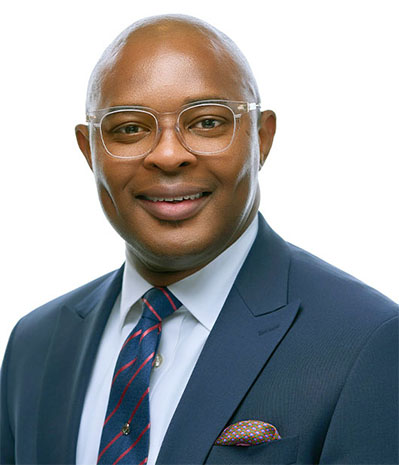
Jide Sipe, ACAMB’s President, highlighted the organization’s commitment to protecting the banking sector’s reputation through proactive information management. “Our engagement with the content creator helped ensure that accurate information about the resilience and stability of Nigerian banks reached his wide audience,” Sipe explained.
The incident underscores the growing challenge of misinformation in Nigeria’s digital media landscape, particularly regarding sensitive financial matters. In recent years, false claims about bank solvency have occasionally triggered customer panic and temporary liquidity pressures at otherwise healthy institutions.
Financial experts emphasize that such misinformation poses real economic risks. Dr. Olabisi Adekoya, a banking sector analyst at Lagos Business School, noted, “In the digital age, misinformation can spread rapidly and potentially trigger bank runs or market instability. ACAMB’s intervention represents a positive approach to countering false information with education rather than mere censorship.”
The content creator acknowledged ACAMB’s educational approach in his apology: “I want to specifically appreciate ACAMB. They were very professional in handling this case and did well to educate and enlighten me on the recapitalization process. I am now better informed and know better.”
This case highlights the delicate balance between free expression and responsible communication in financial matters. Rather than pursuing punitive measures, ACAMB chose engagement and education—a strategy that appears to have yielded positive results.
The association continues its broader mission of strengthening public confidence in Nigeria’s banking system through various public enlightenment initiatives. Financial literacy programs, transparent communication channels, and stakeholder engagement remain central to ACAMB’s strategy for maintaining trust in a sector that serves as the backbone of Nigeria’s economic development.
As the CBN’s recapitalization deadline approaches, the banking sector continues to adapt and strengthen, with most institutions making significant progress toward meeting the new capital requirements.
Fact Checker
Verify the accuracy of this article using The Disinformation Commission analysis and real-time sources.

16 Comments
Glad to see the authorities taking action to address false claims that could undermine confidence in the banking system. Maintaining stability is crucial.
Yes, the Nigerian regulators seem to be on top of this issue. Proactive engagement with content creators is an effective strategy.
Interesting to see ACAMB stepping in to address misinformation around the banking recapitalization program. Transparency and correcting false claims is important for maintaining public trust.
I agree, responsible content creators should be willing to correct the record when they make mistakes. Good on this one for issuing a retraction.
The banking recapitalization policy is a complex topic, so it’s understandable how misinformation could spread. ACAMB’s efforts to educate creators are commendable.
Agreed. Financial regulations can be tricky to explain clearly, so open communication from industry groups is important.
The banking recapitalization issue is a complex one, but it’s good to see ACAMB working to ensure accurate information is shared. Kudos to them.
Yes, financial regulations can be tricky, so education and fact-checking are crucial. Well done to ACAMB for addressing this proactively.
It’s good to see content creators being held accountable for sharing inaccurate information, especially on sensitive financial matters. Kudos to ACAMB.
Definitely. Responsible content creation means verifying facts, especially when discussing regulatory changes that impact people’s finances.
This situation highlights the importance of transparent communication from industry groups and regulators. ACAMB’s efforts are a positive step.
Absolutely. Proactive engagement to correct misinformation can go a long way in maintaining public trust.
This situation highlights the need for financial literacy and fact-checking when it comes to complex regulatory changes. Kudos to ACAMB for engaging proactively.
Absolutely. Spreading misinformation, even unintentionally, can have real consequences for people’s financial security.
The banking recapitalization story is a prime example of why we need more financial literacy education. Glad to see ACAMB taking a proactive role.
Yes, improving public understanding of financial systems and regulations is crucial to preventing the spread of misinformation.