


Listen to the article
Iranian strikes on Abu Dhabi prompt arrests over social media violations
Police in Abu Dhabi have detained 45 individuals for allegedly spreading misinformation and sharing footage of locations impacted by ongoing Iranian military strikes in the region, authorities announced Saturday.
The arrests come amid heightened tensions across the Gulf following a series of Iranian attacks on the United Arab Emirates, which began earlier this month in apparent retaliation for U.S. and Israeli military actions against Iran.
“The Abu Dhabi Police Criminal Investigation Department arrested 45 individuals of various nationalities for filming different locations during ongoing events and posting them on social media platforms,” according to the official police statement. The authorities added that those detained were “accused of spreading inaccurate and misleading information, which could incite public opinion and spread rumours within the community.”
The police did not provide specific details about the nationalities of those arrested or the exact nature of the content they allegedly shared. However, the crackdown underscores the UAE’s strict policies regarding social media use, particularly during security crises.
The arrests highlight the growing concerns about information security in the UAE as the conflict between Iran and its adversaries spills over into the Gulf states. Abu Dhabi, a major financial hub and home to numerous international businesses and expatriates, has been working to maintain an image of stability despite the regional turbulence.
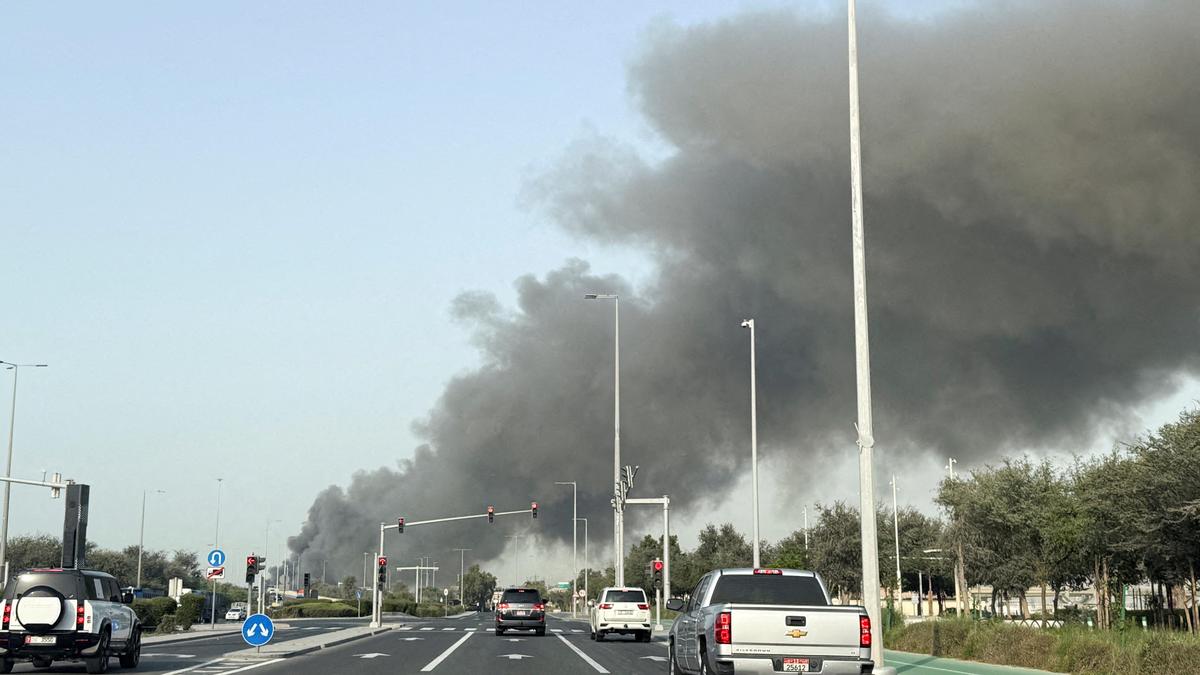
Earlier this month, smoke was seen billowing from Abu Dhabi’s Zayed port following an Iranian attack on March 1, part of a broader military exchange that has destabilized the region. The Iranian strikes came in response to coordinated military actions by the United States and Israel against Iranian targets.
Security analysts suggest that the UAE authorities are particularly sensitive to uncontrolled information flow during this crisis, as unofficial reports could potentially affect tourism, business confidence, and real estate markets in what has long been considered one of the most stable countries in the Middle East.
Dr. Mehran Kamrava, a Middle East expert at Georgetown University’s Qatar campus, explained: “The UAE has invested decades in cultivating an image as a safe haven amid regional turbulence. Unauthorized images of military strikes directly challenge that narrative and could have immediate economic implications.”
The UAE’s cybercrime laws are among the strictest in the world, with hefty penalties for publishing material deemed harmful to national security or public order. Violators can face imprisonment and substantial fines, with foreigners potentially facing deportation.
For expatriates, who make up approximately 88% of the UAE’s population, the arrests serve as a stark reminder of the boundaries around free expression in the country, particularly during times of crisis.
The Iranian strikes on the UAE represent a significant escalation in regional tensions. The UAE had previously maintained relatively balanced relations with Iran despite being a close ally of Saudi Arabia and the United States. This delicate diplomatic balancing act appears to have been disrupted by the current conflict.
Oil markets have responded nervously to the developments, with Brent crude prices climbing as investors weigh the risks to critical energy infrastructure in the Gulf. The UAE is OPEC’s third-largest producer, and any disruption to its energy exports could have global implications.
As military exchanges continue across the region, international diplomats have called for restraint to prevent further escalation. Meanwhile, the UAE authorities appear determined to control the narrative around the conflict’s impact on their territory through strict enforcement of information-sharing protocols.
Human rights organizations have expressed concern about the arrests, suggesting they may represent an overly broad application of security laws during a time of crisis. However, UAE officials maintain that the measures are necessary to prevent panic and protect national security interests.
Fact Checker
Verify the accuracy of this article using The Disinformation Commission analysis and real-time sources.

9 Comments
It’s understandable for the UAE to be cautious about social media during security incidents, but arresting 45 people for sharing footage seems excessive. I hope this doesn’t discourage legitimate reporting and dialogue.
Valid point. The authorities should aim to balance public safety with press freedoms. Responsible journalism helps keep the public informed, which is crucial during crises.
The UAE’s crackdown on social media use raises concerns about civil liberties. While misinformation can be harmful, detaining dozens of people for filming seems like an overreaction that could backfire.
Filming public locations shouldn’t be a crime, even during security incidents. The UAE should focus on combating actual disinformation rather than detaining people for sharing footage. Overreaction could make the situation worse.
This news highlights the delicate balance between public safety and freedom of expression. I hope the UAE authorities can find a way to address misinformation without heavy-handed tactics that undermine public trust.
This is a concerning situation. While sharing misinformation can be damaging, arrests for filming public locations seem heavy-handed. I hope the authorities focus on verifying facts rather than suppressing information.
I agree, transparency and accurate reporting are important, especially during times of heightened tensions. Hopefully this leads to better communication guidelines, not censorship.
While the UAE has legitimate concerns about social media use during crises, these arrests seem like an overzealous response. I hope this doesn’t set a precedent for cracking down on the free flow of information.
Curious to learn more about the specifics of the misinformation that prompted these arrests. Was it truly dangerous or just critical of the government’s response? Transparency is key during security incidents.