


Listen to the article
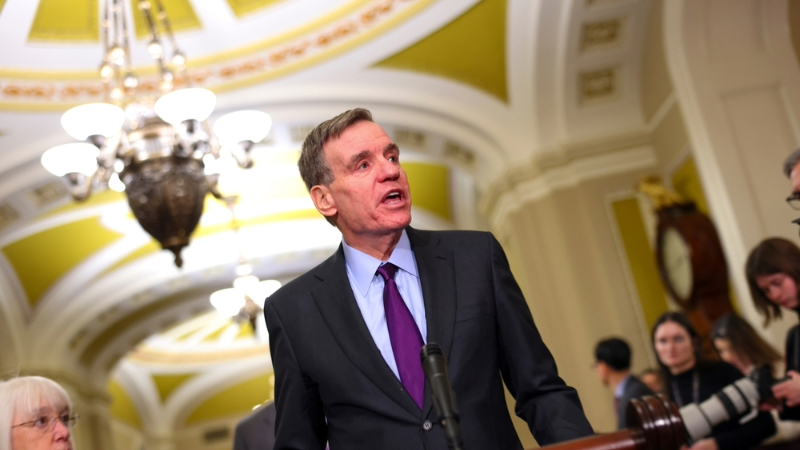
In a significant push to combat digital misinformation, Senator Mark Warner (D-Va.) has launched a broad initiative urging major technology companies to strengthen defenses against manipulated media before the 2026 midterm elections.
On March 16, Warner dispatched letters to seventeen prominent tech companies, including leading AI developers like OpenAI, Anthropic, and xAI, as well as social media giants Meta, Microsoft, Google, TikTok US, and Reddit. Other recipients included content creation platforms Adobe, ElevenLabs, Midjourney, Canva, and Synthesia.
The senator’s concern stems from documented instances of Russian interference during the 2024 U.S. elections. Though these efforts reportedly had minimal impact on election outcomes, Warner emphasized that generative AI capabilities have advanced dramatically in recent years, creating heightened risks from both foreign actors and domestic sources.
“The threats we face today are exponentially more sophisticated than even two years ago,” a cybersecurity expert familiar with election security told this publication. “What were once easily identifiable fakes can now be virtually indistinguishable from genuine content.”
Federal intelligence officials had previously cautioned that AI advancements could enable more convincing and widespread deepfake campaigns targeting political candidates. This warning materialized during the New Hampshire primary when voters received fake robocalls featuring an AI-generated voice resembling President Joe Biden, discouraging participation in the election.
Warner’s letters outline specific recommendations for AI companies to implement additional safeguards against potential misuse. These include embedding content credentials, metadata, and visible watermarks in AI-generated media—technical solutions that could help audiences and systems identify synthetic content. He also urged companies to require downstream partners to preserve these identifiers and to share detection tools with trusted organizations.
Another key recommendation focused on establishing rapid-response verification channels that could quickly address emergent threats during election periods. Warner stressed the importance of cross-sector collaboration, noting that the recent reduction in federal resources makes industry coordination even more critical.
“Particularly against the backdrop of an abrupt pullback in federal resources, an effective multi-stakeholder approach is needed to ensure that industry, state and local governments, and civil society adequately anticipate – and counteract – media manipulation techniques that cause harm to vulnerable communities, public trust, and democratic institutions,” Warner wrote.
For victims of impersonation or manipulation, the senator suggested companies create clear reporting mechanisms while also proactively monitoring for impersonation campaigns. This approach would shift some responsibility from individuals to platforms, potentially addressing deepfakes before they gain traction.
The senator’s letters also specifically addressed social media platforms and content distributors, pressing them to implement stricter standards for manipulated media. These recommendations include establishing clearer rules about AI-generated content, screening uploads for authenticity signals, deploying systems to detect unlabeled synthetic content, and collaborating with journalists, civil society organizations, and election officials to improve verification processes and public awareness.
Warner acknowledged ongoing bipartisan efforts to develop regulatory frameworks for generative AI technologies but emphasized that the private sector can take immediate action.
“Policymakers have on a bipartisan basis begun the process of developing measures to ensure that generative AI technologies serve the public interest,” he wrote. “But the private sector can – particularly in collaboration with civil society and state and local election officials – dramatically shape the usage and wider impact of these technologies through proactive measures in coming months.”
The lack of comprehensive U.S. legislation specifically targeting AI-generated political deepfakes has created a regulatory gap that industry self-regulation might need to fill until legislative solutions emerge. While several states have enacted limited protections, federal action has been slow to materialize despite growing concerns from election security experts.
Companies receiving Warner’s letters have not yet issued public responses to his recommendations.
Fact Checker
Verify the accuracy of this article using The Disinformation Commission analysis and real-time sources.

8 Comments
Protecting elections from digital misinformation is a complex challenge, but one that must be addressed head-on. I’m hopeful the tech sector will work closely with lawmakers to develop robust solutions.
It’s good to see policymakers taking the risks of manipulated media seriously. Technological advancements have made deepfakes increasingly difficult to detect, so a collaborative approach between government and industry is crucial.
I agree. The rapid progress of generative AI makes this a race against time to stay ahead of bad actors. Strong safeguards and transparency from tech companies will be essential.
This is an important initiative, but I question whether tech companies will be willing to implement meaningful safeguards if it impacts their bottom line. Robust government oversight may be needed.
That’s a fair point. Tech firms have a history of prioritizing profits over public interest. Strong regulations and enforcement may be necessary to ensure they take this threat seriously.
This is a concerning development. Deepfakes could pose a serious threat to election integrity if not properly addressed. I’m glad to see Senator Warner taking proactive steps to engage tech companies on this issue.
While deepfakes are a valid concern, I wonder if the risks are being overstated. Voters should still rely on authoritative and trusted sources of information when it comes to elections.
Deepfakes are a worrying new frontier in the battle against disinformation. I hope the tech sector steps up and works closely with policymakers to find effective solutions before the next election cycle.