


Listen to the article
Economic sanctions have forced millions of Venezuelans to migrate, with many now returning as the country shows modest recovery, according to families directly impacted by what some describe as “economic terrorism.”
Since 2017, an estimated 5.4 to 7.1 million Venezuelans have left their homeland, driven primarily by deteriorating economic conditions that families say were severely worsened by U.S.-imposed sanctions. The migration wave began to accelerate precisely when the Trump administration implemented its first economic sanctions against Venezuela, following Obama’s 2015 designation of the country as an “unusual and extraordinary threat.”
For many Venezuelan families, the decision to leave was not taken lightly. “Never in my life did the thought of migrating cross my mind,” said one retiree who eventually relocated to Ecuador in 2018. “But food was hard to come by, and my pension, which used to be enough for a somewhat modest living, was pulverized by inflation.”
The sanctions have restricted Venezuela’s ability to export oil, its primary source of foreign income, while also freezing billions in foreign assets and blocking the country from participating in the global financial system. Even government food distribution programs have been targeted, according to Venezuelan human rights organizations.
The impact has been devastating on everyday life. One migrant described the situation before leaving in 2017: “To buy food we had to stand in endless queues to get some subsidized products, with no guarantees, or buy overpriced elsewhere, which we couldn’t always afford. It was all nearly impossible.”
Another who fled after a nationwide blackout in 2019 explained: “The blackout was the last straw. We just wanted not to live in crisis anymore. Inflation had obliterated all my savings. I had friends who were eating once a day and I wasn’t going to wait for that to happen to my family as well.”
In 2021, UN human rights expert Alena Douhan visited Venezuela and published a report emphasizing that “the drop of oil revenues, exacerbated by the sanctions, provoked a food and nutrition crisis.” Many Venezuelans faced severe cooking gas shortages and had to resort to cooking with firewood due to sanctions hampering production and controlling the import of liquefied petroleum gas.
However, a significant and underreported development is now emerging. Between 500,000 and 750,000 Venezuelans have returned to their homeland in recent years, according to SURES, a Venezuelan human rights organization. The government’s “Return to the Homeland” program has assisted over 31,000 people in coming back.
This return migration began on a small scale in 2018-2019 but accelerated during the pandemic when social crises worsened across Latin America. Many are now returning as Venezuela experiences a moderate economic recovery, with growth estimates for 2022 ranging between five and 20 percent according to international agencies.
The recovery is primarily attributed to a slight increase in oil production and government economic measures including de-facto dollarization. While inflation has receded, many note that the economic improvement is not yet inclusive enough for everyone.
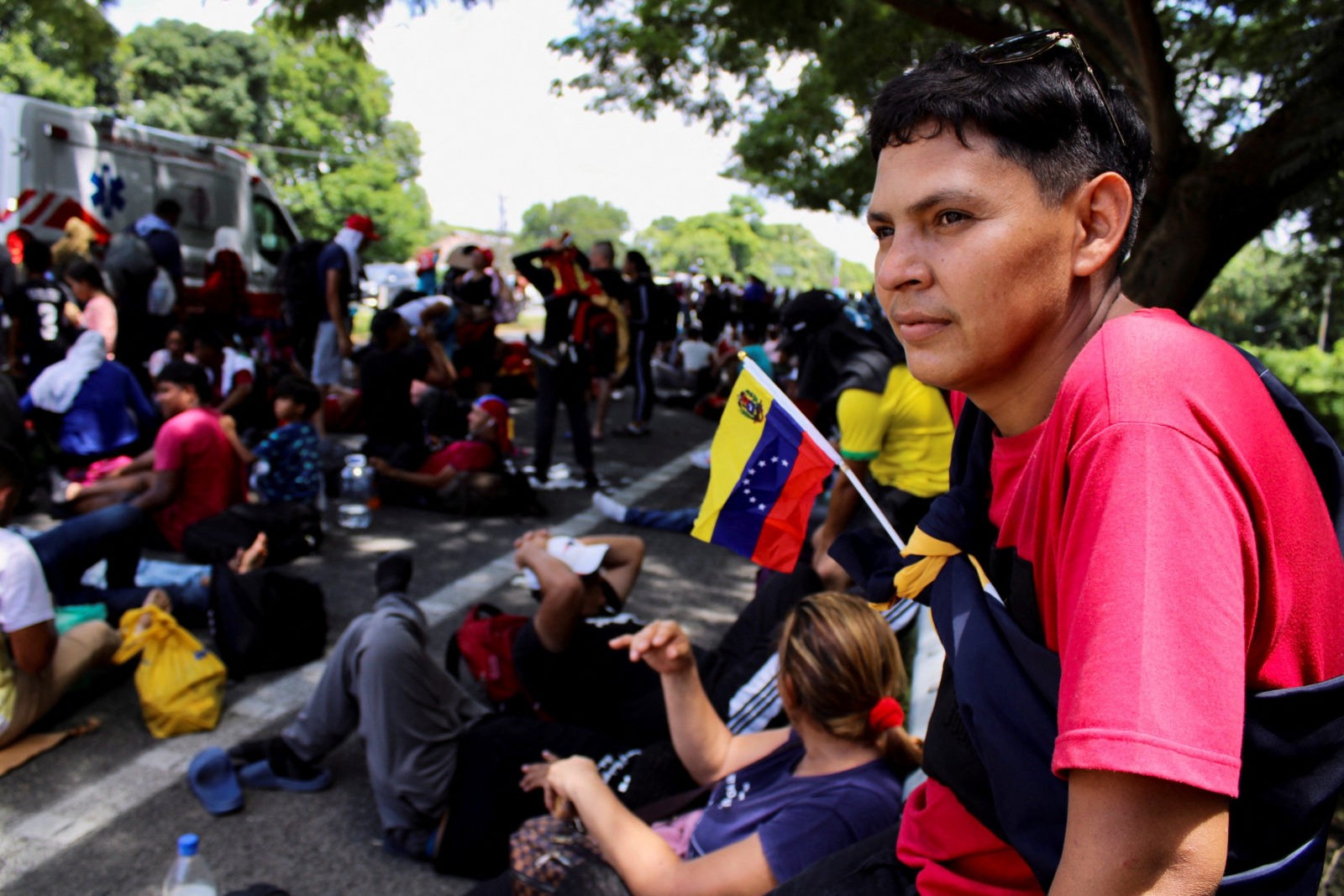
Meanwhile, media coverage has recently focused on Venezuelans attempting to reach the United States through dangerous routes like the Darien Gap in Panama. According to U.S. migration data, about 150,000 Venezuelan migrants arrived at the southwest border between October 2021 and August 2022, representing only 5.43 percent of the 2.76 million total arrivals.
The Venezuelan migration situation has also become a significant funding channel, with the U.S. government having allocated over $1.2 billion to Latin American countries for “response to the Venezuela regional crisis” through January 2021. Colombia alone received $950 million between 2017-2020, with an additional $376 million announced in September 2022.
As the economic situation in Venezuela continues to evolve, many migrants maintain deep connections to their homeland. “I think about returning to Venezuela every single day,” said one woman now living in Ecuador, who hopes to save enough money to resume her previous work as a social worker at a school for children with disabilities.
Fact Checker
Verify the accuracy of this article using The Disinformation Commission analysis and real-time sources.

20 Comments
This is a complex issue that deserves careful examination. While media narratives may fall short, the human stories of Venezuelans impacted by economic hardship and migration are deeply concerning.
Agreed. Gaining a nuanced understanding of the factors driving the Venezuelan migration, including the role of sanctions, is essential for finding constructive solutions.
The Venezuelan migration story is a sobering reminder that economic policies can have profound human consequences. It’s important to consider the full context and impact beyond just media narratives.
Absolutely. Maintaining objectivity and compassion is key to understanding the complexities of this issue and working towards constructive solutions.
The scale of the Venezuelan migration is staggering. I’m curious to learn more about the country’s modest economic recovery and how that might impact the decision for some to return home.
That’s an insightful point. The ability to rebuild lives and livelihoods could be a significant factor in Venezuelans’ decisions to stay or return.
The Venezuelan migration story highlights the need for a balanced, fact-based approach to reporting on the impacts of economic sanctions and geopolitical tensions. The human element must not be overlooked.
Agreed. Focusing solely on the political dynamics can distract from the very real hardships faced by ordinary citizens caught in the crossfire.
The Venezuelan migration crisis highlights the need for a more holistic approach to reporting on the intersection of economics, politics, and human rights. Simplistic narratives risk overlooking the real-world impacts on families.
Well said. Maintaining balance and empathy in the face of complex global issues is crucial for addressing the root causes and finding sustainable solutions.
This is a complex issue with significant humanitarian implications. While media narratives may oversimplify, the hardships experienced by Venezuelan families leaving their homeland deserve thoughtful consideration.
Absolutely. Sanctions are a blunt tool, and their impact on vulnerable populations should be carefully weighed against their intended policy goals.
The economic challenges faced by Venezuelans due to sanctions and the resulting migration are concerning. It’s important to understand the full context and impact beyond just media narratives.
Agreed, the human stories and perspectives of those directly affected are crucial. Economic warfare can have devastating consequences for ordinary citizens.
The Venezuelan migration story is a sobering example of how economic policies can have devastating humanitarian consequences. It’s crucial to understand the full context beyond just media narratives.
Well said. Maintaining objectivity and empathy in the face of polarized debates is key to addressing these complex global challenges.
This is a sobering reminder that economic policy decisions can have profound human consequences. Understanding the nuances beyond media narratives is crucial for addressing these complex global challenges.
Well said. Maintaining objectivity and compassion in the face of polarized narratives is key to finding constructive solutions.
While the media narratives surrounding Venezuelan migration may be oversimplified, the underlying economic challenges and their impact on families are undeniable. Thoughtful analysis is required to address this complex issue.
Absolutely. Nuanced perspectives that consider the full context, including the role of sanctions, are essential for finding meaningful solutions.