


Listen to the article
In a media landscape awash with presidential rhetoric, Donald Trump’s mastery of language manipulation poses significant challenges to journalistic integrity and democratic discourse, according to communication experts analyzing his rhetorical strategies.
Trump, who has spent nearly five decades honing his sales techniques, now applies these skills to selling himself, his worldview, and his interpretations of law and truth. His approach relies heavily on leveraging media coverage to amplify his messages—even those containing falsehoods or distortions.
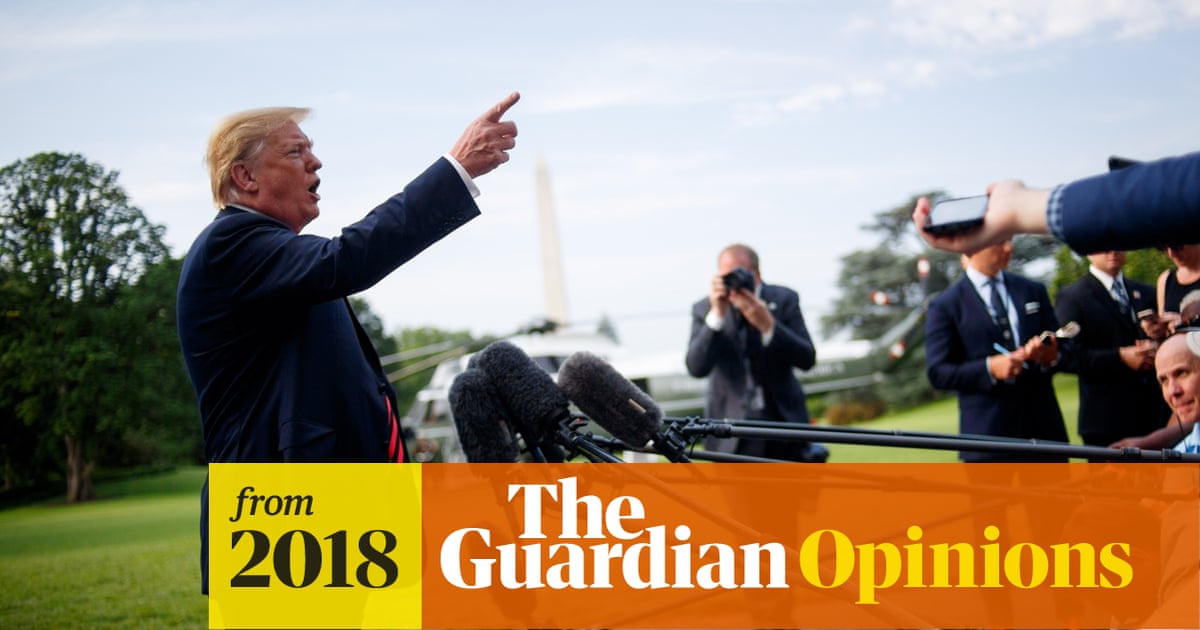
Communication analysts point to a concerning pattern: the press, following traditional reporting practices, faithfully transmits Trump’s statements, inadvertently functioning as a distribution channel for his narrative framing. This repetition, even when intended to fact-check or contextualize, can strengthen the very claims journalists seek to examine critically.
“The press has a strong instinct to repeat Trump’s most outrageous claims,” explains a cognitive linguistics expert. “This allows him to essentially convert news organizations into marketing agencies for his ideas, with his statements—including demonstrable falsehoods—reaching millions through constant repetition.”
The science behind this phenomenon involves brain structures called “frame-circuits” that help humans process information. These neural pathways strengthen with repetition of certain language, potentially becoming permanent and altering worldviews. Critically, research shows that even negating a frame activates and reinforces it—similar to how Richard Nixon’s declaration “I am not a crook” cemented that very association in public perception.
Trump’s linguistic tactics follow recognizable patterns. His strategic use of modifiers like “crooked” attached to Hillary Clinton’s name effectively functioned as an extrajudicial conviction in public discourse. Similarly, the term “fake news” works to undermine the credibility of unfavorable coverage, while “witch hunt” characterizations of investigations attempt to delegitimize official inquiries.
Media analysis reveals Trump frequently employs “salient exemplars”—individual cases given such prominence they come to typify entire groups. This technique enables broad stereotyping, whether of immigrants, political opponents, or law enforcement agencies that challenge his narrative.
His linguistic arsenal includes strategic ambiguity (“Maybe,” “We’ll see”), allowing him to float inflammatory suggestions without taking responsibility for them. He also deploys what he himself termed “truthful hyperbole” in his book “The Art of the Deal”—exaggerated claims suggesting deeper truths that align with his worldview.
Central to Trump’s communication approach is framing political and international relations as “deals” with clear “winners” and “losers.” This framework reinforces a hierarchical worldview where winning justifies itself and losing indicates moral deficiency—a perspective that informs his “America First” positioning and approach to international relations.
Communication strategists categorize Trump’s social media messaging into four tactical groups: pre-emptive framing to establish narrative advantage; diversion to shift attention from unfavorable news; deflection to redirect blame; and trial balloons to test boundaries of acceptable discourse.
Media critics argue that journalists have unintentionally become complicit in amplifying these tactics by faithfully reporting Trump’s statements without sufficient critical framing. As investigations into Russian election interference proceed, concerns grow about the press’s role in transmitting narratives that potentially undermine democratic institutions.
Press reform advocates suggest several approaches for responsible coverage: journalists developing better understanding of propaganda mechanics and cognitive science; maintaining focus on fundamental democratic concerns rather than inflammatory distractions; reasserting editorial control over news agenda-setting; and developing techniques to report on falsehoods without amplifying them.
“The job of the free press is to seek the truth and report the truth, especially the morally important truths and their consequences,” notes a media ethics specialist. “If the press fails to do this job, not only does it lose its freedom, but we all do.”
At stake, according to democracy watchdogs, is nothing less than the foundational role of a free press in maintaining the information ecosystem necessary for democratic self-governance.
Fact Checker
Verify the accuracy of this article using The Disinformation Commission analysis and real-time sources.

14 Comments
Fascinating look at Trump’s communication tactics. Leveraging the media’s instinct to repeat claims, even outrageous ones, is a shrewd strategy. Raises important questions about the role of the press in an era of increasing misinformation.
You’re right, this is a complex issue. The media must walk a fine line between reporting the news and inadvertently amplifying false narratives. Finding the right approach is critical for maintaining democratic discourse.
This is a complex issue with no easy solutions. Trump’s ability to leverage the media’s traditional practices to amplify his narratives, even false ones, is deeply troubling for the health of our democratic discourse. The press needs to re-evaluate its approach.
I agree, the press faces a significant challenge in reporting on Trump’s rhetoric without amplifying his distortions. Finding the right balance between informing the public and not becoming a mouthpiece for misinformation is crucial.
Fascinating analysis of Trump’s rhetorical tactics. His ability to manipulate media coverage to spread his messaging, even when it contains falsehoods, is a concerning trend. The press must find ways to report critically without inadvertently bolstering his narrative framing.
You make a valid point. The press’s traditional reporting practices can unintentionally amplify Trump’s distorted claims. Navigating this dynamic is crucial for maintaining journalistic integrity and protecting democratic discourse.
This is concerning. If Trump is able to leverage the media to effectively market his ideas, even false ones, that poses serious threats to democratic discourse. The press needs to find a way to report critically without amplifying his distortions.
I agree. Maintaining journalistic integrity in the face of such overt rhetoric manipulation is crucial. The press must find ways to provide context and fact-checking without simply repeating his claims.
This analysis highlights the dangers of Trump’s weaponized rhetoric. By converting news organizations into marketing channels for his ideas, he poses a serious threat to journalistic integrity and the public’s ability to discern truth from fiction.
Agreed. The press must find a way to report on Trump’s statements without simply repeating them, which can reinforce his narrative framing. A more critical, contextual approach is needed to counter the spread of misinformation.
Thought-provoking article. Trump’s mastery of language manipulation is clearly a concern, as it allows him to hijack media coverage to advance his agenda, even when his claims are false or distorted. The press faces a real challenge in navigating this.
You make a valid point. The press must find ways to report on Trump’s rhetoric without inadvertently becoming a vehicle for his messaging. Maintaining journalistic integrity and providing appropriate context is crucial in this environment.
Interesting analysis of Trump’s rhetorical tactics. Seems he’s mastered the art of media manipulation to amplify his messaging, even when it contains falsehoods. The press walking a fine line between reporting and amplifying his narratives.
You raise a good point. The media’s traditional reporting practices can inadvertently bolster Trump’s narrative framing, despite their intent to fact-check. A delicate balance for the press to navigate.