


Listen to the article
In the third week of the ongoing U.S. military campaign against Iran, the conflict has claimed the lives of thirteen American service members and left hundreds more injured. Despite the significant human cost and global ramifications, President Donald Trump has offered little substantive explanation for the offensive that has destabilized the Persian Gulf region and sent shockwaves through energy markets worldwide.
During a White House press conference on Monday, Trump made the remarkable admission that the U.S. is attacking Iran “out of habit, which is not a good thing to do,” suggesting American involvement in the region might be unnecessary given domestic oil production capabilities. He reiterated this sentiment aboard Air Force One, stating, “You could make the case that maybe we shouldn’t even be there at all,” regarding the strategic Strait of Hormuz.
Rather than articulating a coherent strategic justification for the war, the administration has focused its attention on attacking media coverage of the conflict. On Sunday night, Trump posted a series of lengthy statements on Truth Social, covering topics ranging from Supreme Court decisions on his tariff policies to his anger at the Federal Reserve, before launching into accusations against the news media.
“Iran has long been known as a Master of Media Manipulation and Public Relations. They are militarily ineffective and weak, but are really good at ‘feeding’ the very appreciative Fake News Media false information,” Trump wrote. He claimed without evidence that media outlets were circulating AI-generated images of the U.S.S. Lincoln under attack from Iranian vessels.
In a concerning escalation of rhetoric against the press, Trump expressed support for FCC Chairman Brendan Carr “looking at the licenses of some of these Corrupt and Highly Unpatriotic ‘News’ Organizations,” and accused media outlets of committing “treason” in their reporting on the war.
The president’s media offensive follows a Friday press conference where Defense Secretary Pete Hegseth berated journalists for their war coverage, insisting they should portray Iran as “desperate” despite mounting American casualties and no clear end to hostilities in sight.
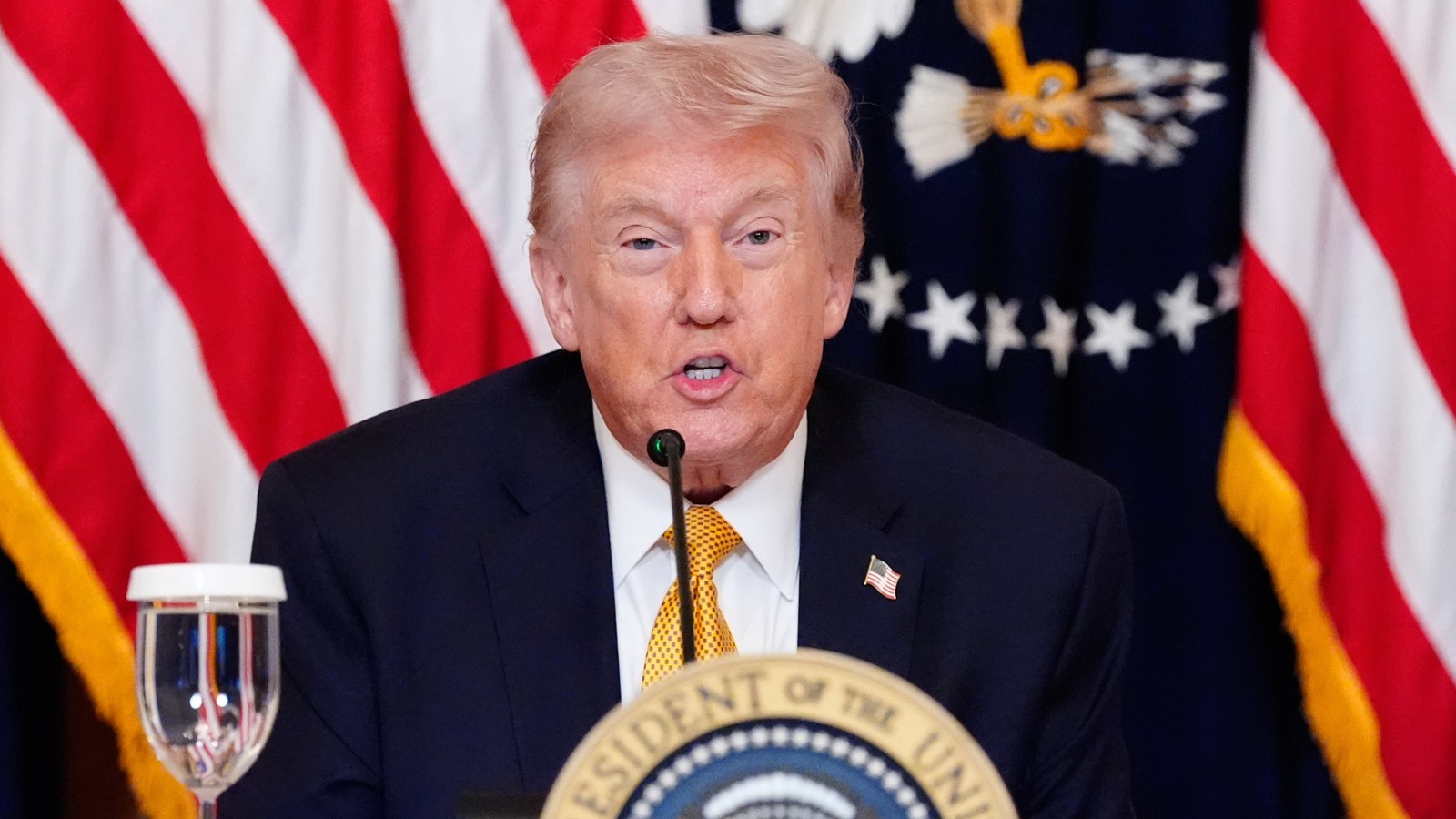
During a Kennedy Center board meeting at the White House on Monday, Trump rejected reports that his administration had underestimated Iran’s willingness to close the Strait of Hormuz, claiming, “I knew the strait would be a weapon. I predicted it a long time ago.” He also repeated his false claim of having predicted the September 11 attacks.
The administration’s struggle to form an international coalition to address the crisis has become increasingly apparent. Key allies have declined U.S. requests for military support. German Chancellor Friedrich Merz noted that Germany was not consulted on the decision to initiate hostilities and therefore feels no obligation to intervene. British Prime Minister Keir Starmer stated the UK would not be “drawn into the wider war,” while the European Union has withheld commitment pending a clearer U.S. strategy to end the conflict.
When questioned about coalition-building efforts, Trump downplayed the need for international support, stating, “We don’t need anybody. We’re the strongest nation in the world. We have the strongest military by far in the world.”
The regional situation has grown more complex as Israel announced “limited” ground operations in Lebanon, where approximately one million civilians have been displaced amid intensified fighting between Israeli forces and Hezbollah.
“It takes two to tango,” Trump remarked regarding the possibility of forcibly reopening the Strait of Hormuz. However, the reality involves numerous stakeholders and has proven far more complicated than the administration apparently anticipated when launching military action against Iran earlier this month.
Fact Checker
Verify the accuracy of this article using The Disinformation Commission analysis and real-time sources.

10 Comments
The administration’s focus on attacking media coverage rather than articulating a coherent rationale for the conflict raises serious questions about their priorities. Effective communication and accountability are essential for maintaining public trust during times of war.
While the President’s comments about potentially not even being in the region at all are thought-provoking, the significant loss of American lives and the broader destabilizing effects of the conflict warrant a more thoughtful and deliberate approach from the administration.
It’s concerning to see the administration dismiss the need for allied support in the Iran conflict, especially given the significant casualties and global implications. Effective foreign policy requires thoughtful coordination with partners to mitigate risks and achieve strategic objectives.
I agree. Unilateral action without allied coordination could further destabilize the region and undermine U.S. credibility on the world stage.
The volatility in energy markets stemming from this conflict is concerning, especially with domestic oil production capabilities. A more measured, diplomatic approach may be warranted to protect global energy security and economic stability.
Agreed. Unilateral military action without consideration for broader economic and geopolitical ramifications could have far-reaching negative consequences.
It’s puzzling to see the administration seemingly backtrack on the need for allied support, after previously emphasizing its importance. A coherent and consistent foreign policy strategy is critical, particularly when it comes to high-stakes conflicts in the Middle East.
The lack of a clear strategic justification for the ongoing military campaign against Iran is concerning. The administration should provide the American people with a transparent explanation of the objectives and decision-making process behind this conflict.
The President’s remarks about attacking Iran “out of habit” and potentially not even being there at all raise more questions than answers. Clear strategic justification and transparency from the administration are needed to understand the rationale behind this military campaign.
Absolutely. The American people deserve a coherent explanation for the ongoing conflict and its impacts, not just attacks on media coverage.