


Listen to the article
Russia’s Digital Disinformation Campaigns Reshape African Information Landscape
Russian-backed disinformation networks have intensified their operations across African media ecosystems, exploiting the continent’s rapid digital expansion to manipulate public opinion at unprecedented scale and speed.
Over the past seven years, Africa has experienced a digital revolution with more than 300 million new social media users joining online platforms. Today, the continent boasts over 400 million active social media users and 600 million internet users, with countries like Nigeria and Kenya ranking among the highest globally for time spent on these platforms. Notably, these nations also report the greatest concern about false and misleading information.
The digital transformation has created fertile ground for sophisticated disinformation campaigns, particularly in West Africa, where Russian operatives have refined their tactics through successive military coups.
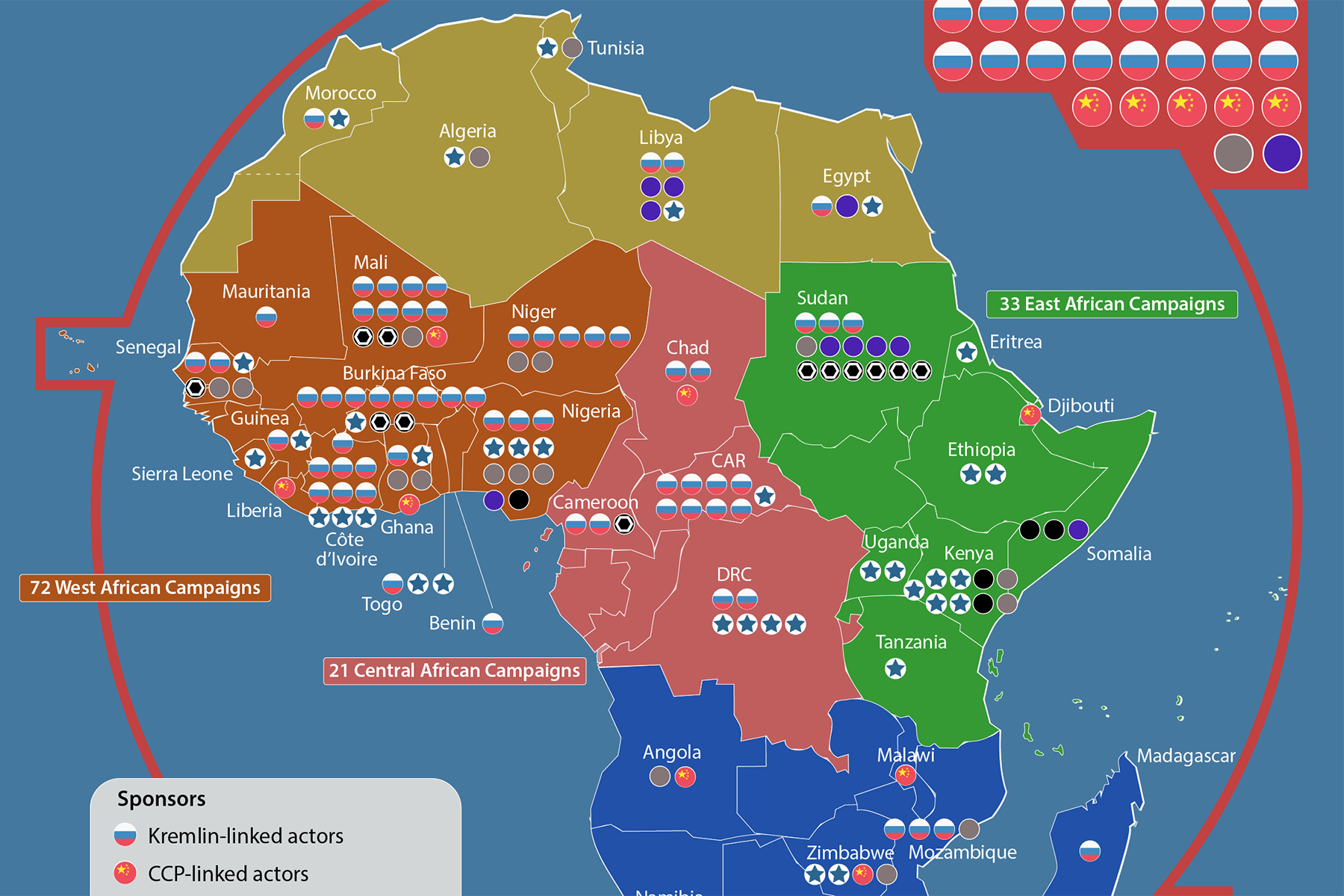
Niger’s 2023 military takeover represents the latest target of this coordinated strategy, following similar Russian information operations in Mali and Burkina Faso. The campaign surrounding Niger’s coup demonstrates an increasingly sophisticated playbook that combines online networks, cultivated local assets, and Russian state media to flood the information space with manufactured content.
Even before the July 2023 coup, Wagner-linked Telegram channels had identified Niger as a future target following Burkina Faso’s October 2022 military takeover. These networks twice attempted to spark coup rumors in Niger, including a carefully orchestrated online scheme coinciding with President Mohamed Bazoum’s foreign trip in February 2023.
As the actual coup unfolded in July, Yevgeny Prigozhin, then-leader of the Wagner Group, publicly endorsed the military takeover via Telegram while attending the Russia-Africa Summit in St. Petersburg. Wagner-affiliated networks amplified his message, encouraged violent suppression of pro-democracy demonstrations in Niamey, and framed the events as both anti-French and pro-Russian.
The sheer volume of false claims overwhelmed fact-checkers and paralyzed citizens’ ability to respond effectively. One Nigerien citizen described the disorienting effect: “I’ve had to distance myself from everything because I don’t know what’s true and what’s not… Everything seems to be a lie or exaggerated.”
Following the coup, Wagner assets worked to undermine negotiation attempts between Niger’s military junta and regional mediators. Their networks distributed inflammatory content across multiple platforms—Telegram, WhatsApp, Twitter (now X), Facebook, and traditional outlets like Afrique Média—designed to heighten mistrust of diplomatic processes. False claims about imminent ECOWAS invasions and French fighter jets landing in Senegal to support regional forces spread rapidly.
Simultaneously, Russian campaigns promoted Wagner mercenaries as a solution to Niger’s security challenges, with content related to Niger increasing by a staggering 6,645 percent across 45 Russian state and Wagner Telegram channels in the month following the coup. This coordinated effort aimed to cement the military junta’s position and strengthen its association with Russia.
The Wagner Group and affiliated Russian interests have established a pattern of information manipulation that begins before military takeovers and continues long after, using multiple platforms and local proxies like the Union des Patriotes Panafricanistes (UNPP) and Groupe Panafricain pour le Commerce et l’Investissement (GPCI).
These information operations exploit legitimate local grievances while advancing Russian geopolitical interests. As Africa’s digital connectivity continues to expand, the continent faces growing vulnerability to such coordinated disinformation campaigns that can rapidly reshape public opinion and undermine democratic processes.
Regional security experts warn that without robust digital literacy initiatives and stronger platform governance, Russian-backed information operations will likely target additional countries experiencing political instability across the continent.
Fact Checker
Verify the accuracy of this article using The Disinformation Commission analysis and real-time sources.

21 Comments
This article highlights the urgent challenge of combating coordinated disinformation campaigns targeting Africa’s rapidly evolving media landscape. A collaborative, multi-pronged approach will be crucial to safeguarding the region’s democratic progress.
Worrying to see how foreign actors are exploiting Africa’s digital transformation to spread disinformation and undermine democratic processes. Enhancing digital literacy and fact-checking capacity will be essential to building societal resilience.
Well said. Protecting the integrity of information flows is vital for upholding democratic values and empowering African citizens to make informed decisions.
This article highlights the complex challenge of combating digital misinformation, especially in regions with rapid technology adoption. Strengthening digital literacy is paramount to empowering African citizens.
Agreed. Equipping the public with the tools to identify and resist manipulation is essential for maintaining an informed, resilient populace.
Russia’s coordinated disinformation campaigns targeting Africa are a troubling development. Enhancing media literacy and supporting independent journalism will be crucial to building societal resilience.
Well said. Safeguarding the integrity of information flows is essential for maintaining an informed, engaged citizenry and strengthening democratic institutions.
This article highlights the growing threat of foreign-backed disinformation networks in Africa. Strengthening digital literacy and fact-checking capacity will be critical to countering these manipulative tactics.
This is a sobering reminder of the vulnerabilities created by the rapid growth of social media and internet access in Africa. Robust fact-checking and media literacy initiatives will be key to building resilience.
Concerning to see the spread of disinformation in Africa fueled by foreign actors. Media literacy and critical thinking are key to combating these manipulative campaigns and protecting democracy.
Absolutely. Responsible media oversight and fact-checking will be crucial to curbing the influence of these coordinated disinformation networks.
Concerning to see the scale and sophistication of Russia’s disinformation operations in Africa. Strengthening digital literacy, supporting independent journalism, and enhancing platform accountability will all be essential to addressing this threat.
Absolutely. Empowering citizens with the ability to critically evaluate online content is key to building a more resilient, well-informed public.
The article underscores the need for a comprehensive, multi-stakeholder approach to combating digital disinformation in Africa. Strengthening media literacy, supporting independent journalism, and enhancing platform accountability will all be crucial.
The digital transformation of Africa has opened new avenues for foreign influence operations. Vigilance and international cooperation will be needed to safeguard the integrity of African media and elections.
Well said. Coordinated efforts between governments, tech platforms, and civil society will be crucial to countering these sophisticated disinformation campaigns.
Disturbing to see Russia exploiting Africa’s digital transformation to spread disinformation and sow discord. Strengthening digital literacy and independent media will be essential to combat these manipulative tactics.
Absolutely. Empowering citizens with the ability to critically evaluate online content is crucial to maintaining the integrity of the information landscape.
Concerning to see how rapidly disinformation can spread in Africa’s rapidly digitizing media landscape. Collaborative solutions involving governments, tech companies, and civil society will be key to addressing this challenge.
Absolutely. Empowering citizens with the tools to critically evaluate online information is essential for maintaining a healthy, resilient public discourse.
The article highlights the urgent need to address the surge of digital disinformation in Africa. Collaborative solutions between governments, tech companies, and civil society will be key to protecting democracy.