


Listen to the article
As TikTok Reshapes Africa’s Information Landscape, Concerns Over Misinformation Grow
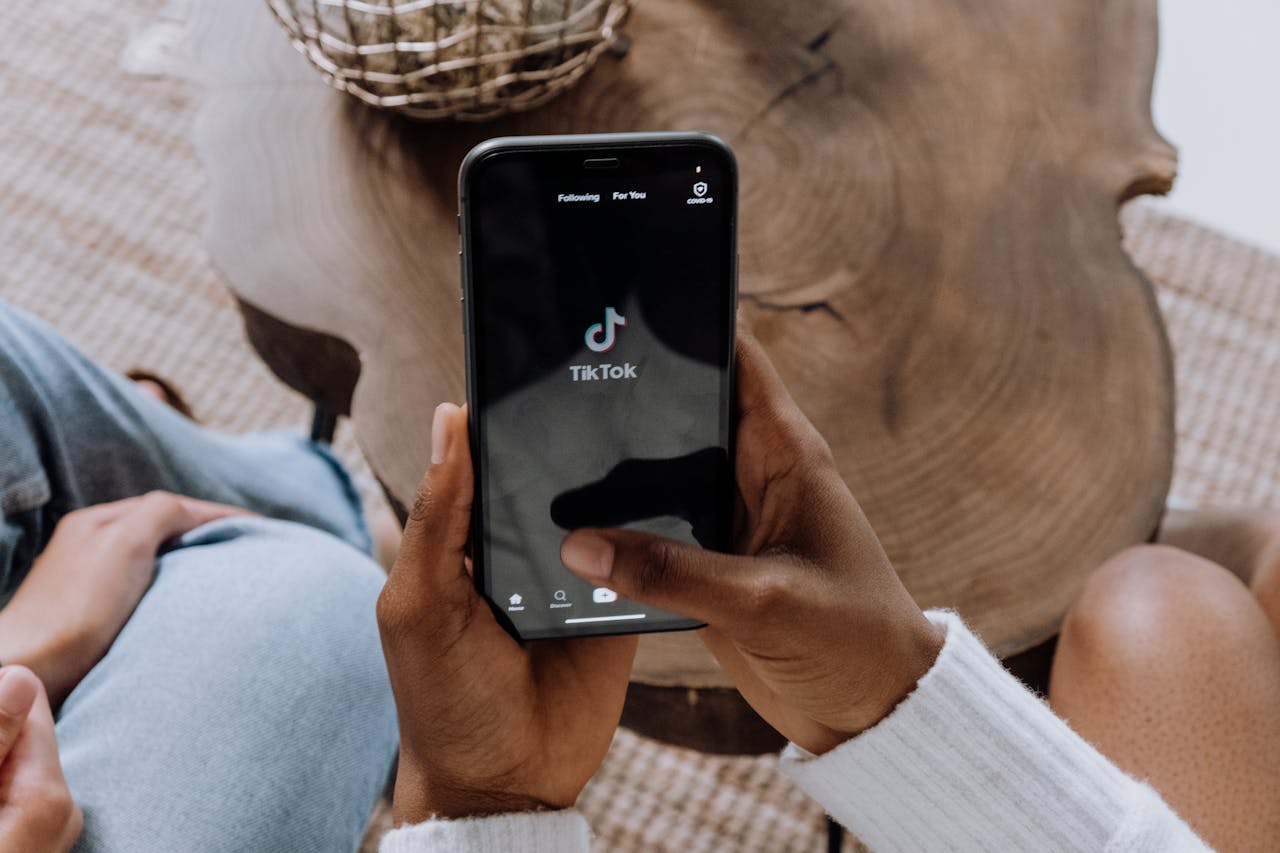
TikTok has undergone a remarkable evolution across Africa, transforming from an entertainment platform known for dance trends into one of the continent’s most influential sources of news and information. This rapid shift is reshaping how millions of Africans consume political, conflict, and security news, bringing both unprecedented accessibility and serious challenges.
Recent surveys highlight the platform’s growing dominance in Africa’s media ecosystem. A 2024 study spanning five African countries found that 84 percent of respondents now rely on social media for news, with half specifically citing TikTok as their primary source. Traditional media outlets like television and radio garnered trust from fewer than 16 percent of respondents. The platform’s penetration varies by country but consistently outpaces adoption rates seen in Europe and North America—38 percent of Kenyan users regularly consume news via TikTok, compared to 33 percent in South Africa and 28 percent in Nigeria.
The rapid shift toward short-form video news consumption has already demonstrated real-world consequences. In Nigeria, TikTok removed over 3.6 million videos between January and March 2025 for violating content standards—a 50 percent increase from the previous quarter. During Niger’s 2023 coup, manipulated videos and fabricated audio recordings distorted public perception of events, complicating both domestic and international responses to the political crisis.
Some countries are implementing targeted interventions to address these challenges. South Africa established a dedicated in-app election center before its May 2024 polls, offering verified information from the Independent Electoral Commission in multiple languages including isiZulu, Afrikaans, Sesotho, Setswana, and English. This initiative combined on-ground teams with algorithmic moderation to remove misleading content with a reported 99 percent success rate.
The situation in Ghana reveals additional dimensions of the problem. The Ministry of Health has issued warnings about scammers impersonating authority figures on the platform, while the Media Foundation for West Africa has called for stronger regulation and digital literacy campaigns. The Ghanaian government has demanded localized content moderation, arguing that global standards fail to reflect the country’s cultural norms.
In Malawi, the real-world implications of TikTok’s influence reached the justice system when authorities convicted a man for insulting the president in a viral video. The court threatened a sentence of up to six years in prison or a fine of approximately £2,600, demonstrating how quickly online content can lead to serious legal consequences.
Several factors explain why amateur TikTok creators now frequently outpace professional journalists in reaching audiences. The platform’s recommendation algorithm heavily rewards early engagement, allowing dramatic but unverified content to spread virally within hours. Creating and publishing content requires minimal resources compared to the labor-intensive process of verification. Content that triggers emotional responses—whether through shocking visuals, outrage, or humor—drives sharing more effectively than accurate but less sensational reporting. Perhaps most concerningly, frequent posting builds a perception of credibility, with audiences often trusting creators who have large followings regardless of their training or verification methods.
These dynamics carry profound implications for the continent. The combination of short videos, emotionally charged commentary, and weak verification mechanisms is deepening political polarization that frequently spills offline. In Nigeria, media watchdogs note that unverified claims now regularly migrate from social media into radio and print journalism, hardening partisan divisions and complicating election coverage and security reporting.
The cross-border nature of TikTok’s reach creates additional challenges. Content can easily travel between countries, creating regional waves of misinformation. A misleading clip uploaded in one country can quickly resurface in neighboring nations, adapted to exploit local political tensions. Following recent coups in the Sahel region, TikTok content promoting pro-junta and anti-Western sentiments circulated widely across Niger, Burkina Faso, and Mali, reinforcing militant narratives and undermining international stabilization efforts.
Some governments have seized upon these issues to justify restrictive regulations. While combating misinformation is the stated goal, critics note that such laws often serve to silence legitimate dissent. This creates a difficult policy balance: unchecked misinformation undermines democratic stability, but overzealous regulation threatens freedom of expression.
Verification on TikTok presents unique challenges. The short life cycles of viral videos often mean that newsrooms cannot confirm facts before content either disappears or spreads beyond control. Platform opacity makes tracking the origins of viral content difficult, hampering early-warning systems that might otherwise identify coordinated disinformation campaigns.
Experts suggest that addressing these challenges requires a multi-faceted approach: empowering local fact-checkers, establishing partnerships with authoritative institutions, increasing public literacy about media manipulation, and holding platforms accountable for the content they amplify. Some promising initiatives are already underway, such as Ghana’s coalition of fact-checking organizations that use AI tools and broadcast partnerships to rapidly debunk false claims.
As TikTok cements its position in Africa’s information ecosystem, the continent faces a critical balancing act: harnessing the platform’s ability to amplify diverse voices while defending against its potential to distort events, influence elections, and complicate security responses. When a single video clip can potentially sway public opinion before verification occurs, finding this balance is no longer optional—it has become an urgent necessity.
Fact Checker
Verify the accuracy of this article using The Disinformation Commission analysis and real-time sources.
