


Listen to the article
Iran’s Digital Battleground: How the Regime Suppressed the Mahsa Amini Protest Movement Online
In what began as the largest anti-regime movement in the Islamic Republic’s history, Iranian users published over 500 million tweets with the hashtag #MahsaAmini by December 2022. Yet within months, the Iranian regime had effectively suppressed this digital dissent through a sophisticated arsenal of both direct and indirect tactics.
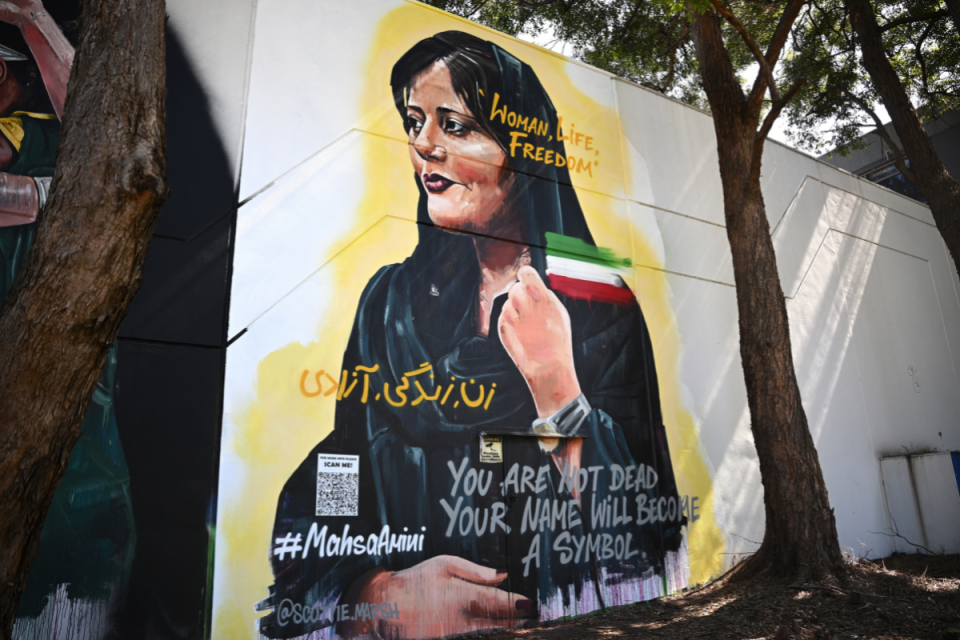
The “Women, Life, Freedom” movement erupted following the death of 22-year-old Mahsa Jina Amini in September 2022 while in custody of Iran’s “morality police” for allegedly violating hijab regulations. What started as protests against women’s discrimination quickly evolved into a nationwide movement challenging the entire regime, with over two million people demonstrating across nearly 160 cities according to researchers.
The regime’s response was brutal. Human rights groups report more than 525 protesters killed, including 71 minors, with approximately 30,000 detained and 1,100 put on trial. But equally significant was the battle waged online, where the government deployed increasingly sophisticated methods to neutralize digital activism.
Beyond Traditional Censorship
While traditional repressive measures like internet shutdowns, blockage, and surveillance formed part of the regime’s strategy, Iranian authorities innovated with more insidious approaches to suppress online dissent.
A two-year longitudinal digital ethnography conducted on Persian Twitter from April 2022 to April 2024, complemented by critical discourse analysis of over 36,000 tweets during the protest’s first two months, revealed several categories of regime-linked infiltrators operating online.
The first category comprised anonymous political accounts that emerged or gained popularity during the protests. Accounts like @anonymousopiran and @javanane_t regularly pronounced that regime overthrow was imminent and published calls for street protests. However, their questionable behavior and inability to verify their authenticity contributed to an environment of confusion and mistrust among protestors.
A second group included non-anonymous accounts belonging to real individuals, including some prominent activists and journalists. Despite showing no direct support for the regime, these accounts occasionally shared unverified information that later proved false. For instance, television host Pouria Zeraati claimed “a large wave of families affiliated with the regime” had arrived in Vancouver, Canada—information that proved unfounded. Similarly, journalist Ali Javanmardi repeatedly shared fabricated stories about Supreme Leader Khamenei’s supposed critical health condition.
The final group consisted of seemingly ordinary user accounts focused on everyday topics. These accounts worked to depoliticize online discourse during critical moments, redirecting attention away from protests toward mundane topics. Often operating in coordinated networks, these users would post nearly identical non-political content to dilute protest messaging.
Sophisticated Disinformation Tactics
Beyond manipulating account types, the regime introduced innovative forms of disinformation that went beyond simple falsehoods. Two strategies proved particularly effective: spreading unverified information and creating elaborately fabricated stories.
The regime planted unverified information that exploited protesters’ hopes and beliefs. A prime example was the false claim that demonstrators had “liberated” the city of Oshnavieh from government control. When this information was later disproven, it dealt a severe blow to protester morale—exactly as the regime intended.
In the case of Nika Shakarami, a 16-year-old who became a symbol of the protests after her death, regime supporters exploited initial information gaps to spread confusion about the circumstances of her death. Only months later did BBC investigations confirm she had been arrested and murdered by authorities, but by then, the momentum of public outrage had diminished.
Particularly concerning were fabricated stories—incidents with varying degrees of falsehood that appeared credible when initially reported. The case of prominent activist Hossein Rounaghi demonstrates this technique. After his arrest, reports circulated that regime forces had broken his legs—information that appeared to come from reliable sources like family members. When photos later showed this was false, regime media used the incident to discredit both Rounaghi and the media outlets that reported the story.
Creating a “Disinformation Vertigo”
The regime’s ultimate goal was to create what might be called “disinformation vertigo”—an environment where truth becomes impossible to discern, and distrust permeates protest communities. In this atmosphere, each user and narrative could potentially be part of a regime disinformation campaign.
This strategy bore fruit in the months following the movement’s peak, when supporters of different anti-regime figures began accusing each other of cooperating with the government. Without trust among protesters, effective online unity became impossible.
The Iranian case offers a crucial lesson for digital activism globally: opposition to authoritarian regimes can only succeed when movements develop countermeasures that prevent them from falling into sophisticated disinformation traps. Greater transparency about connections and activities may provide a starting point to combat the invisible dimensions of online manipulation.
As digital battlegrounds become increasingly important in political struggles worldwide, the Iranian regime’s innovations in suppressing the #MahsaAmini movement provide a sobering case study of how authoritarian governments are adapting to—and sometimes prevailing against—digital dissent.
Fact Checker
Verify the accuracy of this article using The Disinformation Commission analysis and real-time sources.

10 Comments
It’s chilling to see the lengths the Iranian regime went to suppress the online #MahsaAmini protest movement. The article lays bare their sophisticated toolkit for digital repression – from fake accounts to technical disruptions. This underscores how critical the online space has become for challenging authoritarian rule.
Absolutely. The regime’s digital tactics are a stark reminder that the internet is no longer a free and open space, especially in closed societies. Authoritarian governments are becoming increasingly adept at using technology to monitor, censor and crush online dissent.
The scale of online activism around #MahsaAmini is remarkable – over 500 million tweets in just a few months. But the regime’s ability to suppress this digital dissent is equally staggering. It shows their determination to crush all forms of opposition, even in the virtual realm.
Exactly. The regime’s sophisticated digital tactics to quash online protest movements is a disturbing trend we’re seeing across authoritarian states. It’s a grim reminder of how technology can be weaponized against citizens.
The Iranian regime’s coordinated effort to suppress the #MahsaAmini protest movement online is a troubling case study in modern digital authoritarianism. The scale and sophistication of their tactics, from fake accounts to technical disruptions, show how vital the virtual sphere has become for challenging repressive rule. A concerning trend indeed.
Agreed, this is a clear demonstration of how authoritarian regimes are evolving their repressive strategies to the digital age. The Iranian government’s response to the #MahsaAmini protests underscores the urgent need to protect online spaces for free expression and civic activism.
Disturbing to see how the Iranian regime ruthlessly suppressed the online protest movement against Mahsa Amini’s death. Silencing digital dissent seems as much a priority as the violent crackdown on street protests. This speaks to the regime’s fear of free expression and public scrutiny.
You’re right, the regime’s digital tactics are just as alarming as the physical repression. Controlling the narrative online is crucial for authoritarian regimes to maintain power in the face of public outrage.
The details on how the Iranian regime targeted Persian Twitter to silence the #MahsaAmini protests are really eye-opening. From coordinated troll campaigns to technical disruptions, they seem to have an extensive playbook for online repression. Clearly digital activism poses a real threat to their control.
You make a good point. The regime’s digital crackdown shows how far they’ll go to maintain their grip on power, even in the virtual sphere. It’s a sobering example of how authoritarians can leverage technology to quash dissent and control the narrative.