


Listen to the article
Nigerian Vice President Praises Media’s Resistance to Foreign Manipulation
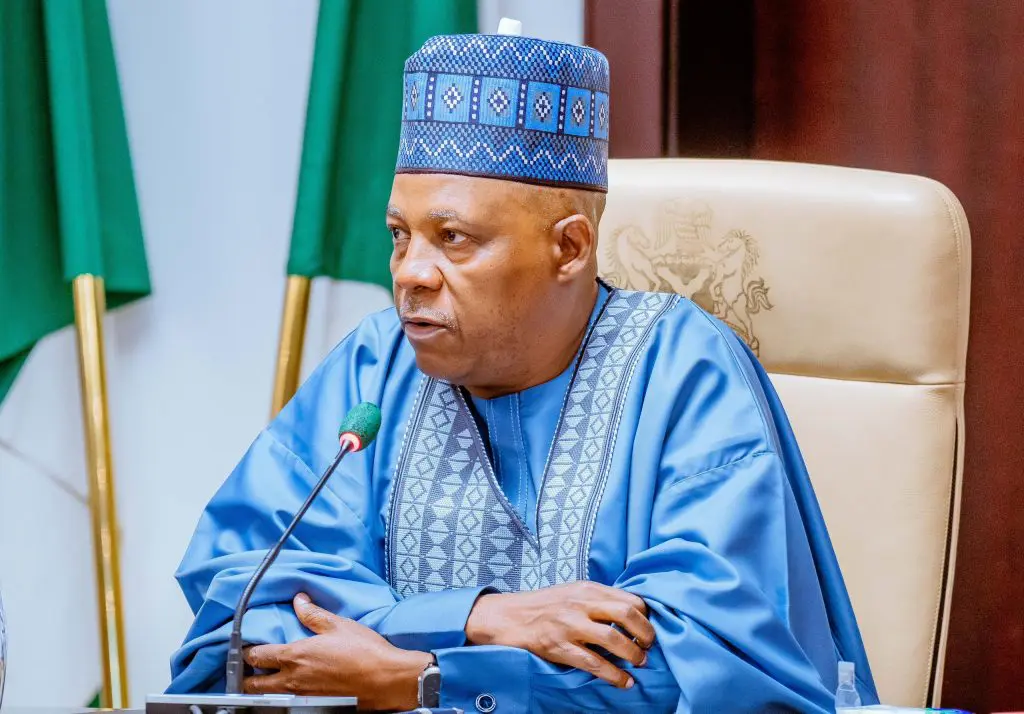
Vice President Kashim Shettima has commended Nigerian media organizations for their integrity in confronting what he termed “the rising tide of Foreign Information Manipulation and Interference.” Speaking at the 2025 Conference and Annual General Meeting of the International Press Institute (IPI) Nigeria on Tuesday, Shettima emphasized the crucial role media plays in preserving democratic principles.
The conference, held in Abuja under the theme “Addressing Media Repression and Safeguarding Democratic Accountability in Nigeria,” provided a platform for the Vice President to acknowledge the country’s robust media landscape.
“One thing you have never failed to do is rise in defense of the public’s right to know,” Shettima told the gathering of media professionals. “You have confronted those who sought to suffocate this oxygen of our democracy, and in moments of national confusion, you stepped forward to correct misinformation.”
He particularly praised mainstream Nigerian journalists for standing firm against disinformation campaigns, distinguishing them from what he described as a minority who “chase notoriety by manipulating unverified data and manufacturing obvious lies—those who prefer viral fiction to verified facts.”
The Vice President stressed that ethical responsibility remains fundamental to journalism’s longevity and effectiveness. “The pen is only mightier than the sword when it is deployed in the pursuit of justice and objectivity,” he noted. “Without ethics, journalism becomes nothing more than a dictatorship of text and airwaves, a distortion chamber where truth is suffocated by dangerous agendas.”
Shettima’s remarks come at a critical time when many nations across Africa are grappling with information warfare and coordinated disinformation campaigns from both domestic and foreign actors. Nigeria, Africa’s most populous nation and largest economy, has increasingly become a target for such operations, particularly during election cycles and periods of social unrest.
The Vice President characterized the media’s role as extending beyond mere government watchdog, suggesting journalists have a responsibility to “save democracy” not just from political overreach but also from politicians’ self-destructive tendencies. “Democracy is safe only when power is under constant observation. And it is safe only when those who observe do so with integrity rather than vendetta,” he said.
While acknowledging the often adversarial relationship between journalists and politicians—likening it to “the friendship of a cat and a mouse”—Shettima advocated for more collaborative engagement. “We are better off as friends,” he suggested, while recognizing the inherent tensions when interests collide.
The Vice President highlighted Nigeria’s historical resilience against media suppression, asserting that “it is impossible, utterly impossible, to have a successful dictator in Nigeria.” He credited this to the strength and persistence of the country’s media institutions, which have “stood firm in the coldest nights of national adversity” and outlived attempts to restrict press freedom.
However, Shettima also pointed to shortcomings within the industry, noting that some journalists “knowingly fabricate tales” and “refuse to retract falsehood even when confronted with evidence.” These “bad actors,” he warned, undermine the integrity of the profession.
Concluding his address, the Vice President reaffirmed the government’s commitment to protecting press freedom. “We owe you a space of practice devoid of harassment, intimidation, or fear. That much is non-negotiable,” he stated. “As a government, we must continue to create an environment where truth can thrive without obstruction and where the work you do is protected rather than policed.”
The IPI, a global network of media executives, editors, and leading journalists, has been actively advocating for press freedom and improved journalistic standards in Nigeria, where reporters continue to face challenges ranging from legal harassment to physical threats in their pursuit of accountability journalism.
Fact Checker
Verify the accuracy of this article using The Disinformation Commission analysis and real-time sources.

16 Comments
In an age of rampant disinformation, the Nigerian media’s commitment to truth and integrity is commendable. Kudos to them for standing up to foreign attempts at undermining democracy.
Absolutely. A strong, independent media is the best defense against foreign manipulation and influence. Nigeria seems to have journalists willing to fulfill this vital civic duty.
Domestic media outlets have a key role to play in combating foreign propaganda and manipulation. It’s good to see the Nigerian government supporting this important function.
Agreed. A vibrant, independent press is essential for informing the public and holding leaders accountable, even in the face of foreign disinformation efforts.
Glad to hear the Nigerian media is standing up to foreign manipulation. It’s crucial for democracy that the press remains vigilant and independent in the face of disinformation campaigns.
Absolutely, a free and responsible media is the bedrock of a healthy democracy. Kudos to the Nigerian journalists for fulfilling their duty.
Kudos to the Nigerian media for standing firm against the tide of foreign-backed disinformation. Maintaining public trust and democratic transparency requires courageous journalism.
Absolutely. The Vice President’s praise for the media’s integrity is well-deserved, and reflects the vital role they play in Nigeria’s democratic process.
Maintaining an independent and ethical media is a constant challenge, but it’s heartening to see the Nigerian government recognize its importance. Preserving democratic accountability requires a free press.
Absolutely. The Vice President’s acknowledgment of the media’s role in combating misinformation is an encouraging sign for Nigeria’s democratic health.
It’s heartening to see the Nigerian government recognize the importance of a free and responsible press in combating foreign information manipulation. Safeguarding democratic principles requires a vigilant media.
Agreed. The media’s ability to fact-check, counter misinformation, and hold leaders accountable is crucial for preserving democratic institutions and public trust.
Strong media institutions are vital for maintaining public trust and informing citizens. It’s encouraging to see the Nigerian government recognize and support this important role.
Agreed. Shettima’s praise for the media’s integrity and resistance to foreign interference is a positive sign for Nigeria’s democratic development.
In an era of widespread disinformation, the ability of national media to fact-check and counter manipulation is crucial. Nigeria seems to have a robust press corps willing to fulfill that responsibility.
Yes, the media plays a critical watchdog function, especially against foreign actors seeking to sow discord. Kudos to the Nigerian journalists upholding this vital democratic principle.