


Listen to the article
Russian Media Tactics Falter as Local Protests Gain Momentum
Russia’s state-run media machine, long adept at shaping public opinion through carefully controlled narratives, appears to be losing its grip on the Russian information space. Recent protests in the city of Yekaterinburg have exposed growing cracks in the Kremlin’s propaganda techniques, challenging the government’s ability to control how domestic events are portrayed and perceived.
In mid-May, residents of Yekaterinburg took to the streets to protest plans to build an Orthodox church in one of the city’s few remaining green spaces. What began as a local dispute over urban planning quickly escalated into a significant demonstration of civic activism, drawing thousands of participants and capturing the attention of hundreds of thousands more through social media and independent news outlets.
After a week of confrontations that saw approximately 100 protesters detained, authorities eventually yielded to public pressure and removed the fence around the construction site. By May 21, protesters had secured a temporary victory, demonstrating an unprecedented level of effective civic participation.
The state-controlled media’s response to these events revealed several weaknesses in their traditional approach. Initially, Russia’s two main television channels—Channel One and Russia 1—attempted to minimize coverage of the protests. This tactic, which had worked for similar demonstrations in Arkhangelsk and Ingushetia, proved ineffective as independent media and social networks flooded the information space with firsthand accounts and footage.
When state media finally addressed the situation, they employed selective coverage, focusing exclusively on statements from President Vladimir Putin, local authorities, and Orthodox Church representatives. Notably absent were the voices of protesters, information about detentions, or any coverage of the violent confrontations between demonstrators and mixed martial arts practitioners allegedly hired by investors backing the church project.
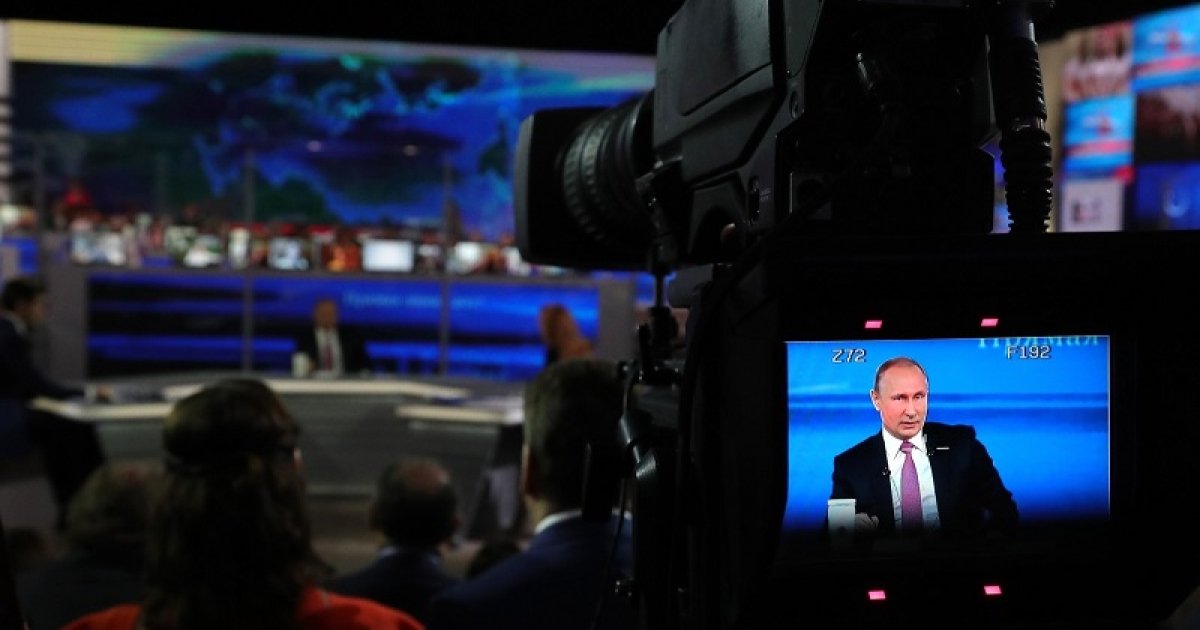
The media narrative carefully positioned Putin as a wise mediator who suggested conducting a public opinion survey to resolve the conflict. “The state-run media portrayed Putin as a wise peacemaker who listens to the voice of the people,” emphasizing that the survey idea came from the president rather than local officials. This framing inadvertently highlighted a systemic weakness: the suggestion that Russia’s governance structure functions effectively only with direct presidential intervention.
State media also fell back on familiar conspiracy theories, with prominent host Vladimir Solovyov claiming the protests were orchestrated according to “Western manuals” and represented “an attempt to stage a Maidan in the center of Russia.” He and others suggested American influence behind the demonstrations, pointing to the coincidental timing of U.S. Secretary of State Mike Pompeo’s visit to Russia and tenuous connections between protest participants and American companies.
These tactics, however, appear increasingly out of touch with current Russian realities. With Putin’s approval ratings well below their 2014 post-Crimea annexation highs and Russians increasingly blaming him for declining living standards, the traditional propaganda formula is yielding diminishing returns.
The Kremlin’s media strategy has historically succeeded in shaping Russians’ cognitive framework, as evidenced by the rehabilitation of Stalin’s image in public opinion. By systematically downplaying the scale of Stalin’s crimes, state propaganda has fostered a public perception of the dictator as a “wise leader” and “fighter against corruption” rather than a murderous tyrant.
Yet this information control strategy is showing signs of strain. Anti-Western rhetoric has failed to divert attention from growing socioeconomic problems and widespread corruption. Moreover, local independent media, journalists, and bloggers have demonstrated greater agility than the centralized propaganda apparatus, with activists utilizing livestreaming and social media platforms to reach younger audiences that Kremlin messaging typically fails to engage effectively.
The Yekaterinburg protests highlight how the Kremlin’s traditional media playbook—minimizing coverage of dissent, elevating federal authority, and portraying protesters as Western agents—is becoming less effective in Russia’s changing information landscape. As economic conditions worsen, local protests increase, and social media enables real-time organization, these dated propaganda techniques may increasingly backfire.
Russia’s pro-government media appears increasingly disconnected from current realities, still operating within a framework of post-Crimean nationalism that polling data suggests has already faded from public consciousness.
Fact Checker
Verify the accuracy of this article using The Disinformation Commission analysis and real-time sources.

14 Comments
It’s encouraging to see civic activism prevailing in Yekaterinburg, even if temporarily. This could embolden more local communities to stand up against government plans that disregard public interests.
That’s a good point. These protests may inspire similar displays of grassroots mobilization in other parts of Russia, potentially challenging the Kremlin’s ability to steamroll local concerns.
Interesting to see how local protests in Yekaterinburg have challenged the Kremlin’s control over the media narrative. It highlights the growing role of social media and independent outlets in shaping public discourse in Russia.
Yes, this seems to be a significant development that could signal shifting dynamics in Russia’s information space. The ability of citizens to organize and voice dissent outside of state-controlled channels is notable.
The Yekaterinburg case highlights the ongoing tensions between the Kremlin’s centralized control and the diverse realities across Russia’s regions. Even state media dominance has its limits when confronted with determined local activism.
Exactly. This suggests the Kremlin may face growing challenges in maintaining a unified, government-friendly narrative as more citizens find ways to voice their dissent at the local level.
The Yekaterinburg protests demonstrate the limits of the Kremlin’s propaganda machine. Even with state media dominance, grassroots mobilization and digital platforms enabled citizens to make their voices heard on this local issue.
Absolutely. This is a reminder that despite the government’s efforts to control the narrative, the public still has ways to bypass official channels and raise awareness of their concerns.
While the Kremlin’s media tactics have been effective in the past, the Yekaterinburg protests demonstrate that citizens can still organize and make their concerns heard, even if temporarily. This could foreshadow more cracks in the government’s information control.
That’s an insightful observation. The ability of local communities to mobilize and influence outcomes, despite state media dominance, is a notable development that bears watching going forward.
The Yekaterinburg case is a reminder that the Kremlin’s grip on information is not absolute, and that citizens can find ways to challenge official narratives and assert their interests. This could have broader implications for how dissent and civic engagement are expressed in Russia.
Absolutely. This incident highlights the evolving dynamics between the government, media, and the public, and suggests that the Kremlin’s control over the information space may be more fragile than it appears.
The Yekaterinburg protests reveal the resilience of local communities and their ability to mobilize effectively, even in the face of a powerful state media apparatus. This is an important development that could shape future debates over urban planning and civic participation in Russia.
Agreed. This case study underscores the limitations of the Kremlin’s media control and the potential for grassroots movements to influence policy decisions, even on a local scale. It will be interesting to see if this sets a precedent for similar challenges to state authority.