


Listen to the article
U.S. Senator Cruz Accuses Nigerian Government of Denying Christian Persecution
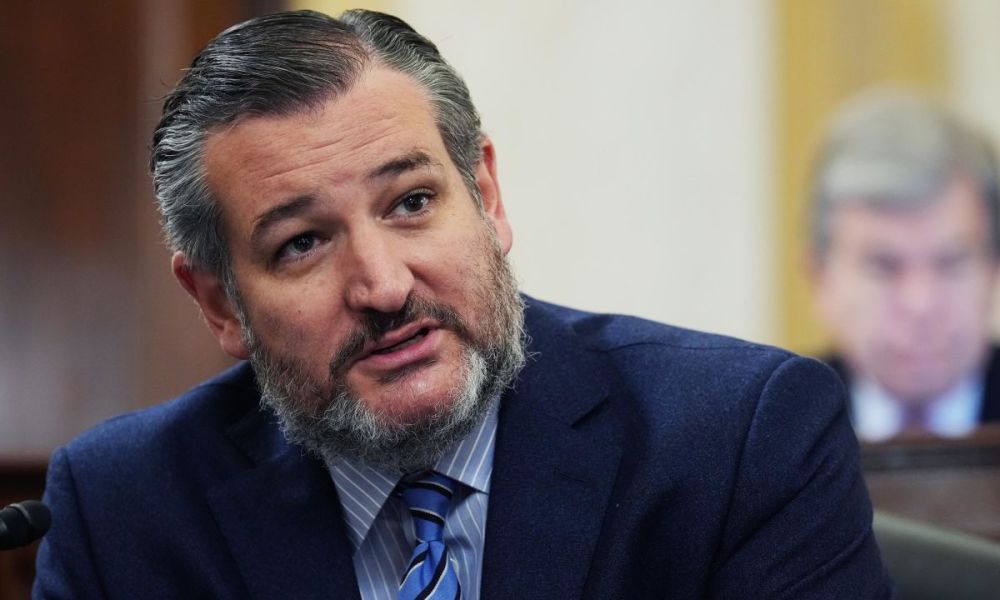
United States Senator Ted Cruz has launched a scathing criticism against the Nigerian government, accusing officials of deliberately ignoring policies that fuel Christian persecution while mounting a public relations campaign to obscure the reality on the ground.
The Texas Republican, who has consistently pressed Nigerian authorities to enhance protection for Christians in the country, took to social media platform X on Friday to rebuke what he described as a coordinated effort to deny the existence of religious violence.
Cruz’s comments were triggered by a recent television appearance by Nigeria’s Minister of Foreign Affairs, Yusuf Tuggar, on Piers Morgan’s “PiersUncensored” program. During the interview, Tuggar categorically denied allegations of Christian genocide in Nigeria, describing such claims as “misleading narratives.”
“I presented a factual and contextual perspective on the misleading narratives and allegations of religious persecution in Nigeria,” Tuggar stated after his appearance. The minister insisted that his explanations were backed by “verifiable data” and called for the interview to be aired in full “without edits or selective omissions,” claiming that “Nigeria’s truth must not be distorted to fit external biases.”
Senator Cruz swiftly condemned this characterization, alleging that Nigerian officials are well aware of how their policies have created an environment conducive to anti-Christian violence.
“Nigerian officials know their policies have created an environment in which Christians are being persecuted and slaughtered, including their enforcement of sharia law and their tolerance of Islamist violence,” Cruz stated. “Instead of reversing these policies, they are waging a media campaign to escape exposure and accountability. I intend to prevent them from doing so.”
The exchange highlights growing international concern over religious violence in Nigeria, Africa’s most populous nation with approximately 220 million citizens divided almost evenly between Christians and Muslims. The country has struggled for years with sectarian tensions, particularly in its Middle Belt region where the predominantly Muslim north meets the largely Christian south.
Human rights organizations have documented numerous attacks on Christian communities in recent years, particularly in northern and central Nigeria. Groups like Boko Haram and armed bandits have targeted churches, kidnapped Christian students, and attacked predominantly Christian farming communities.
The U.S. Commission on International Religious Freedom has repeatedly recommended that Nigeria be designated as a “Country of Particular Concern” for severe religious freedom violations. The Trump administration added Nigeria to this list in 2020, but the Biden administration removed it in 2021, a decision that drew criticism from religious freedom advocates and several lawmakers, including Cruz.
Nigeria’s government has consistently maintained that violence in the country stems from complex factors including competition for resources, criminal activity, and climate change-induced conflicts between herders and farmers, rather than religious persecution per se.
Security analysts note that Muslims have also been victims of violence in Nigeria, with Boko Haram and other extremist groups targeting both moderate Muslims and government institutions in their campaign to establish strict Islamic rule.
The public disagreement between Senator Cruz and Nigerian officials underscores the diplomatic challenges facing Nigeria as it attempts to address international concerns about religious freedom while managing its complex internal security challenges.
Whether this heightened U.S. scrutiny will translate into policy changes remains unclear, but Cruz’s pledge to prevent Nigerian officials from “escaping accountability” suggests that religious freedom in Nigeria will remain on the agenda of at least some U.S. lawmakers in the coming months.
Fact Checker
Verify the accuracy of this article using The Disinformation Commission analysis and real-time sources.

7 Comments
Religious intolerance is unacceptable, but accusations require rigorous verification. I hope all parties can engage constructively to protect the rights and security of all Nigerians.
This highlights the challenges of navigating complex religious and political dynamics. I’m curious to learn more about the specific policies and data the Nigerian government is citing to refute the claims.
Yes, understanding the factual basis for each side’s position is key. Nuance and objectivity are important when dealing with sensitive issues like this.
Allegations of persecution are serious. I hope both sides can move past rhetoric and work collaboratively to address the root causes and ensure religious freedoms are upheld.
The Nigerian government’s response seems defensive. More transparent dialogue and investigation is needed to understand the full situation and find solutions to protect all citizens’ rights.
Agreed. Robust and impartial analysis of the facts is crucial here, rather than political posturing.
This is a complex issue with many perspectives. I appreciate Senator Cruz highlighting concerns about religious persecution, but would encourage examining the data and context objectively before making accusations.