


Listen to the article
Myanmar’s Digital Darkness Deepens Following Devastating Earthquake
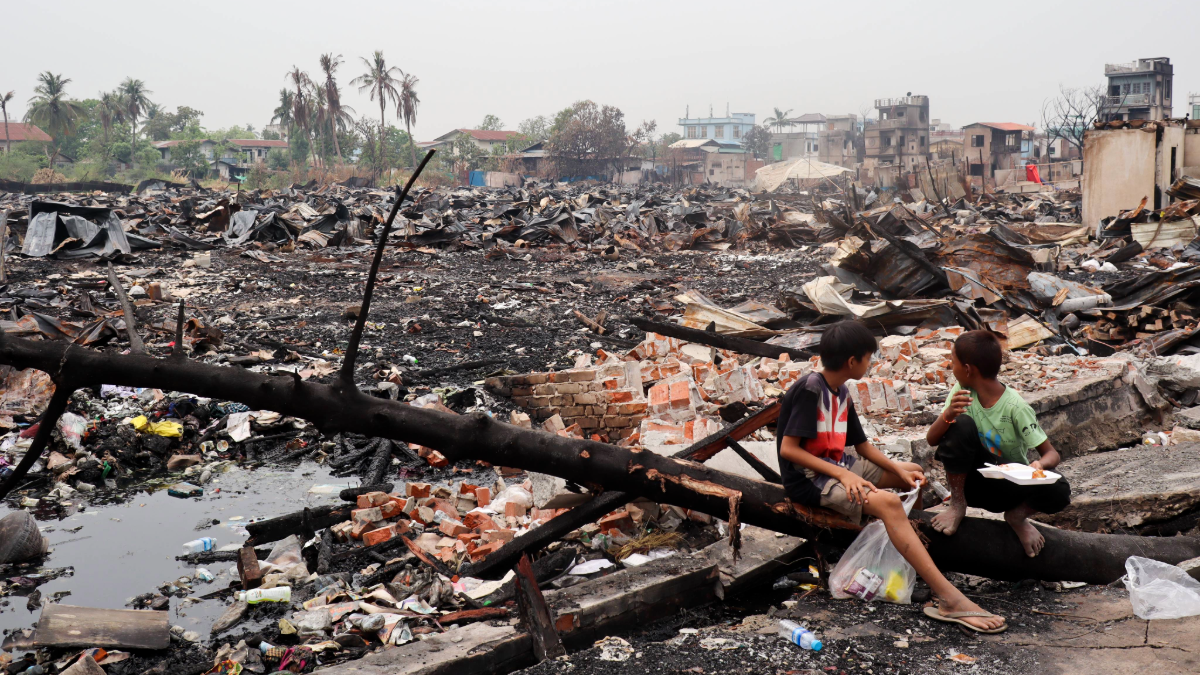
Two months after one of the deadliest earthquakes in Myanmar’s history struck in March 2025, the country faces a worsening humanitarian crisis compounded by the military junta’s tightening grip on digital freedoms and communications infrastructure.
The earthquake, which devastated central Myanmar and particularly the Mandalay Region, has provided cover for an intensified crackdown on connectivity, while surveillance systems, biometric identification programs, and propaganda campaigns have accelerated amid the chaos.
Communications blackouts have expanded dramatically in the earthquake’s aftermath. According to monitoring by Athan, a local rights organization, internet shutdowns affected 107 townships before the earthquake but jumped to 138 by early April. Currently, five of Myanmar’s fourteen states and regions have no internet access whatsoever, while remaining areas struggle with unstable connectivity.
“The junta’s breakdown of communications infrastructure has forced people in Myanmar further into isolation,” explained a local digital rights defender who requested anonymity for safety reasons. “Phone lines no longer work in many areas, and smartphones have become essentially useless without mobile data or internet services.”
The situation has created a desperate information vacuum during a time when coordinated rescue and aid efforts are most critically needed. Attempts by civilians to maintain communications through satellite services like Starlink have faced brutal suppression, with military forces conducting raids, confiscating equipment, and threatening arrests in communities using these technologies.
Even along the Thailand-Myanmar border, a traditional lifeline for information flow, the Thai government has intensified crackdowns on imported communication devices, citing concerns about online scam networks. This has severely impacted Myanmar activist groups operating in exile, many of whom have faced targeted raids and office shutdowns.
The military junta has simultaneously expanded its digital surveillance apparatus. At the center of this system is what civil society monitors call the “Personal Scrutinization and Monitoring System” – a centralized military database collecting citizens’ location history, criminal records, financial activities, and other personal data.
A key component is the electronic identification card (e-ID), which the regime claims is optional and required only for specific purposes like passport applications. However, documentation by rights groups reveals increasing coercion, with workers facing the choice between enrollment or losing access to employment, social security benefits, and freedom of movement.
“The e-ID links individuals to an extensive surveillance network,” said a cybersecurity expert familiar with the system. “With a single scan, authorities can access a person’s complete profile, including political affiliations and past activities.” Reports indicate the system mirrors India’s Aadhaar biometric ID infrastructure, with alleged technical support provided by members of the Aadhaar team.
Amid the communication blackouts, military propaganda has flourished unchecked. Independent monitoring groups like Red Flag have documented coordinated disinformation campaigns across social media platforms, while state-run media amplifies official narratives. The situation has worsened with the recent closure of international radio programs like Voice of America’s Burmese service and Radio Free Asia broadcasts due to funding cuts, eliminating crucial sources of independent information.
These developments come as the international community appears increasingly willing to normalize relations with the junta. Senior General Min Aung Hlaing has recently attended high-profile diplomatic events, including the BIMSTEC summit in Bangkok, Russia’s Victory Day in Moscow, and the Eurasian Economic Forum in Belarus. Perhaps most significantly, he met with the Chinese president during his Moscow visit – their first face-to-face meeting since the 2021 coup.
For Myanmar’s diaspora communities, the global landscape has become increasingly hostile. Thailand, once a relative safe haven, has implemented restrictive SIM card identification requirements, financial constraints, and targeted enforcement actions against exile organizations.
The United States, previously a reliable source of bipartisan support, has shifted policy dramatically. Recent funding cuts have affected crucial Myanmar-related programs, while new tariffs and travel restrictions signal a departure from past approaches that avoided direct engagement with the junta.
“We’re witnessing a layered emergency of natural disaster, political violence, and systematic digital repression,” said Wai Phyo Myint, Asia Pacific Policy Analyst at Access Now. “These aren’t isolated issues – they represent a comprehensive strategy to silence dissent and consolidate control.”
Despite these challenges, Myanmar’s civil society continues to resist under increasingly difficult conditions. International human rights organizations emphasize that coordinated global support for secure internet access, independent media protection, halting surveillance technology exports, and rejecting diplomatic normalization with the junta remains crucial.
As Myanmar’s crisis deepens, observers warn that the country’s experience represents both a humanitarian tragedy and a cautionary tale about the consequences when authoritarian regimes gain complete control over digital infrastructure and information channels.
Fact Checker
Verify the accuracy of this article using The Disinformation Commission analysis and real-time sources.

8 Comments
The global response has clearly failed to halt this repressive campaign. More international pressure and concrete actions are desperately needed to restore internet access and protect Myanmar’s citizens.
Absolutely. The world cannot stand by idly as this unfolding tragedy unfolds. Decisive intervention is required to uphold human rights and democracy in Myanmar.
This story highlights the critical role of digital infrastructure and connectivity, especially in times of crisis. Restricting access only compounds the suffering of earthquake victims.
Worrying to see the military exploiting the earthquake disaster to intensify its crackdown on free speech and communications. The people of Myanmar deserve better.
Agreed, this is a cynical abuse of power. The international community must find ways to restore connectivity and protect vulnerable citizens in Myanmar.
Devastating to hear about the intensifying digital crackdown in Myanmar amid the earthquake crisis. Restricting connectivity and communications will only worsen the humanitarian situation for people already suffering.
Agreed, the military junta’s actions are unconscionable. They seem intent on tightening their grip on power at the expense of the vulnerable population.
Devastating to see how the junta is leveraging the earthquake disaster to further tighten its grip on digital freedoms. This will only exacerbate the humanitarian crisis.