


Listen to the article
The battle for Cuba’s narrative continues to intensify as media organizations outside the island nation employ sophisticated agenda-setting tactics to shape global perceptions of Cuban reality, according to multiple academic and journalistic sources.
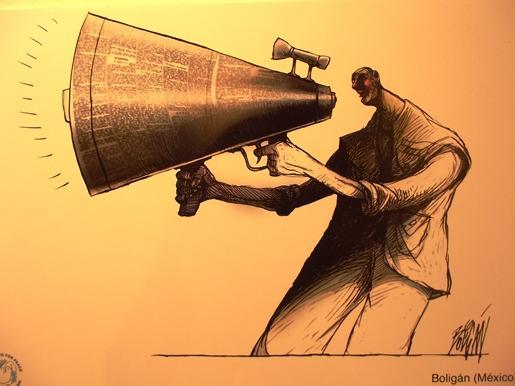
Media agenda-setting, a theory developed by professors Maxwell McCombs and Donald Shaw in the 1970s, describes how mass media outlets influence public discourse not by directly telling audiences what to think, but by determining which topics deserve attention. By selecting certain stories for front-page coverage while ignoring others, media organizations effectively control which issues dominate national and international conversations.
This dynamic is particularly evident in media coverage of Cuba, where a well-funded external media apparatus works to influence both domestic and international opinions about the island nation. Communication experts point to a systematic pattern in which these outlets highlight the country’s economic difficulties while deliberately downplaying the role of the U.S. economic blockade in creating those hardships.
“The mechanism is perverse but effective,” notes an analysis from La Jiribilla, a Cuban cultural publication. The U.S. blockade creates shortages of essential goods like fuel, medicine, and food. Media organizations funded by U.S. agencies then amplify the resulting public discontent, focusing extensively on product shortages and transportation problems while attributing these issues solely to “internal mismanagement” by the Cuban government.
This represents a significant shift in modern information warfare tactics. Rather than denying the existence of economic hardships, these media campaigns acknowledge the problems but redirect blame away from external economic pressures toward the Cuban government itself.
Another key strategy involves elevating selected individuals as “opinion leaders” or “experts” on Cuban affairs, despite their having limited actual influence within Cuba. By featuring these figures prominently, international media effectively position them as legitimate representatives of Cuban society and viewpoints.
Communication researchers have also identified attempts to portray Cuban society as inherently hostile to progressive causes such as racial equality and women’s rights. This framing aims to align international human rights advocates with political destabilization efforts by presenting Cuba through a carefully constructed narrative of oppression.
The financial backing for these media operations is substantial. According to multiple sources, including academic journals from Spain’s UNED and UNIR universities, these campaigns operate with multimillion-dollar budgets and employ sophisticated information dissemination techniques that often bypass traditional journalistic ethics regarding verification and context.
The contrast between media approaches is striking. While Cuban public media operate with what supporters describe as “a logic of service and social development,” the external media machine functions with what critics characterize as “a logic of war,” prioritizing political objectives over journalistic standards.
Media analysts suggest that responding to these challenges requires more than defensive measures. They recommend a proactive communications strategy that positions Cuban national media as primary and reliable information sources while highlighting the country’s accomplishments in science, social stability, and culture to counter the prevailing narrative of despair.
The situation illustrates the evolving nature of geopolitical conflict in the digital age. Information has become a strategic resource, with media narratives serving as battlegrounds for influence and sovereignty. Understanding that media manipulation represents not just incidental coverage but a coordinated policy designed to influence public opinion has become essential in analyzing international relations with Cuba.
As this media contest continues, the struggle over who controls the narrative about Cuba remains central to both the island’s domestic politics and its position in global affairs.
Fact Checker
Verify the accuracy of this article using The Disinformation Commission analysis and real-time sources.

10 Comments
The role of the US economic blockade in Cuba’s economic challenges is an important context that shouldn’t be overlooked. Balanced reporting is crucial for understanding the full reality on the ground.
Agreed, the blockade is a significant factor that warrants more attention. Nuanced analysis is needed to avoid oversimplifying the situation.
While the article focuses on Cuba, the broader implications around media monopolies and agenda-setting are relevant globally. It’s an issue that warrants ongoing scrutiny.
Fascinating insights into the mechanisms of media influence. I’d be interested to see more empirical analysis on the specific impacts of agenda-setting on public discourse and decision-making.
Interesting how media agenda-setting can shape public discourse on complex issues like Cuba. It’s important to seek out diverse perspectives and fact-check claims, rather than relying on a single narrative.
This is a timely reminder of the importance of media literacy and critical thinking when consuming news. Checking sources and seeking alternative viewpoints is vital.
The article raises important questions about the influence of external media narratives on internal national discourse. Unpacking these dynamics is crucial for a fuller picture.
This highlights the power media organizations wield in determining which stories and perspectives gain traction. Maintaining a critical eye when consuming news is essential.
Absolutely. It’s worrying how concentrated media ownership can lead to biased agenda-setting. Diverse and independent sources are key for well-rounded understanding.
Agenda-setting is a complex phenomenon that deserves deeper exploration. I’m curious to learn more about how these dynamics play out in other geopolitical contexts beyond Cuba.