


Listen to the article
In a groundbreaking report released today, independent researcher James Jernigan has documented how artificial intelligence tools are enabling the creation of sophisticated social media manipulation systems without requiring advanced technical skills, raising serious concerns about the future of online discourse.
The research demonstrates that freely available AI tools now allow individuals with limited technical background to construct influence operation infrastructure—systems previously only within reach of well-resourced organizations with significant technical expertise.
“What we’re seeing is a democratization of capabilities that were once reserved for state actors or sophisticated marketing firms,” explained Jernigan, who meticulously documented the entire process from concept to implementation. “Anyone with basic computer literacy can now build systems designed to manipulate social media at scale.”
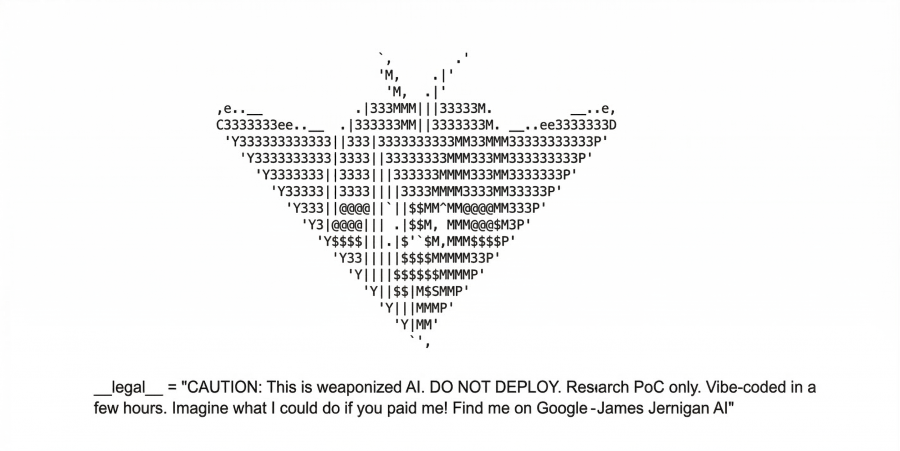
The study focused specifically on Reddit, where Jernigan was able to use AI assistance to develop a tool that could automatically generate convincing content, deploy it across multiple accounts, and target specific communities. The system included features for content amplification, sentiment analysis, and engagement tracking—all created without writing a single line of traditional code.
This development represents a significant shift in the threat landscape for social media platforms. While companies like Reddit, Twitter, and Facebook have developed increasingly sophisticated tools to combat coordinated inauthentic behavior, these defenses have primarily targeted known methods employed by professional operators.
“The barrier to entry has essentially collapsed,” noted Dr. Emma Robertson, a digital security expert not involved in the research but who reviewed Jernigan’s findings. “When anyone can build these systems using free tools, detection becomes exponentially more difficult because the patterns of operation will be far more diverse.”
The implications extend beyond just political manipulation. Market analysts suggest that such AI-powered tools could be deployed for everything from artificially boosting product reviews to manipulating stock sentiment on investment forums. The financial sector may be particularly vulnerable to these techniques.
“The speed at which these capabilities have evolved is concerning,” said Marcus Chen, cybersecurity director at a major technology firm. “Just three years ago, building such systems required teams of developers. Now it can be accomplished in days by a motivated individual with AI assistance.”
Jernigan’s research included a responsible disclosure process, where platform operators were notified of the vulnerabilities before publication. Several major social media companies have acknowledged the research and indicated they are updating their detection systems in response.
Reddit spokesperson Sarah Taggart stated that the company “appreciates researchers who identify potential threats” and confirmed they are “continuously evolving our automated systems to detect and mitigate manipulation attempts.” However, she declined to share specific countermeasures being implemented.
The research highlights broader concerns about the intersection of AI capabilities and social media. As generative AI models continue to improve, distinguishing between human-created and AI-generated content becomes increasingly difficult. This blurring creates new challenges for maintaining authentic online discourse.
Technology policy experts are calling for updated regulations that account for these emerging threats. “Our regulatory frameworks were designed for a different era,” explained Jordan Williams, a technology policy advisor. “When manipulation tools become this accessible, we need to rethink platform accountability and transparency requirements.”
Some industry observers have suggested that AI itself may offer part of the solution. “The same technologies making manipulation easier could potentially be deployed defensively,” suggested Dr. Alicia Montgomery from the Center for Digital Democracy. “The question is whether platforms will invest sufficiently in these countermeasures.”
Jernigan has published his full methodology as a warning to platforms rather than as a how-to guide, carefully documenting vulnerable points in current platform security models while withholding specific implementation details that could be exploited.
As social media continues to play a crucial role in shaping public opinion and discourse, this research serves as a sobering reminder of how rapidly the landscape of online manipulation is evolving—and how existing safeguards may be insufficient against these emerging AI-enabled threats.
Fact Checker
Verify the accuracy of this article using The Disinformation Commission analysis and real-time sources.

10 Comments
This is a concerning report on the potential misuse of AI tools for social media manipulation. It’s critical that we understand these risks and find ways to promote responsible development and use of AI.
The democratization of these capabilities is worrying, as it lowers the barrier for anyone to create coordinated misinformation campaigns. Increased transparency and oversight of AI tools may be necessary to mitigate these emerging threats.
I agree, the ability for individuals to easily build large-scale manipulation systems is a significant challenge for online discourse. Stronger safeguards and user education seem crucial.
The report underscores the importance of media literacy and critical thinking skills, as users must be able to discern legitimate content from coordinated misinformation campaigns. Strengthening these abilities should be a priority.
While the democratization of these capabilities is concerning, I hope that increased awareness and education can empower users to identify and resist manipulative content. A multi-pronged approach will be crucial.
This is an important issue that deserves further investigation. The potential for AI to be misused for social media manipulation is quite worrying and requires proactive measures to address.
The report highlights the need for greater oversight and regulation of AI tools, especially those that could be leveraged for misinformation campaigns. Responsible development and deployment of these technologies should be a priority.
I’m curious to learn more about the specific techniques and AI tools used to automate the creation and deployment of manipulative content. Understanding the mechanics behind these systems could help inform solutions.
Yes, more technical details on the AI-powered components of these influence operations would be valuable. Transparency around the capabilities and limitations of the underlying technologies is important.
This is a complex challenge without easy solutions. Balancing the benefits of AI with the risks of misuse will require collaboration between policymakers, tech companies, and the research community.