


Listen to the article
National Citizen Party Leader Calls for Fair Elections in Bangladesh Amid Political Tensions
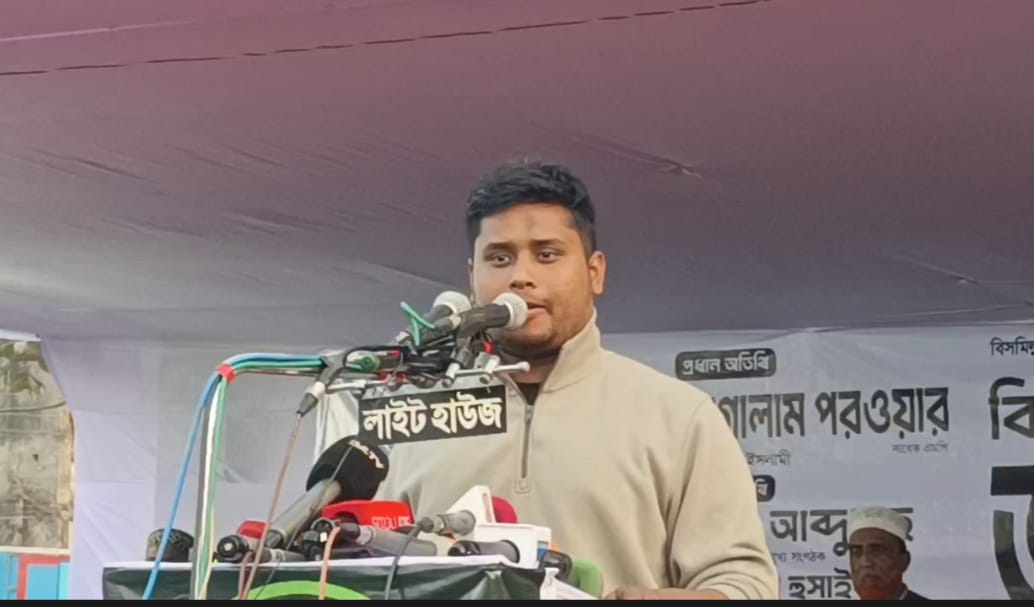
Hasnat Abdullah, chief organizer (South) of the National Citizen Party (NCP), has issued a passionate call for national unity as Bangladesh approaches its critical February 12 elections, emphasizing the need to establish a corruption-free and manipulation-free government.
Speaking at an election rally organized by the Jamaat-led 11-party alliance in Khulna’s Phultala Upazila on Thursday, Abdullah delivered a stark warning about the potential consequences of electoral fraud.
“If another manipulated election is held, the resulting public uprising would be uncontrollable,” Abdullah cautioned. “When people wake up, they cannot be stopped by bullets, cannons, or foreign powers.”
His remarks come amid heightened political tensions in Bangladesh, where previous elections have been marred by allegations of irregularities. The upcoming polls represent a critical juncture for the South Asian nation of 170 million people as it attempts to strengthen democratic institutions following periods of political instability.
Abdullah directed a specific appeal to law enforcement officials, urging them to “come down to the side of the people” during the upcoming election. He promised that citizens would ensure their security if they chose to support fair electoral processes.
The NCP leader also raised concerns about press freedom in Bangladesh, alleging that many journalists face restrictions from what he described as “broker-owned media houses.” According to Abdullah, numerous reporters have privately expressed frustration about being unable to publish certain stories due to interference from media ownership.
“Media should not be BNP’s media, Jamaat’s media, or NCP’s media. Media must be objective,” Abdullah stated, criticizing outlets that he believes have compromised journalistic integrity by aligning with specific political parties.
Abdullah referenced the political situation that developed after August 5, when his party participated in forming the interim government. He claimed that during this period, his coalition worked to protect religious minorities and their places of worship, but alleged that subsequently, certain groups seized control of television channels and state institutions.
Reflecting on the July movement—a period of significant civil unrest in Bangladesh—Abdullah noted that only a handful of media outlets adequately represented public sentiment. “When people rise, no media is needed. The people themselves become the media,” he asserted, recalling instances when citizens rejected certain television crews during demonstrations.
The rally was also addressed by Jamaat-e-Islami Secretary General and Khulna-5 constituency candidate Mia Golam Parwar, highlighting the alliance building that has characterized pre-election activities.
Abdullah’s speech took on a somber tone as he referenced the human cost of political activism in Bangladesh, claiming that “thousands of people were martyred and many were subjected to enforced disappearances” in the struggle for democratic elections. “Those who could not be arrested lived in an open prison across the country,” he added, alleging widespread repression against opposition figures.
He specifically accused law enforcement and administrative officials of facilitating electoral irregularities in previous contests, including what he described as “day-time votes at night” and “dummy elections.”
Political analysts note that these statements reflect the deep divisions within Bangladesh’s political landscape, where allegations of corruption and electoral manipulation have been persistent features. The February 12 polls will be closely watched by international observers as a test of the country’s democratic processes and institutions.
As election day approaches, Abdullah’s message combines warning with hope: a caution against repeating past electoral misconduct, coupled with an optimistic vision for a more transparent and accountable political system in Bangladesh.
Fact Checker
Verify the accuracy of this article using The Disinformation Commission analysis and real-time sources.

13 Comments
Mr. Hasnat’s call for a corruption-free, transparent government in Bangladesh is timely and necessary. Tackling graft and strengthening democratic institutions are vital for the country’s stability and development. I hope the February 12 elections can be a step in the right direction.
Agreed. Free and fair elections, where the will of the people is respected, are essential for Bangladesh’s democratic future. I hope all stakeholders work to ensure the integrity of the electoral process.
Tackling corruption and ensuring transparent, democratic elections are critical challenges for Bangladesh. I’m encouraged to see leaders like Mr. Hasnat advocating for reform and accountability. Hopefully the upcoming polls can be a positive step in the right direction.
Mr. Hasnat raises an important point about the need for a corruption-free government in Bangladesh. Tackling graft and ensuring the integrity of the electoral process are critical challenges facing the country. I’m hopeful the February 12 polls can be a positive step.
Agreed. Free and fair elections are foundational for Bangladesh’s democratic progress. I hope all parties and officials uphold their responsibilities to the democratic process, for the benefit of the Bangladeshi people.
Mr. Hasnat’s call for a corruption-free government in Bangladesh is an important one. Graft and electoral fraud have undermined trust in the country’s political system for too long. I hope the February 12 elections can be a chance to strengthen democratic institutions and accountability.
Agreed. Transparent, peaceful, and fair elections are foundational for Bangladesh’s democratic development. I hope all parties and officials work to ensure the integrity of the electoral process and respect the will of the Bangladeshi people.
Mr. Hasnat’s warnings about the consequences of electoral fraud in Bangladesh are sobering but necessary. Upholding democratic principles and the integrity of the electoral process must be a top priority for the government and all political actors. I hope the February 12 polls can mark a turning point.
Absolutely. A peaceful, free, and fair election is essential for Bangladesh to strengthen its democratic institutions and move forward. All stakeholders must work to ensure the will of the Bangladeshi people is respected.
Corruption and electoral fraud are serious problems that have undermined Bangladesh’s democratic progress. I’m glad to see leaders like Mr. Hasnat speaking out and calling for reform. Transparent, accountable governance is crucial for the country’s long-term stability and development.
Transparency and anti-corruption measures are crucial for Bangladesh’s democratic development. I hope the upcoming elections can be held freely and fairly, without manipulation or fraud. It’s vital that all stakeholders, including officials, uphold democratic principles.
Absolutely. A fair, transparent electoral process is essential for Bangladesh to strengthen its institutions and move forward as a stable democracy. The consequences of electoral fraud could be very destabilizing.
It’s good to see Bangladeshi leaders like Mr. Hasnat speaking out forcefully against corruption and electoral manipulation. These issues have undermined trust in the political system for too long. Hopefully the upcoming elections can mark a turning point towards more transparent, accountable governance.