


Listen to the article
Energy Secretary’s False Post Triggers Oil Market Turbulence Amid Middle East Tensions
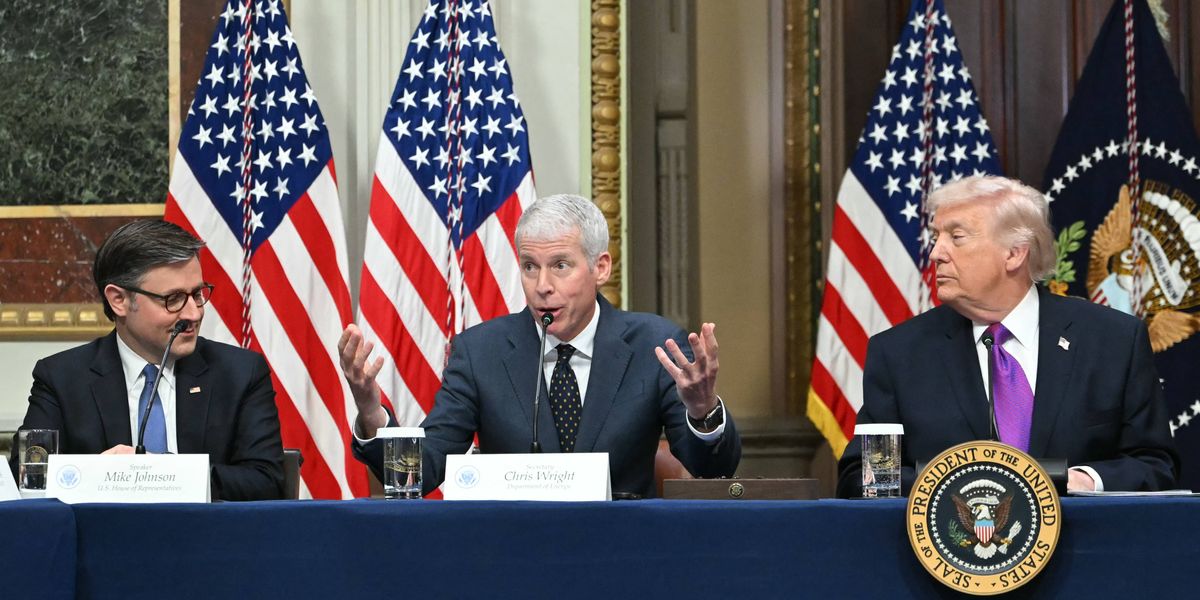
U.S. Energy Secretary Chris Wright found himself at the center of a diplomatic and financial controversy Tuesday after publishing a false claim on social media that briefly sent oil markets into a tailspin.
Wright, who previously served as a fracking executive before joining the Trump administration, posted on X that the American Navy had “successfully escorted an oil tanker through the Strait of Hormuz to ensure oil remains flowing.” The statement came amid heightened tensions following the U.S.-Israeli military campaign against Iran.
The post was deleted within minutes, but not before causing what the Wall Street Journal described as the steepest slide in oil prices in years. White House Press Secretary later confirmed that Wright’s claim was entirely false, forcing the Energy Department into damage control. The department blamed the incident on staff who allegedly “incorrectly captioned” the post.
Market observers immediately raised concerns about potential market manipulation. Hedge fund manager Spencer Hakimian publicly questioned who might have profited from shorting oil during the brief period when the false information circulated. Anti-monopoly researcher Matt Stoller noted that while “the fusion of war-making and market manipulation by top Trump officials isn’t entirely without precedent, the speed and brazenness does seem new.”
The incident even provoked a response from Iranian Foreign Minister Abbas Araghchi, who accused U.S. officials of “posting fake news to manipulate markets.” Araghchi warned that such tactics “won’t protect them from inflationary tsunami they’ve imposed on Americans,” adding that markets face “the biggest shortfall in HISTORY: bigger than the Arab Oil Embargo, Iran’s Islamic Revolution, and the Kuwait invasion COMBINED.”
The Strait of Hormuz has emerged as a critical flashpoint in the ongoing conflict. Approximately 13 million barrels of oil passed through the strait daily in 2025, representing roughly 31% of global seaborne crude flows. Iran’s military has threatened to attack vessels attempting passage through this vital shipping lane in response to U.S. and Israeli missile strikes.
Contrary to Wright’s deleted post, Reuters reported that the U.S. Navy has “refused near-daily requests from the shipping industry for military escorts through the Strait of Hormuz since the start of the war on Iran, saying the risk of attacks is too high for now.”
Tensions in the region continued to escalate early Wednesday when the United Kingdom Maritime Trade Operations center reported that a cargo vessel in the strait was “hit by an unknown projectile,” causing a fire and forcing crew evacuation.
This incident followed shortly after the U.S. military announced it had “eliminated multiple Iranian naval vessels,” including “16 minelayers near the Strait of Hormuz.” The timing raised eyebrows as the military statement came less than two hours after President Donald Trump declared on social media that “we have no reports” of Iran laying mines in the strait.
Trump’s post included a warning that “if for any reason mines were placed, and they are not removed forthwith, the Military consequences to Iran will be at a level never seen before.” He added that removal of any mines would be “a giant step in the right direction.”
U.S. Senator Chris Murphy (D-Conn.) expressed frustration after attending a classified briefing on the situation. Murphy stated it was evident the administration “had no plan” regarding the Strait of Hormuz before launching military operations against Iran. “They don’t know how to get it safely back open,” Murphy wrote, calling the lack of foresight “unforgivable, because this part of the disaster was 100% foreseeable.”
The incident highlights the delicate interplay between government communications, global markets, and military operations in a region critical to worldwide energy supplies.
Fact Checker
Verify the accuracy of this article using The Disinformation Commission analysis and real-time sources.

8 Comments
This is a concerning situation. If the former Energy Secretary did indeed post false information that temporarily disrupted oil markets, that would be a serious abuse of power and position. Transparency and accountability are critical in these sensitive sectors.
The Energy Department’s explanation about staff error is hard to believe. A cabinet-level official posting unverified information with such potential impact seems highly suspicious. I hope the authorities get to the bottom of this incident and any abuse of position for private gain.
As someone with a keen interest in energy and mining, I find this news very concerning. The potential for abuse of power and insider information in these sensitive sectors is alarming. Strong, independent oversight is clearly needed to protect market stability and public trust.
This episode highlights the need for robust safeguards and oversight when it comes to government officials and sensitive market information. Even an inadvertent false claim can cause major market turmoil. Stronger protocols are clearly required.
I’m curious to see how this investigation unfolds. Spreading misinformation that disrupts vital global commodity markets is extremely serious. Hopefully the facts will come to light and any wrongdoing will be swiftly addressed.
This is a complex situation, but the core issue seems to be about transparency and accountability. If the former Energy Secretary acted unethically, the consequences should be severe. The public deserves leaders who uphold the highest standards of integrity.
It’s troubling to see such a high-level official potentially engaging in market manipulation. Spreading misinformation that impacts commodity prices can have far-reaching consequences. A full investigation is warranted to uncover the facts and any wrongdoing.
As an investor in mining and energy equities, I’m concerned about the implications of this alleged market manipulation. Volatility and uncertainty are the last things these sectors need. Rigorous reforms are required to prevent similar abuses of power in the future.