


Listen to the article
In a significant development that has raised concerns about media freedom, former President Donald Trump announced plans for the Federal Communications Commission (FCC) to review licenses of news outlets, while simultaneously labeling Iran as a “master of media manipulation.”
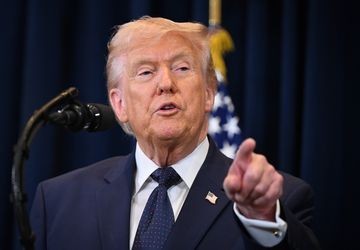
Trump made these remarks during a press conference at Trump National Doral Miami, signaling what could become a contentious relationship between his administration and media organizations. The former president’s statements come amid ongoing tensions with press outlets that he has frequently criticized throughout his political career.
“We’re going to have the FCC take a very close look at these licenses,” Trump stated. “There needs to be accountability for what Americans are being told.” The announcement represents a potential shift in how the regulatory body might approach its oversight of broadcast media should Trump return to office.
Media law experts were quick to respond to the announcement. Professor Jane Mitchell of Columbia Journalism School explained, “The FCC’s authority over broadcast licenses is meant to ensure technical compliance and public interest standards, not to police content based on a president’s perception of accuracy.”
The FCC, an independent agency of the United States government, regulates communications by radio, television, wire, satellite, and cable across the country. Its five commissioners are appointed by the president and confirmed by the Senate, with the president designating one commissioner as chairman.
Current FCC Commissioner Brendan Carr, who was appointed during Trump’s previous administration, has not yet commented on the former president’s statements. Historically, the FCC has maintained a position that respects First Amendment protections for journalists and news organizations.
In the same press conference, Trump directed sharp criticism toward Iran, calling the country “the master of media manipulation” and accusing it of orchestrating public relations campaigns to influence American public opinion.
“They’re very good at what they do,” Trump said of Iran’s media strategy. “They know exactly how to manipulate certain outlets to push their narrative, and we’re seeing it happen right before our eyes.”
The remarks come at a time of heightened tensions between the United States and Iran, following years of diplomatic friction over nuclear agreements, regional conflicts, and sanctions. International relations experts suggest that Trump’s comments may be laying groundwork for a more confrontational approach to Iran should he return to office.
Media watchdog organizations expressed concern about Trump’s statements regarding license reviews. The Committee to Protect Journalists issued a statement noting, “Threatening regulatory action against news outlets based on content is a tactic more commonly seen in authoritarian regimes, not democracies with press freedom protections.”
The Wall Street Journal, specifically mentioned in Trump’s remarks, defended its editorial independence in a statement: “Our journalism adheres to the highest standards of accuracy and fairness. We stand by our reporting and will continue to cover all administrations with the same level of scrutiny.”
Some political analysts view Trump’s dual focus on media regulation and Iran as part of a broader strategy to control messaging ahead of potential future political endeavors. Dr. Marcus Hoffman, political communication professor at Georgetown University, observed, “By positioning certain media outlets as potentially compromised by foreign influence, it creates a justification for greater government oversight of the press.”
Legal experts note that any substantial change to how the FCC approaches broadcast licenses would likely face significant court challenges on constitutional grounds. The Supreme Court has historically upheld strong First Amendment protections for news organizations against government interference.
The announcement has already triggered debate about the proper relationship between government and media in a democratic society. Press freedom advocates warn that politicizing the license review process could have a chilling effect on journalism, while supporters of Trump’s position argue greater accountability is needed in news reporting.
As this story develops, the media industry, legal experts, and political observers will be watching closely to see whether these statements translate into concrete policy proposals or remain rhetorical positioning in the ongoing tension between Trump and news organizations he has frequently labeled as adversaries.
Fact Checker
Verify the accuracy of this article using The Disinformation Commission analysis and real-time sources.

5 Comments
The FCC reviewing news outlet licenses raises serious concerns about press freedom. While media manipulation is a real issue, content regulation should not be used to silence critical voices. Objective, fact-based reporting is essential for a healthy democracy.
Labeling Iran as the ‘master of media manipulation’ seems like a politically-charged accusation. I’d want to see strong evidence to back up such a claim before making such a definitive statement. Maintaining media integrity is crucial, but politicizing the process is concerning.
The FCC should be extremely careful about any attempts to revoke news licenses based on content. The public relies on a diversity of news sources, even if they have differing political leanings. Curbing media freedoms is a dangerous path that undermines democratic principles.
While media manipulation is a serious issue, I’m skeptical of the former president’s plan to have the FCC target specific news outlets. That could set a worrying precedent of using regulatory power to silence critical reporting. A free press is essential, even if it’s sometimes messy.
Labeling Iran as the ‘master of media manipulation’ is a very strong claim. I’d want to see clear, unbiased evidence to support that before accepting it. We should be wary of politicizing media oversight in this way.