


Listen to the article
In a move that has sent ripples through the media landscape, former President Donald Trump announced plans for the Federal Communications Commission to review the licenses of various news outlets, while simultaneously criticizing Iran as a “master of media manipulation.”
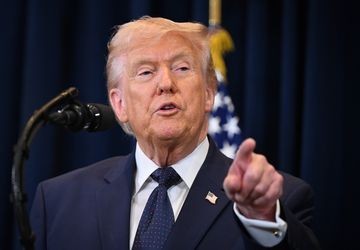
Speaking at a news conference held at Trump National Doral Miami, the former president outlined what appears to be a potential shift in media regulatory policy should he return to office. The announcement comes amid ongoing tensions between Trump and mainstream news organizations, a relationship that has been contentious since his first presidential campaign.
“We’re going to have the FCC take a very close look at these licenses,” Trump stated, though he did not specify which news organizations would face scrutiny or what criteria would be used in the review process. “When you see deliberate misinformation being spread, there need to be consequences.”
The former president’s comments immediately raised concerns among First Amendment advocates and media law experts, who note that such reviews could potentially infringe on press freedoms protected by the Constitution.
“Any attempt to use the federal regulatory apparatus to target news organizations based on their coverage raises serious constitutional questions,” said Eleanor Martin, a media law professor at Georgetown University. “The FCC’s licensing authority was never intended to be used as a tool for content control.”
Brendan Carr, a current FCC commissioner who has previously aligned with Trump’s positions on media regulation, was mentioned in connection with the proposed reviews, though the exact role he might play remains unclear. The FCC has historically maintained a position of neutrality regarding news content, focusing instead on technical compliance and ownership concentration.
During the same press conference, Trump pivoted to international media relations, labeling Iran as the “master of media manipulation” and accusing the country of orchestrating propaganda campaigns in Western media outlets.
“They’ve figured out how to work the system,” Trump claimed. “They know exactly how to plant stories, how to influence coverage. They’ve been doing it for years, and nobody talks about it.”
Media analysts note that Trump’s dual focus on domestic news licensing and foreign influence represents a consistent theme in his approach to media relations. Throughout his presidency and subsequent years, he has frequently characterized unfavorable coverage as “fake news” while suggesting closer regulation of media entities.
The Wall Street Journal was specifically mentioned during the conference, with Trump criticizing a recent article as “completely fabricated” and suggesting it exemplified the kind of reporting that would warrant license review. The Journal has stood by its reporting.
Industry observers point out that the practical implementation of such license reviews would face significant hurdles. Many news organizations operate across multiple platforms, including digital spaces that fall outside traditional FCC jurisdiction. Additionally, broadcast licenses are typically held by parent companies rather than individual news divisions.
“The media landscape has changed dramatically since the FCC’s regulatory framework was established,” explained communications policy analyst James Wilson. “There’s a fundamental mismatch between Trump’s apparent goals and the actual regulatory mechanisms available.”
Press freedom organizations responded swiftly to Trump’s announcement. The Committee to Protect Journalists issued a statement calling the proposed reviews “deeply concerning” and warning that they could create a chilling effect on reporting.
Market reactions to Trump’s comments were mixed. While shares in some major media companies showed slight downward movement following the announcement, analysts suggested this represented short-term uncertainty rather than genuine concern about license revocations.
The former president’s comments come during a period of significant transformation in the media industry, with traditional outlets facing both economic challenges and questions about their role in an increasingly polarized information environment. Trump’s statements may indicate that media regulation could become a central campaign issue as the next election cycle approaches.
As the situation develops, legal experts will be watching closely to see how specific any proposed license reviews become, and whether they represent serious policy initiatives or campaign rhetoric designed to energize Trump’s base of supporters who share his criticisms of mainstream media coverage.
Fact Checker
Verify the accuracy of this article using The Disinformation Commission analysis and real-time sources.

8 Comments
Accusations of ‘media manipulation’ are concerning, but I’d want to see clear evidence before supporting any FCC crackdown on news outlets. Protecting press freedom is crucial.
I agree, the First Amendment implications here are worrying. The FCC must tread very carefully and avoid any appearance of political retaliation against critical media.
Interesting development. The FCC reviewing news licenses could have major implications for press freedom. I wonder what specific criteria they’ll use and if it will withstand legal challenges.
The media manipulation concerns are concerning. However, any licensing review process needs to be very transparent and avoid political interference.
Iran being labeled a ‘master of media manipulation’ is an interesting claim. I’d want to see a detailed analysis backing that up before drawing any conclusions.
Any FCC review of news licenses needs to be grounded in clear, objective criteria – not political vendettas. Preserving a free and independent press is vital for democracy.
Agreed. Attempting to punish critical media coverage through regulatory means would be a dangerous precedent that could severely undermine press freedoms.
This is a complex issue with important First Amendment implications. I’ll be closely following how any potential FCC licensing review process unfolds and the rationale behind it.