


Listen to the article
Former President Donald Trump announced plans to have the Federal Communications Commission (FCC) review the licenses of news outlets, while simultaneously criticizing Iran as a “master of media manipulation” during a press conference at his Florida resort.
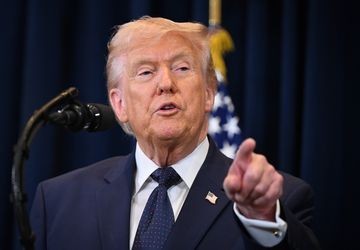
Speaking to reporters at Trump National Doral Miami on Friday, Trump outlined his intention to direct the FCC to examine broadcasting licenses if he returns to office, framing the initiative as necessary to combat what he characterized as widespread media manipulation.
“The American people deserve honest reporting,” Trump said. “We’re going to have the FCC take a very close look at who’s reporting the truth and who’s just pushing foreign propaganda on the American public.”
The former president specifically highlighted what he called Iran’s sophisticated media influence operations, describing the country as “perhaps the world’s most skilled manipulator of Western media.” Trump claimed Iranian interests have infiltrated major U.S. news organizations, though he did not provide specific evidence to support these assertions.
“They know exactly how to play the game, how to plant stories, how to make themselves look better than they are,” Trump said. “And our media falls for it every time.”
Media and communications law experts expressed immediate concerns about the constitutional implications of Trump’s proposed license reviews. First Amendment attorney Catherine Rodriguez noted that government-directed scrutiny of news outlets raises serious questions about press freedom.
“The FCC’s authority over broadcast licenses is limited and cannot be used as a tool to punish coverage the government dislikes,” Rodriguez said. “The Supreme Court has repeatedly recognized broad protections for the press against government interference.”
The FCC, an independent regulatory agency, oversees television and radio broadcast licenses but has traditionally maintained a hands-off approach regarding content, focusing instead on technical compliance and public interest standards. The agency does not license cable news networks or digital media outlets.
Current FCC Commissioner Brendan Carr, who was appointed during Trump’s first administration, responded cautiously to the former president’s remarks. “The FCC operates under specific statutory authorities that respect First Amendment principles,” Carr said in a statement. “Any review of licenses must follow established legal procedures.”
Media industry groups reacted swiftly to Trump’s comments. The National Association of Broadcasters issued a statement emphasizing the essential role of independent journalism in American democracy. “Broadcast journalists work diligently to provide accurate, fair coverage to their communities,” the statement read. “Any attempt to weaponize the licensing process would represent a dangerous departure from our nation’s democratic traditions.”
Trump’s comments come amid heightened tensions with Iran and during a period of increasing polarization regarding trust in mainstream media. A recent Gallup poll indicated that Americans’ confidence in mass media has reached near-record lows, with sharp partisan divides over which news sources are considered reliable.
Media analysts note that Trump’s criticisms of news organizations have been a consistent feature of his political messaging since his first presidential campaign. Sarah Westbrook, media studies professor at Columbia University, observed that “the rhetoric about foreign influence in media serves dual purposes – it delegitimizes coverage he views as unfavorable while positioning himself as a defender against external threats.”
Wall Street Journal media reporter Jason Phillips pointed out that Trump’s relationship with the press has long been complex. “He simultaneously criticizes mainstream media while demonstrating a sophisticated understanding of how to dominate news cycles,” Phillips said. “This latest proposal fits that pattern.”
The former president’s comments about media licensing reviews align with his broader messaging about institutional reform. During the same press conference, Trump outlined other changes he would pursue in a potential second term, including significant restructuring of federal agencies and departments.
As the presidential campaign season intensifies, Trump’s proposals regarding media regulation will likely face continued scrutiny from legal experts, media organizations, and civil liberties advocates concerned about potential implications for press freedom and First Amendment protections.
Fact Checker
Verify the accuracy of this article using The Disinformation Commission analysis and real-time sources.

14 Comments
The idea of the FCC reviewing news licenses to combat media manipulation raises valid concerns about press freedom. Addressing foreign influence is important, but this proposal could open the door to politically-motivated targeting of critical reporting. Balanced oversight is needed, but must protect journalistic independence.
You’re absolutely right. Any FCC action in this area needs to have robust safeguards to ensure it doesn’t become a tool for suppressing free speech and a free press, even as we grapple with real issues of foreign disinformation campaigns.
Combating foreign media manipulation is a worthy goal, but the FCC license review plan raises major red flags for press freedom. Overly broad or politically-motivated regulation could seriously undermine the free and independent press that is essential for a healthy democracy.
Absolutely. Any FCC action in this area must have ironclad safeguards to prevent it from being abused for political purposes. Addressing real foreign influence is important, but not at the expense of fundamental press freedoms.
Concerns around foreign media manipulation are understandable, but the FCC license review proposal is worrying. Overreaching regulation could seriously undermine press freedoms. Any oversight needs to be laser-focused on verifiable foreign influence, not political disagreements with critical reporting.
I agree, the devil will be in the details here. While tackling disinformation is important, protecting journalistic independence must be the top priority. The FCC process and criteria will need intense scrutiny to ensure it doesn’t become a pretext for political censorship.
Reviewing news outlets’ licenses to combat media manipulation is a controversial proposal. More details are needed on the specific criteria and process to ensure it doesn’t become a tool for political suppression of the press. Balanced oversight is important, but must preserve core journalistic freedoms.
I share your cautious stance. While foreign influence operations are a genuine threat, any regulatory action must be rigorously transparent and impartial to avoid undermining press freedoms. The devil will be in the details of how this FCC review is implemented.
Interesting development on media oversight. While free press is critical, it’s also important to address foreign influence and misinformation. The FCC review could help improve media integrity, but details on the process and criteria will be key.
I agree, media manipulation by foreign actors is a serious concern. Transparent and impartial oversight could help counter these issues, but it needs to be done carefully to protect press freedoms.
The proposal to have the FCC review news outlet licenses is deeply concerning. While foreign media manipulation is a real issue, this plan could easily become a pretext for political interference in the press. Protecting journalistic independence must be the top priority, even as we address challenges like state-sponsored disinformation.
I share your alarm about this proposal. Robust oversight to counter foreign influence is warranted, but it has to be laser-focused, transparent, and accountable. Anything less risks becoming a tool for suppressing critical reporting, which would be a grave threat to democratic discourse.
Cracking down on media manipulation is a complex issue. While Iran’s influence operations are worrisome, any FCC review must uphold journalistic independence and due process. Overzealous regulation could backfire and erode public trust.
Good point. Any regulatory actions should focus on verifiable foreign influence, not political targeting of critical reporting. Maintaining a free and fair press is essential, even as we address real challenges like state-sponsored disinformation.