


Listen to the article
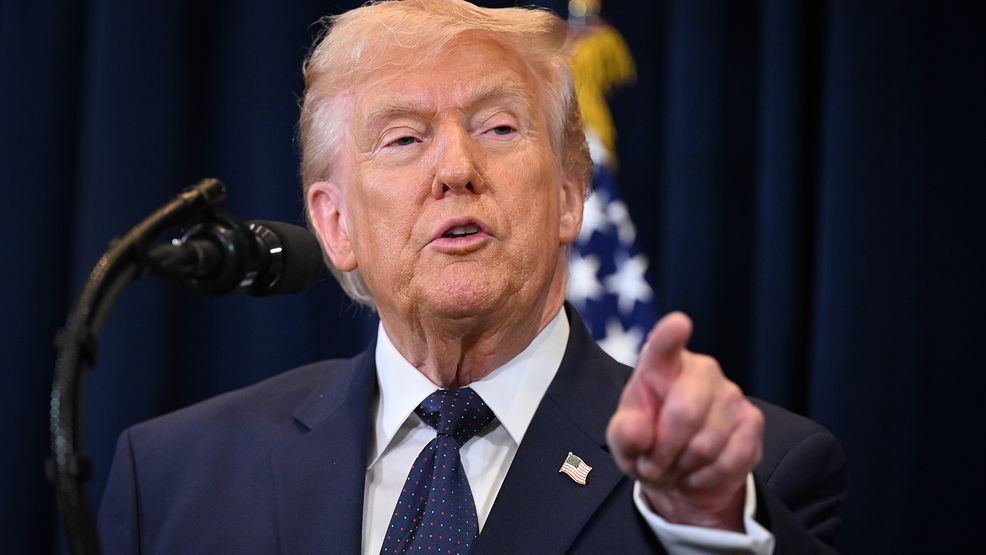
In a sweeping shift that marks a new chapter in America’s immigration policy, President Donald Trump announced significant changes to border security and migrant processing during a press conference held yesterday at Trump National Doral Miami.
The President, addressing reporters at his Florida resort property, outlined what administration officials are calling a “comprehensive overhaul” of the immigration system that dominated much of his campaign rhetoric during the 2024 election cycle.
“We’re implementing the strongest border protection plan in American history,” Trump stated, flanked by several Cabinet members including the Secretary of Homeland Security. “These measures will ensure American safety while creating an orderly process for those who truly qualify for entry.”
The new directives include the acceleration of border wall construction along previously unfortified sections of the U.S.-Mexico border, the expansion of detention facilities to accommodate what officials project will be an increase in apprehensions, and the deployment of additional Border Patrol agents to high-traffic crossing areas.
Immigration experts note that this policy shift represents a significant departure from the approach taken by the Biden-Harris administration, which had rolled back many of Trump’s first-term border policies between 2021 and 2024.
Alex Nowrasteh, immigration policy analyst at the Cato Institute, pointed out the cyclical nature of these changes. “We’re seeing the pendulum swing back toward enforcement-first policies, which creates tremendous uncertainty for migrants, border communities, and the immigration system as a whole,” Nowrasteh explained.
The announcement comes amid fluctuating border crossing statistics, with Customs and Border Protection reporting approximately 187,000 encounters along the southwest border in February, representing a 14% decrease from January but still higher than historical averages for this time of year.
Southern border states are responding differently to the federal policy shift. Texas Governor Greg Abbott immediately praised the announcement, having previously deployed state resources to supplement federal border operations. Meanwhile, Arizona’s governor expressed concerns about the humanitarian implications of expanded detention.
Beyond physical barriers, the administration also unveiled a revamped approach to asylum processing. Under the new guidelines, asylum seekers will face more stringent credible fear interviews and expedited removal proceedings for those deemed not to meet the legal threshold for protection.
Human rights organizations have already voiced strong opposition. The American Civil Liberties Union announced plans to challenge aspects of the policy in federal court, with litigation director Maria Sanchez stating, “These measures undermine our legal obligations to asylum seekers and violate due process protections.”
Business leaders, particularly in agriculture and hospitality sectors, have expressed mixed reactions. The American Farm Bureau Federation raised concerns about labor shortages, noting that many farms rely heavily on seasonal migrant workers.
“We need secure borders, but we also need a functional guest worker program,” said James Thornton, president of the Farm Bureau. “Without adequate agricultural labor, American consumers will face higher food prices and reduced domestic production.”
Wall Street analysts suggest the policy could have economic ripple effects, particularly in border economies that have developed interdependent relationships with Mexican communities. The Mexican peso weakened slightly against the dollar following the announcement, reflecting market uncertainty about cross-border trade implications.
Congressional reaction has largely fallen along partisan lines, with Republican leaders praising the measures as necessary for national security and Democratic opponents criticizing what they characterize as a return to divisive policies.
Senate Majority Leader Mark Johnson (R-Iowa) called the plan “a crucial step toward restoring order at our southern border,” while House Minority Leader Katherine Reyes (D-California) countered that the approach “ignores the complex realities of migration and fails to address root causes.”
Policy analysts expect implementation to begin within 30 days, though legal challenges could delay aspects of the plan. Department of Homeland Security officials indicated that certain provisions, particularly those relating to expedited deportation proceedings, would take effect immediately.
As markets, border communities, and migrants themselves adjust to this policy reversal, the administration has promised quarterly assessment reports to measure effectiveness and economic impact.
Fact Checker
Verify the accuracy of this article using The Disinformation Commission analysis and real-time sources.

9 Comments
Addressing foreign influence over American media outlets is a complex challenge, but one the FCC seems determined to tackle. I’m curious to learn more about their proposed approach and how they plan to balance media independence with national security concerns.
The FCC’s plan to scrutinize news outlets over foreign influence concerns is a reasonable response. Maintaining the integrity of US media is vital, though the review process must be fair and transparent. I look forward to seeing what concrete steps they propose.
This sounds like a concerning development. Ensuring the integrity of media outlets and guarding against foreign manipulation of the information landscape is crucial for a healthy democracy. I hope the FCC’s review will be thorough and transparent.
The FCC’s plan to scrutinize news licenses in response to foreign media manipulation is a reasonable step. Protecting the integrity of US journalism is vital. I hope their review is thorough and leads to effective safeguards while preserving press freedoms.
Media manipulation by foreign powers is a real threat that needs to be taken seriously. I’m glad the FCC is stepping in to review the licensing of news outlets. Ensuring the reliability and independence of the press is crucial for an informed citizenry.
The FCC taking action to address foreign meddling in US media is a welcome move. Maintaining an independent and trustworthy press is vital. I’m curious to see what specific measures they propose to safeguard against these threats.
Foreign actors attempting to manipulate the US media is a serious issue that deserves attention. The FCC’s review of news outlet licenses is a prudent step, though the details will be important. I hope this leads to robust protections for journalistic integrity.
Foreign meddling in US media is a serious threat that warrants the FCC’s attention. Reviewing news outlet licenses is a prudent measure, though the details will be critical. I’m interested to see what specific policies they implement to guard against these challenges.
This is an important issue that the FCC is rightly addressing. Protecting the American media landscape from foreign manipulation is crucial. I hope their review leads to effective safeguards while preserving press freedoms.