


Listen to the article
President Donald Trump on Monday called for significant policy changes to reform the nation’s education system, proposing substantial funding shifts and new requirements for schools across America.
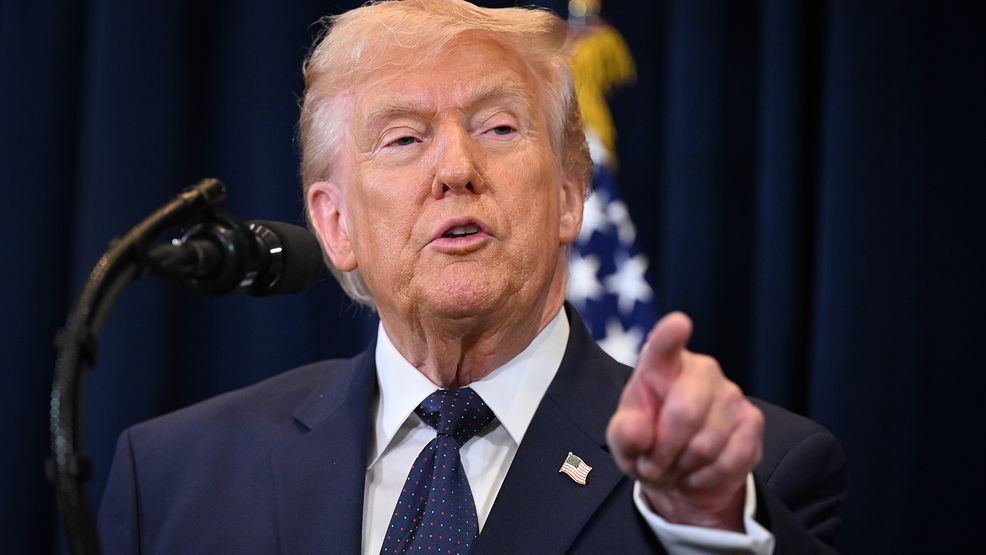
Speaking at a press conference from Trump National Doral Miami, the President outlined what he described as a “complete overhaul” of educational priorities that would redirect federal dollars and impose new standards on public schools.
“Our education system has failed too many American children for too long,” Trump said. “We’re going to fix that with bold action that puts students first and breaks the grip of bureaucrats who care more about ideology than outcomes.”
The President’s plan centers around several key initiatives, including redirecting approximately $40 billion in federal education funding toward school choice programs, implementing mandatory patriotic education curricula, and establishing new standardized testing requirements focused on core academic subjects.
The proposal would significantly expand federal voucher programs allowing parents to use public funds for private school tuition. It would also condition certain federal education dollars on states implementing what the administration calls “academic transparency laws” requiring schools to post all teaching materials online for parental review.
Education policy experts note that the proposal represents one of the most ambitious attempts to reshape American education in decades, though implementation would face significant hurdles in Congress and likely court challenges.
Michael Petrilli, president of the Thomas B. Fordham Institute, a conservative education think tank, called the plan “sweeping in scope” but questioned its political viability.
“While there’s strong Republican support for school choice expansion, the scale of funding redirection proposed here would face fierce opposition from public education advocates and teachers’ unions,” Petrilli said. “The constitutional questions around some of these proposals are also substantial.”
Democrats were quick to criticize the plan. Senate Education Committee Ranking Member Patty Murray called it “a dangerous attempt to undermine public education” and vowed to oppose it.
“This isn’t reform—it’s an attack on the very foundation of our public school system that would hurt millions of students while benefiting wealthy families who can already afford private options,” Murray said in a statement.
The plan comes amid growing parental frustration with public education following pandemic-related learning disruptions. Recent national assessment data shows continuing academic challenges, with math and reading scores for American students still below pre-pandemic levels in most states.
Trump’s proposal would establish what he called a “Patriotic Education Initiative” requiring schools receiving certain federal funds to incorporate specific American history content and civics education. The plan would also eliminate several diversity and inclusion programs currently funded by the Department of Education.
Education Secretary William Evers, who joined Trump at the announcement, emphasized what he called “returning to educational fundamentals.”
“For too long, our schools have been distracted by social agendas at the expense of core academic achievement,” Evers said. “This plan refocuses our national priorities on excellence, accountability, and parental rights.”
The National Education Association, the nation’s largest teachers’ union with over three million members, immediately condemned the proposal. NEA President Rebecca Pringle called it “a thinly veiled attempt to privatize education” and pledged organized opposition.
Market analysts noted that the announcement sparked share price increases for several private education companies, including K12 Inc. and Stride, which operate online schools and educational services that could potentially benefit from expanded school choice programs.
The proposal faces an uncertain legislative path, requiring congressional approval for major funding changes. Republican leaders in the House expressed support for the broad outlines, while Senate leadership offered more measured responses, acknowledging the need for education reform while stopping short of endorsing specific elements of Trump’s plan.
White House officials indicated that the President would begin promoting the education reform package during upcoming campaign appearances, positioning it as a centerpiece of his domestic policy agenda heading into the midterm elections.
Fact Checker
Verify the accuracy of this article using The Disinformation Commission analysis and real-time sources.

8 Comments
Revamping federal education funding is a bold move, but I’m curious to learn more about the rationale and potential impacts on public schools. Expanded school choice could increase access, but funding shifts need to be carefully weighed.
Good point. Ensuring fair and equitable access to quality education for all students should be the top priority, regardless of the funding model.
Education reform is a perennial challenge, and the President’s plan to ‘fix’ the system with ‘bold action’ raises a lot of questions. I hope the details prioritize student outcomes and access over political ideology.
Federal education reform is a complex and sensitive issue. While increased school choice and funding flexibility may have merits, we’ll need to closely examine how it impacts underserved communities and maintains academic standards.
Interesting proposal to reform the education system, though the details will be crucial. Directing more funding to school choice programs could promote diversity, but we’ll have to see how it’s implemented in practice.
I agree, the devil is in the details. Mandatory ‘patriotic education’ also raises some concerns about curriculum politicization that will require careful oversight.
The President’s proposal to overhaul the education system is certainly ambitious. I’m interested to see how the plan to redirect funds and impose new standards plays out, especially around the ‘patriotic education’ curriculum.
Redirecting $40 billion in federal education funds is a significant move. I’m curious to learn more about the specific proposals for school choice programs and standardized testing requirements, and how they will be implemented equitably.