


Listen to the article
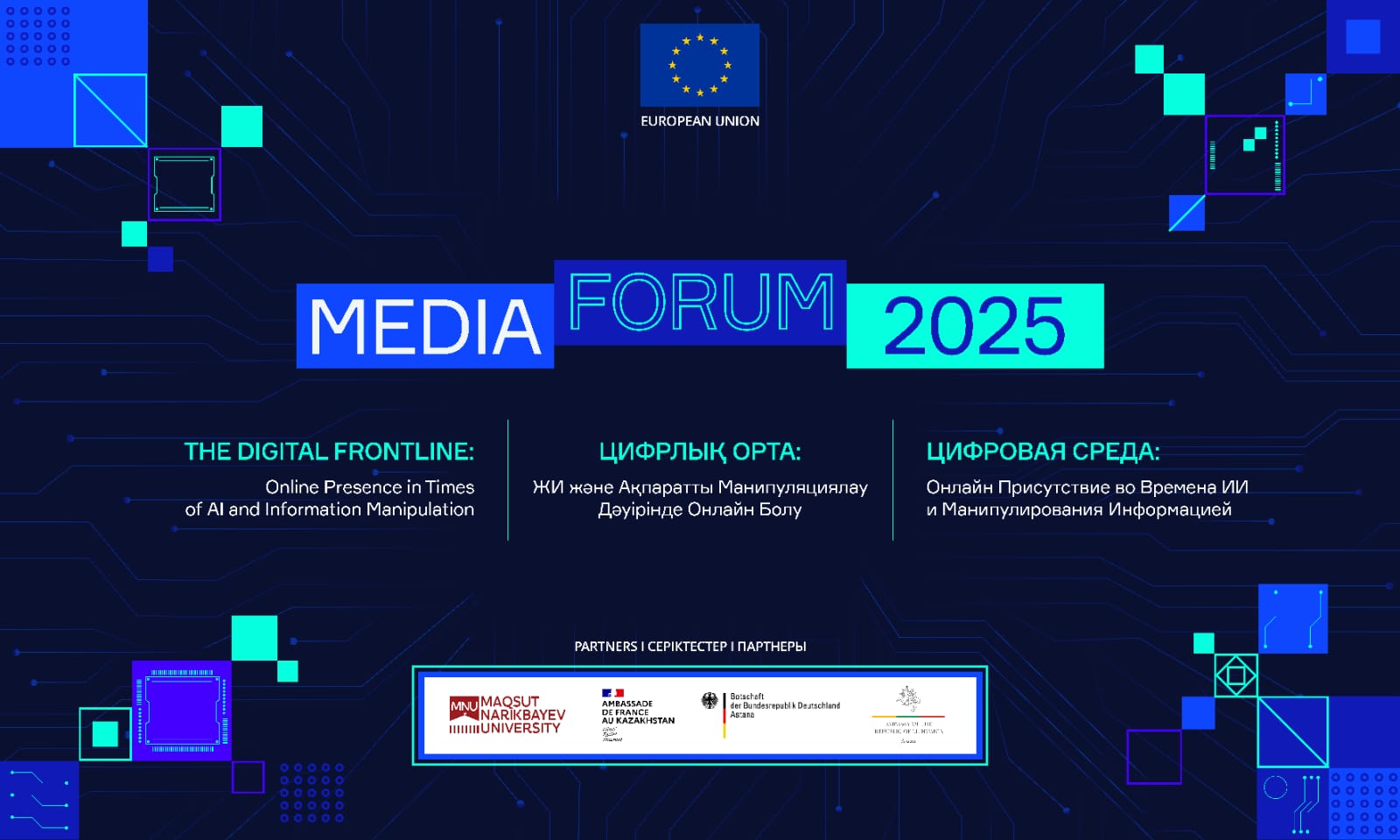
The European Union Delegation to Kazakhstan will host its third annual Media Forum on December 4, 2025, focusing on critical digital challenges facing journalists in the era of artificial intelligence and information manipulation. The event, titled “The Digital Frontline: Online Presence in Times of AI and Information Manipulation,” will take place at Maqsut Narikbayev University in Astana.
The day-long forum will bring together media professionals from across Central Asia and the European Union, creating a platform for discussing the rapidly evolving media landscape. Participants will explore how AI technologies and digital manipulation techniques are transforming journalism and media operations throughout the region.
European Union Ambassador to Kazakhstan, H.E. Ms. Aleska Simkic, will deliver opening remarks alongside EU Special Representative for Central Asia, H.E. Mr. Eduards Stiprais, and Ms. Anar Ibrayeva, Provost of Maqsut Narikbayev University. Their participation underscores the importance the EU places on media development in Central Asia, a region where press freedom faces various challenges.
Media representatives are invited to attend the opening session scheduled from 9:30 to 11:00 AM. However, subsequent discussions, roundtables, and workshops will be conducted off the record to facilitate open and candid exchanges among participants. This format reflects the sensitive nature of topics likely to be addressed, including combating disinformation and protecting journalistic integrity in increasingly complex digital environments.
The timing of this forum is particularly significant as Central Asian media outlets continue to navigate political pressures while simultaneously adapting to technological disruption. Countries in the region have seen varying degrees of media freedom, with Kazakhstan specifically undertaking reforms in recent years but still facing challenges in establishing truly independent media.
For the European Union, the forum represents part of a broader engagement strategy in Central Asia, where media development is viewed as essential to democratic progress and regional stability. The EU has consistently supported media initiatives across the region through various programs and partnerships.
The focus on artificial intelligence reflects growing global concerns about AI’s dual role in journalism—offering powerful new tools for reporting while simultaneously creating unprecedented challenges through deepfakes, automated disinformation, and algorithmic manipulation of news distribution. Media professionals across Central Asia are increasingly confronting these technologies, often with limited resources or specialized training.
The choice of Maqsut Narikbayev University as the venue highlights the institution’s growing role in media education and research in Kazakhstan. The university has expanded its journalism and communications programs in recent years, preparing a new generation of media professionals for the digital landscape.
The EU Delegation has indicated that practical workshops will form a significant portion of the day’s activities, suggesting a focus on skill-building alongside theoretical discussions. This approach acknowledges the urgent need for practical solutions to emerging digital challenges.
Media representatives wishing to attend must register by December 3, 2025, by contacting Aisha Kutubayeva via email or phone. Organizers have advised early arrival for those needing to set up equipment before the event begins.
This forum continues the EU’s tradition of fostering media development in Central Asia, with previous annual forums addressing different aspects of the evolving media environment in the region. The continuity of these events suggests a sustained commitment to supporting independent journalism and media literacy as counterweights to growing information manipulation across the Eurasian space.
Fact Checker
Verify the accuracy of this article using The Disinformation Commission analysis and real-time sources.

20 Comments
The EU’s support for media development in Central Asia is commendable. In a region facing press freedom challenges, this forum could help strengthen the capacity of local journalists to navigate the digital landscape.
I’m curious to learn more about the specific AI and information manipulation challenges that media professionals in Central Asia are grappling with. Hopefully, this forum will shed light on the region-specific dynamics at play.
The participation of high-level EU officials underscores the strategic importance of this forum. I’m hopeful it will yield tangible outcomes and actionable recommendations for media professionals in the region.
Absolutely. The involvement of senior EU leadership signals a strong commitment to supporting media development and strengthening democratic institutions in Central Asia.
The EU’s efforts to foster media development in Central Asia are commendable. This forum represents an important opportunity to build cross-border networks and shared best practices for navigating the digital landscape.
Agreed. Strengthening regional cooperation on media issues will be key to addressing the common challenges faced by journalists in the era of AI and information manipulation.
Bringing together media representatives from Central Asia and the EU is a smart move. Cross-border collaboration will be key to addressing the shared challenges posed by AI and information manipulation.
The topic of this forum is incredibly timely and relevant. As AI continues to advance, it will be crucial for journalists to stay ahead of the curve and mitigate the risks of digital manipulation.
Absolutely. This event could help equip media professionals with the knowledge and tools they need to combat the spread of disinformation in the digital age.
Fascinating topic – AI is rapidly transforming the media landscape, both in positive and concerning ways. I’m curious to hear the perspectives shared at this forum on balancing the benefits of AI with the risks of disinformation and manipulation.
Absolutely, the responsible development and deployment of AI in journalism will be critical. Looking forward to seeing the outcomes and recommendations from this event.
It’s great to see the EU prioritizing media development in Central Asia, a region that has faced significant press freedom challenges. This forum could help strengthen the resilience of local journalism.
Agreed. Empowering local media is crucial for promoting transparency and accountability, which are essential for democratic governance.
This forum sounds like a critical opportunity for media professionals in Central Asia to discuss the challenges of AI and information manipulation. It’s great to see the EU taking an active role in supporting media development in the region.
I agree, the participation of high-level EU officials underscores the importance they place on press freedom and media integrity in Central Asia.
AI and information manipulation are complex, multifaceted issues that require a nuanced, multi-stakeholder approach. This forum seems well-positioned to facilitate that kind of constructive dialogue.
This forum could not come at a more critical time. As AI and digital manipulation techniques become more sophisticated, it’s essential that media professionals have the knowledge and tools to identify and counter these threats.
As AI becomes more integrated into media operations, it’s crucial that journalists and outlets maintain strong ethical standards and transparency. I hope this forum provides practical guidance on those fronts.
Agreed. Navigating the ethical minefields of AI in journalism will be key to preserving public trust in news media.
Information manipulation is a growing global threat, so it’s heartening to see the EU taking a proactive stance in Central Asia. This forum could yield valuable insights for media professionals worldwide.