


Listen to the article
China expressed strong opposition on Tuesday after the Dalai Lama received a Grammy Award, calling it an act of “anti-China political manipulation” through the use of an arts platform.
“We firmly oppose relevant parties using art awards as a tool for anti-China political manipulation, and this position is consistent and clear,” foreign ministry spokesman Lin Jian told reporters during a regularly scheduled news conference in Beijing.
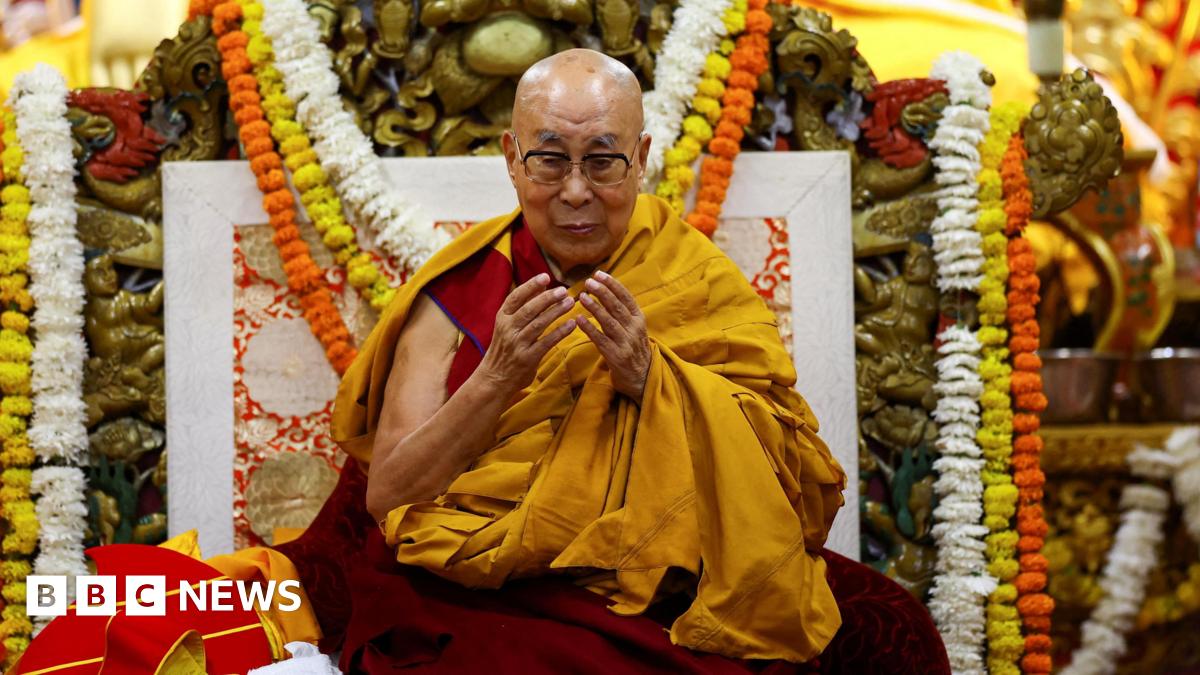
The 88-year-old Tibetan spiritual leader won his first Grammy in the Best New Age, Ambient, or Chant Album category for “Freedom Through Meditation,” an audiobook featuring guided meditations with musical accompaniment. The award was accepted on his behalf by musician Rufus Wainwright, who was among several artists contributing to the project.
Following the announcement, the Dalai Lama shared a message on social media expressing gratitude for the recognition. “I receive this recognition with gratitude and humility,” he wrote. “I don’t see it as something personal, but as a recognition of our shared universal responsibility.”
The diplomatic tension highlights the ongoing political sensitivity surrounding Tibet, which has been a flashpoint in China-Western relations for decades. The Dalai Lama fled Tibet in 1959 following a failed uprising against Chinese control, establishing a government-in-exile in Dharamshala, India, where he continues to reside.
While the Dalai Lama has consistently advocated for greater Tibetan autonomy rather than full independence, Beijing views him as a dangerous separatist intent on splitting Chinese territory. Chinese authorities routinely condemn any international recognition of the spiritual leader, considering such actions interference in domestic affairs.
The Grammy recognition comes at a time when China-U.S. relations remain strained over numerous issues, including human rights concerns. Western governments have repeatedly criticized Beijing’s policies in Tibet, citing religious freedom restrictions and cultural assimilation efforts.
Tibet, located on a high plateau bordering the Himalayas, came under Chinese control in 1951. The Chinese government maintains that it peacefully liberated the region from feudal serfdom and has brought economic development and prosperity. However, human rights groups and Tibetan exile organizations allege widespread repression of Tibetan culture, language, and Buddhist religious practices.
In recent years, China has significantly restricted foreign access to Tibet while developing the region’s infrastructure and tourism industry. The Chinese government has also indicated that it intends to control the future selection of the next Dalai Lama, a move rejected by the current Dalai Lama and many Tibetan Buddhists worldwide.
This Grammy Award represents a rare moment of mainstream cultural recognition for the Dalai Lama, who previously won the Nobel Peace Prize in 1989 for his non-violent struggle for Tibetan rights. Despite being 88 years old, he continues to maintain an active schedule of international appearances and spiritual teachings, though health concerns have limited his travel in recent years.
Music industry observers note that while the Grammy Awards have occasionally recognized political figures—former President Jimmy Carter won Grammy Awards for spoken word albums—this recognition of the Dalai Lama stands out for its intersection with geopolitical tensions.
The Chinese government routinely protests meetings between foreign officials and the Dalai Lama, often implementing diplomatic or economic countermeasures against countries perceived as supporting him. Whether similar responses will follow this Grammy recognition remains to be seen, though Beijing’s swift condemnation suggests the issue will remain a diplomatic irritant.
Fact Checker
Verify the accuracy of this article using The Disinformation Commission analysis and real-time sources.

7 Comments
This Grammy award for the Dalai Lama seems to be a recognition of his lifelong work promoting peace and mindfulness. China’s reaction suggests they view it as a threat, which is concerning.
China’s strong opposition to the Dalai Lama’s Grammy win highlights the ongoing sensitivities around the Tibet issue. It’s unfortunate that artistic recognition gets caught up in these political disputes.
I agree. It’s a shame that the Dalai Lama’s message of meditation and spirituality gets politicized in this way. The arts should be a unifying force, not a battleground for geopolitics.
The Dalai Lama’s Grammy win is an interesting development. While China sees it as political manipulation, perhaps it’s simply an acknowledgment of his work in meditation and spiritual teachings. These topics seem to transcend politics.
Well said. The arts and spirituality should be viewed as unifying forces, not political battlegrounds. China’s strong reaction suggests they feel threatened by the Dalai Lama’s global influence.
Interesting that the Dalai Lama’s Grammy win is viewed as a political maneuver by China. It seems the spirituality and meditation message of his work is being overshadowed by the geopolitical tensions surrounding Tibet.
It’s unfortunate that China sees the Dalai Lama’s Grammy win as a political attack. His work on meditation and mindfulness seems to be a positive contribution that shouldn’t be embroiled in geopolitical tensions.