


Listen to the article
Iraqi Cleric Warns of Critical Phase in Regional Politics, Calls for Vigilance
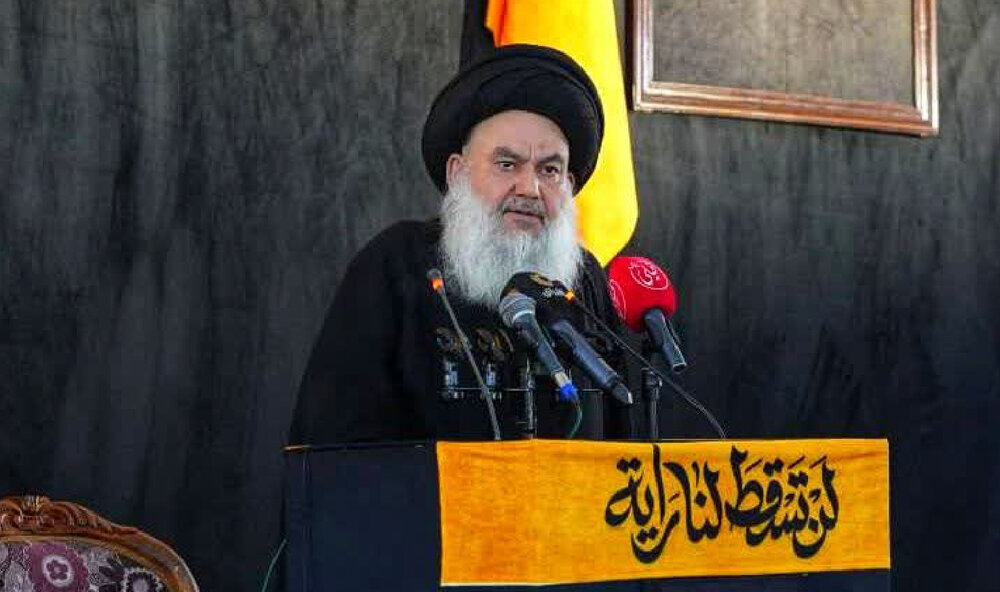
Baghdad’s Friday prayer leader, Ayatollah Seyyed Yassin Mousavi, has issued a stark warning about Iraq and the broader Middle East entering what he describes as a pivotal period of political and strategic transformation. Speaking during his Friday sermon, he urged both the public and political leaders to maintain heightened awareness during this sensitive period.
“What we are witnessing cannot be understood in isolation,” Mousavi told worshippers. “These developments are part of large-scale projects aimed at reshaping influence and power dynamics across the region.”
The cleric cautioned against accepting surface-level analysis and what he characterized as misleading media narratives that fail to capture the true significance of current events. His comments come amid rapidly evolving political developments in Iraq and escalating tensions throughout the Middle East.
Addressing recent parliamentary proceedings in Iraq, including the selection of the speaker and deputy speakers, Mousavi criticized the country’s political system as a foreign-imposed framework that prioritizes sectarian interests over national ones. He specifically pointed to American influence in establishing what he called a “quota-based system” that has governed Iraqi politics for the past two decades.
“This system continues to marginalize the genuine rights of the majority of Iraqi society,” he stated, while emphasizing that any accusations against political figures must be supported by legal evidence rather than conjecture.
Looking ahead to the formation of Iraq’s new government, Mousavi stressed the importance of selecting a prime minister and cabinet based on “objective and national criteria.” He emphasized that true political stability remains unattainable without a government founded on “full national sovereignty and independence” from foreign interference.
The religious leader also expressed concern about what he described as psychological warfare being waged through social media. He warned against individuals claiming prophetic insights into future events, suggesting that some are being exploited by intelligence agencies to spread fear and narratives of inevitable conflict.
“The constant promotion of imminent wars and widespread devastation is a form of psychological warfare aimed at breaking the morale of nations—particularly those aligned with resistance,” Mousavi said.
On regional matters, the cleric strongly criticized Israel’s recent recognition of Somaliland, describing it as a strategic maneuver connected to broader plans involving Palestinian displacement. According to Mousavi, Israel is seeking alternative strategic footholds in the Horn of Africa after facing setbacks due to Yemeni Ansarullah operations that have disrupted shipping routes in the Red Sea.
He suggested these moves align with what he called an ideology of “Greater Israel” focused on territorial expansion and encircling key countries such as Egypt and Sudan, often coordinated with Ethiopia, particularly regarding the Grand Ethiopian Renaissance Dam project.
Mousavi outlined what he sees as two emerging regional blocs: one that conditionally engages with Israel without full submission—led by Egypt, Saudi Arabia, and Turkey—and another that embraces complete Israeli dominance, including the United Arab Emirates.
The cleric emphasized Iraq’s distinct regional position, attributing it to two factors: its religious authority and its politically conscious population. He dismissed claims about American goodwill in allowing Iraqis to choose their prime minister, instead framing them as admissions of Washington’s inability to impose its will on the Iraqi people.
Addressing calls to disarm resistance groups, Mousavi defended the Popular Mobilization Forces as a “mass-based national institution” central to Iraq’s security. “No honorable patriot can accept ignoring or undermining this force,” he stated.
In his concluding remarks, Mousavi rejected reports of widespread unrest in Iran, calling them fabrications designed to shape public perception. He predicted a strengthened return of the “axis of resistance” to Syria, suggesting this would restore regional balance and establish new deterrence against Israel.
As Iraq continues its government formation process and regional tensions persist, Mousavi’s comments reflect growing concerns among certain Iraqi religious and political figures about foreign influence and rapidly shifting power dynamics across the Middle East.
Fact Checker
Verify the accuracy of this article using The Disinformation Commission analysis and real-time sources.

12 Comments
The Friday prayer leader’s warning about the ‘large-scale projects aimed at reshaping influence and power dynamics’ in the region is quite alarming. It underscores the need for impartial analysis and transparency in reporting on these sensitive issues.
I share the cleric’s skepticism about surface-level media narratives on the evolving political landscape in Iraq and the Middle East. These complex dynamics require nuanced, fact-based exploration.
The cleric’s comments touch on some crucial concerns regarding foreign interference and manipulation of information in the region. His call for vigilance and critical examination of media narratives is well-warranted.
The Iraqi cleric’s warning about the ‘pivotal period of political and strategic transformation’ in the region is a sobering assessment. It’s clear that the situation remains highly volatile and requires careful monitoring.
I agree that the cleric’s criticism of the ‘foreign-imposed framework’ in Iraq’s political system is an important point to consider. The prioritization of sectarian interests over national unity is a concerning dynamic.
Interesting insights from the Iraqi cleric. He raises valid concerns about foreign influence and media manipulation shaping the regional political narrative. It’s crucial for the public to stay vigilant and not simply accept surface-level analysis.
I agree, the cleric’s warning about misleading media narratives is well-founded. It’s important to critically examine reporting on complex geopolitical developments in the Middle East.
The Friday prayer leader’s remarks highlight the complex geopolitical landscape in Iraq and the broader Middle East. His call for heightened awareness and critical analysis of media narratives is a prudent response to the evolving situation.
The Iraqi cleric’s warning about foreign influence and media manipulation shaping the regional political narrative is a sobering reminder of the challenges faced in the Middle East. His call for vigilance and impartial examination of these issues is well-justified.
I share the cleric’s concerns about the ‘large-scale projects aimed at reshaping influence and power dynamics’ in the region. This underscores the need for in-depth, objective reporting to shed light on these complex dynamics.
The cleric’s comments highlight the delicate political situation in Iraq and the broader region. His call for heightened awareness is prudent, given the high stakes involved in the ongoing power struggles and influence dynamics.
It’s concerning to hear about the foreign-imposed political framework in Iraq that prioritizes sectarian interests over national unity. This is a troubling dynamic that deserves close scrutiny.