


Listen to the article
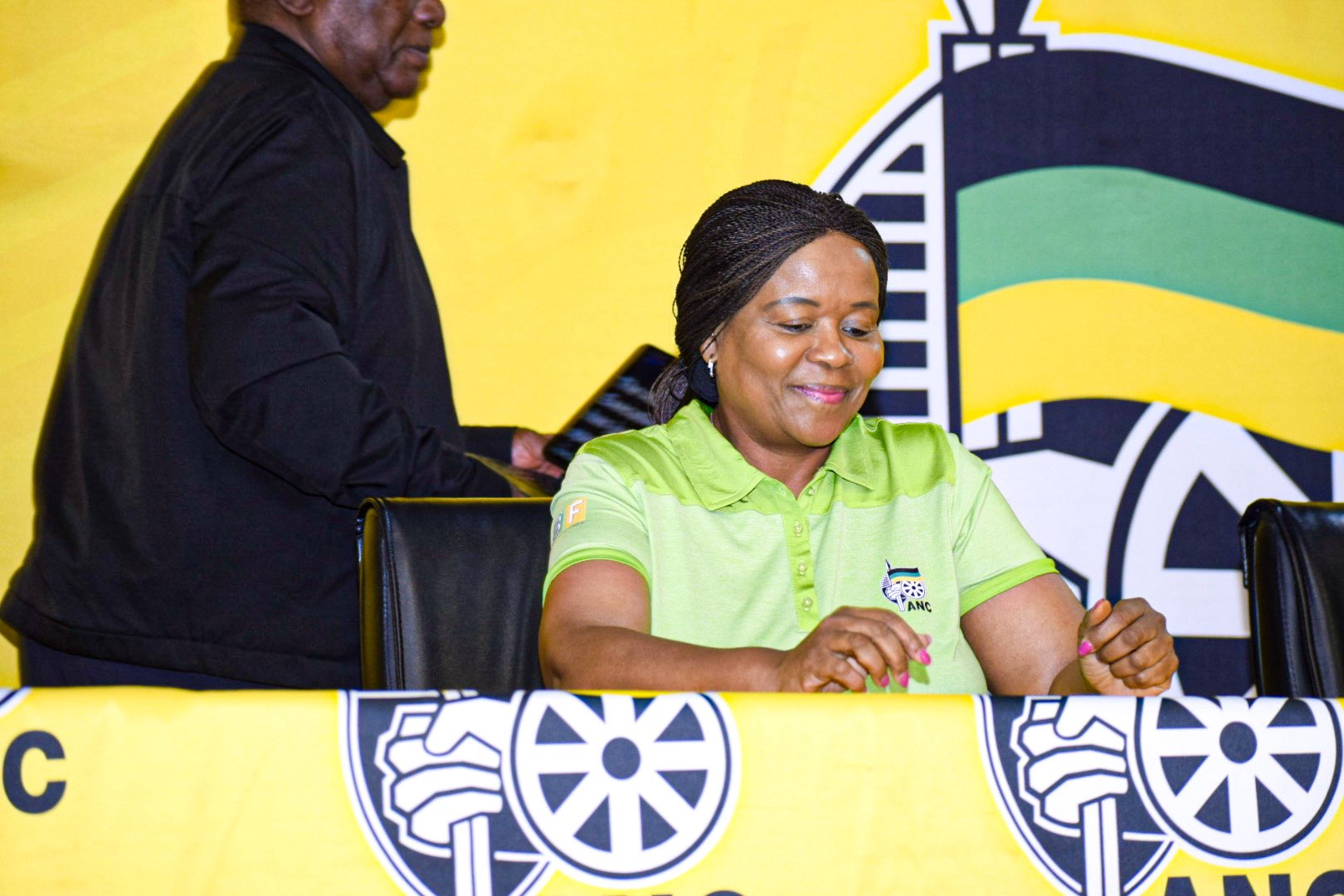
ANC Treasurer-General Gwen Ramokgopa has vehemently denied allegations of collusion stemming from purported leaked WhatsApp conversations linking her to controversial North West businessman Brown “Oupa” Mogotsi. In a strongly worded statement posted on X (formerly Twitter), Ramokgopa dismissed the claims as “fake faceless lies” designed to damage her reputation and create division within the party.
“These fake faceless lies are meant to sow division and damage my reputation. We work well as officials,” Ramokgopa declared on October 11. “My number was cloned and is being used on fake fabricated conversations with persons I don’t know. Those who spread these malicious fakes may be sued for defamation.”
The alleged communications, which have circulated widely on social media platforms and WhatsApp groups, suggest Ramokgopa and Mogotsi plotted to smear ANC Secretary-General Fikile Mbalula through orchestrated media manipulation. The controversy emerges against the backdrop of the Madlanga Commission’s investigation into political interference in law enforcement agencies.
Mogotsi has recently gained notoriety following testimony at the Madlanga Commission by KwaZulu-Natal Police Commissioner Nhlanhla Mkhwanazi, who implicated him in alleged efforts to disband the Political Killings Task Team (PKTT). Mkhwanazi claimed Mogotsi collaborated with suspended Police Minister Senzo Mchunu and suspended Deputy National Commissioner Shadrack Sibiya to shield politically connected criminals from investigation.
The Commission, chaired by retired Constitutional Court Justice Mbuyiseli Madlanga and established in July 2025, is examining systemic corruption across the South African Police Service, National Prosecuting Authority, judiciary, and correctional services. Testimony from Crime Intelligence head Dumisani Khumalo revealed Mogotsi’s involvement in spreading misinformation, including false claims about the arrest of National Police Commissioner Fannie Masemola.
Political analysts suggest the timing of these leaked messages is significant, as they surface when Ramokgopa’s political stock within the ANC appears to be rising. As a potential contender for higher office ahead of the party’s 2027 elective conference, anonymous attacks could be strategically aimed at undermining her position and credibility.
This is not the first time Ramokgopa has faced disinformation campaigns. In June 2024, she warned followers about fake social media accounts impersonating her. Earlier smears in January 2025 attempted to connect her to businessman Edwin Sodi and the Rooiwal wastewater scandal, allegations that dissipated due to lack of evidence.
Supporters have rallied behind Ramokgopa, with the Progressive Business Forum (PBF), which she chairs, initiating a forensic investigation by Tayfin Auditors to identify the source of the rumors. PBF spokesperson Tshwane Molope characterized the claims as “misleading, false and baseless” and indicated legal action might follow if necessary.
“Dr. Ramokgopa’s clean image threatens certain elements within the party who fear her growing influence ahead of the 2027 leadership race,” said a source close to the Treasurer-General who requested anonymity due to the sensitivity of the matter.
Ramokgopa, who holds a medical degree and has built a career advocating for public health and equity, has maintained a relatively low-key but effective style since assuming the Treasurer-General position in 2022. Her focus on party funding and organizational renewal has earned her respect within ANC circles.
Meanwhile, Mogotsi faces his own controversies. The ANC North West has accused him of scamming individuals by selling fake party memberships, while Mbalula has distanced the organization from him and launched a R1 million defamation lawsuit over claims Mogotsi made regarding party funding.
The Madlanga Commission has exposed additional concerns about Mogotsi’s connections, including communications with Vusimuzi “Cat” Matlala, a tender tycoon currently facing money laundering and attempted murder charges. Evidence presented to the Commission suggests Mogotsi tipped off Matlala about the PKTT’s disbandment, potentially interfering with investigations into political assassinations.
Public reaction to the controversy reflects broader frustration with what some call “commission fatigue” – the seemingly endless series of inquiries into corruption. Digital media experts have highlighted how the incident underscores the growing problem of disinformation spread through platforms like WhatsApp, which has significant reach in South Africa.
As the ANC navigates internal tensions ahead of its 2027 conference, this episode serves as another reminder of how digital manipulation and fake news can be weaponized in political battles, potentially undermining public trust in leaders and institutions.
Fact Checker
Verify the accuracy of this article using The Disinformation Commission analysis and real-time sources.

14 Comments
The allegations of collusion and media manipulation are quite serious, but Ramokgopa’s claim of number cloning adds an interesting twist. I’m curious to see how this story develops as more information comes to light.
Absolutely. The potential for cloned numbers and fabricated conversations is a concerning issue that deserves further investigation. Transparency and due diligence will be key in resolving this matter.
This seems like a complex situation with conflicting narratives. I’m curious to see how the investigation into political interference in law enforcement agencies may shed light on these alleged communications.
Agreed. The Madlanga Commission’s findings could be pivotal in understanding the context and motives behind this alleged media manipulation.
This case highlights the need for transparency and accountability in public office. Ramokgopa’s denial raises valid questions, and the Madlanga Commission’s findings could be crucial in determining the facts.
Absolutely. Ensuring the integrity of political processes and the media is essential for a healthy democracy. A comprehensive and impartial investigation is necessary to uphold the principles of good governance.
The implications of these alleged communications, if true, could be significant for the ANC and the broader political landscape. Ramokgopa’s claim of number cloning is an interesting development that warrants further scrutiny.
Agreed. The potential for political interference and media manipulation is a serious concern that deserves thorough investigation to uncover the truth and maintain public trust.
Interesting case of alleged media manipulation and number cloning. It’s important to get the facts straight before jumping to conclusions. Ramokgopa’s denial raises questions about the authenticity of the leaked conversations.
Indeed, we need more information to determine the veracity of these claims. The allegations have serious implications, so a thorough investigation is warranted.
This case highlights the growing challenges of misinformation and the need for robust fact-checking in the digital age. Ramokgopa’s denial raises valid questions about the authenticity of the leaked conversations.
Well said. In the age of social media, it’s crucial to approach such allegations with a critical eye and demand solid evidence before drawing conclusions.
Ramokgopa’s strong denial of the leaked conversations is noteworthy. If her number was indeed cloned, that would raise serious concerns about the integrity of the evidence. This case highlights the challenges of verifying digital communications.
You make a good point. In the digital age, it’s crucial to carefully scrutinize the provenance of any leaked or purported communications to avoid falling victim to potential manipulation.