


Listen to the article
Walking Backward: A Simple Exercise with Surprising Health Benefits
Walking backward could offer significant benefits for joint health, chronic pain management and cognitive function, according to multiple scientific studies. This unconventional exercise method is gaining recognition as researchers uncover its therapeutic potential.
A study published in the Journal of Orthopaedic Surgery and Research found that patients with mild to moderate knee osteoarthritis who incorporated backward walking into their routines several times weekly for six weeks experienced notable improvements. Participants reported reduced pain and better knee function compared to those who only walked forward.
The mechanics behind these improvements are straightforward but significant. Backward walking naturally shortens stride length and creates softer landings, which reduces compressive forces on knee joints. This gentler impact translates to less wear and tear over time, making it particularly valuable for individuals with joint pain.
Lower back pain sufferers may also find relief through this technique. Research published in PLOS One demonstrated that participants with chronic lower back pain who practiced backward walking showed decreased pain levels and improved lumbopelvic movement control—the critical coordination between the lower back and pelvis that stabilizes the spine.
“The motion engages a wider range of stabilizing muscles than conventional walking,” noted researchers. This expanded muscle engagement helps retrain movement patterns that may have become imbalanced in people with chronic pain conditions.
Unlike high-impact exercises that can aggravate existing conditions, backward walking offers a gentle approach to rehabilitation. It doesn’t require jumping, twisting, or heavy lifting—just a reversal of a familiar movement pattern. This accessibility makes it suitable for various age groups and fitness levels.
The benefits extend beyond physical therapy applications. According to the Cleveland Clinic, backward walking provides a substantial cognitive workout. The practice challenges spatial awareness, coordination, and concentration, strengthening neural pathways between brain and muscles. This enhanced mind-body connection can improve balance and reaction time, which becomes increasingly important as people age.
From a fitness perspective, walking backward is surprisingly efficient. It burns more calories per minute than forward walking at the same pace due to increased muscular engagement. The exercise naturally promotes better posture as practitioners must remain upright and alert to maintain control and balance.
Even minimal time commitments can yield results. Research suggests that just five minutes of backward walking added to a daily routine can provide measurable benefits to strength and balance. This makes it particularly valuable for older adults or those recovering from injuries who may not be able to engage in more demanding exercise programs.
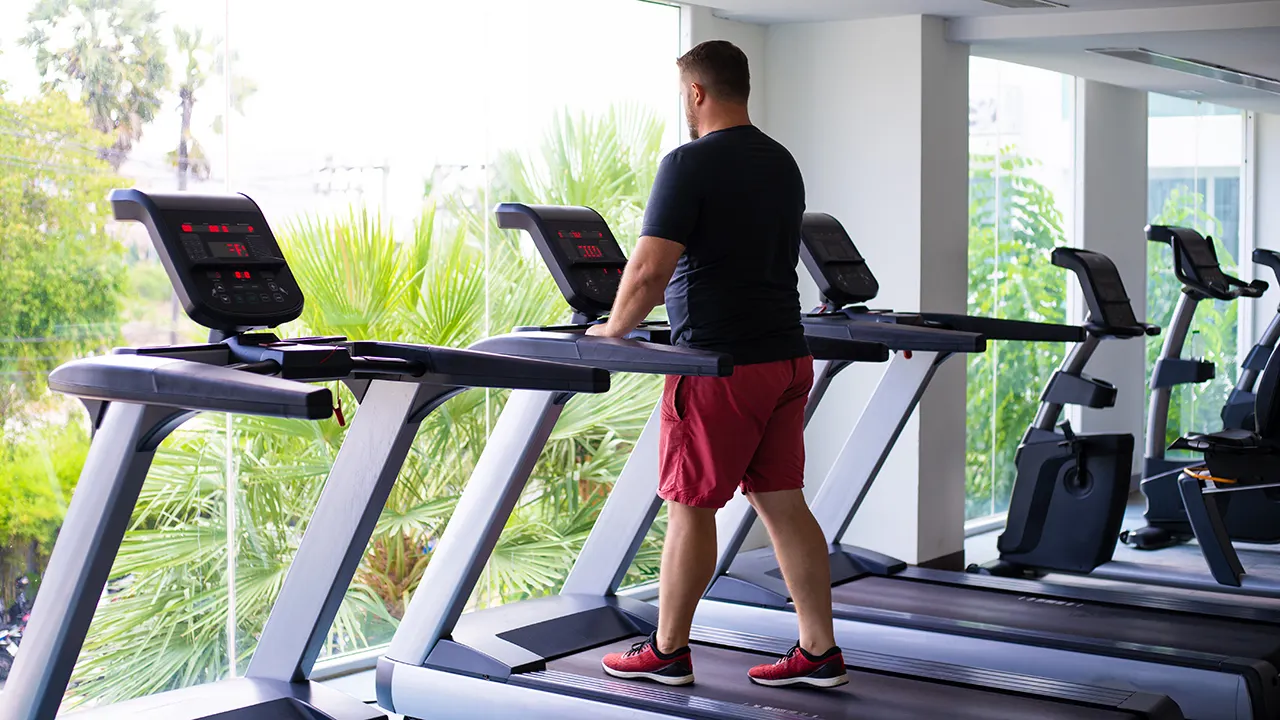
For those interested in trying backward walking, experts recommend starting cautiously. Begin in a flat, open space like a track, gym floor, or quiet hallway where obstacles are minimal. Take short, deliberate steps while maintaining proper posture—core engaged, shoulders back, and gaze forward as much as possible. Treadmill users should start at very slow speeds and use handrails until comfortable with the motion.
As proficiency increases, practitioners can incorporate interval training by alternating between forward and backward walking. Even short sessions can help the body adapt to the new movement pattern and begin to realize its benefits.
Safety remains paramount. Those with significant balance issues should practice with a spotter or near a stable support. Individuals with existing medical conditions should consult healthcare providers before beginning any new exercise routine.
With continued research demonstrating its effectiveness, backward walking represents a promising addition to physical therapy protocols and general fitness regimens. Its unique combination of joint protection, muscle engagement, and cognitive stimulation offers a multifaceted approach to wellness through a simple directional change.
Fact Checker
Verify the accuracy of this article using The Disinformation Commission analysis and real-time sources.

11 Comments
As someone with mild osteoarthritis, I’m really intrigued by the findings on the knee benefits of backward walking. Anything that can help manage that joint pain without invasive treatments is worth exploring. I’ll have to give this a try.
Interesting to hear about the benefits of backward walking. It makes sense that the reduced impact could help with joint and back pain. I’ll have to give this a try, sounds like a simple but effective way to improve mobility and recovery.
Yes, the gentler impact is a key advantage. I’m curious to see how this compares to other low-impact exercises like swimming or cycling for joint health.
This is a fascinating concept. The potential cognitive impacts of backward walking are especially interesting to me. I wonder if it could also have applications in neurological rehabilitation or fall prevention for the elderly.
As a personal trainer, I’m always on the lookout for new, low-impact exercises to recommend to clients dealing with joint issues. Backward walking seems like it could be a great addition to a balanced fitness routine. I’ll have to look into incorporating it with my clients.
While the joint pain and mobility benefits seem reasonably well-supported, I’m a bit skeptical about the cognitive claims around backward walking. More research would be needed to validate those types of broader health impacts. But still an intriguing technique worth exploring further.
This is a really intriguing concept. I wonder if backward walking could also have cognitive benefits beyond the physical impacts. The change in gait and altered visual perspective may engage the brain in a unique way.
Good point. The cognitive aspect is an interesting angle. I could see it potentially helping with balance, coordination, and spatial awareness as well.
I’m a bit skeptical about the claims around backward walking and longevity. That seems like a stretch based on the research cited. The joint and pain benefits are more plausible, but I’d want to see more robust studies before believing the broader health claims.
I’ll admit, the idea of walking backward doesn’t sound super appealing at first. But the research on the joint and pain management benefits is quite compelling. Might be worth incorporating into a regular exercise routine, even if just for short periods.
I agree, it does take some getting used to. But if the payoffs in terms of reduced joint stress and pain relief are real, it could be a worthwhile addition to a fitness regimen.