


Listen to the article
Obscure Brain Disorder Linked to Fourfold Increase in Dementia Risk, Study Finds
A little-known blood vessel disorder in the brain could significantly increase the risk of dementia in older adults, according to preliminary research from the American Heart Association.
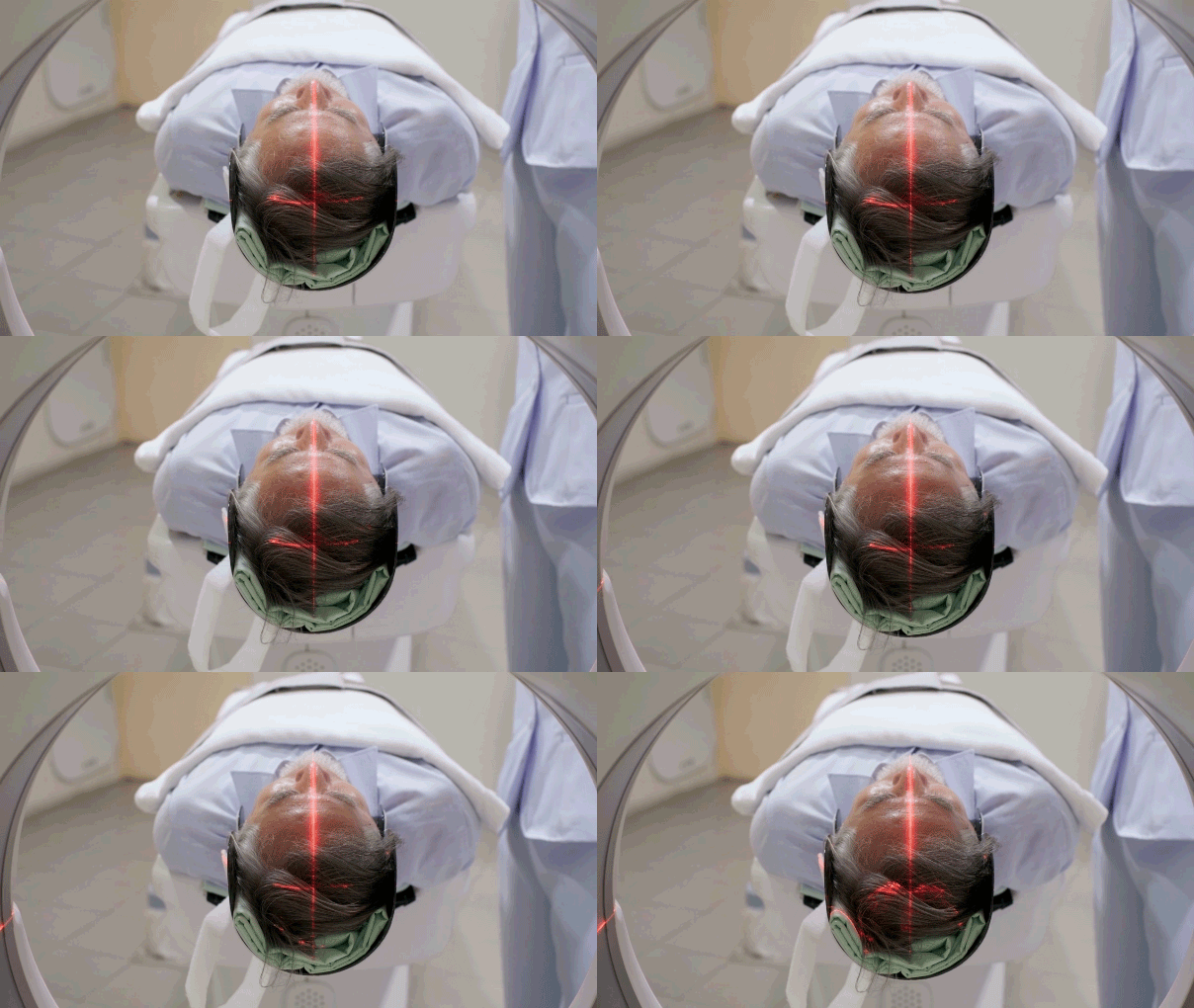
The condition, cerebral amyloid angiopathy (CAA), occurs when protein deposits build up in the brain’s blood vessels, gradually weakening them. While these proteins can accumulate with few or no symptoms as people age, the buildup can eventually impair brain function, leading to a formal diagnosis through MRI or PET scans. In severe cases, CAA can trigger a stroke.
The condition is surprisingly common, affecting approximately 23% to 29% of individuals over age 50 with moderate to severe symptoms, according to Cleveland Clinic data.
In a comprehensive new study, researchers analyzed health records of nearly two million Medicare beneficiaries aged 65 and older, tracking new dementia diagnoses from 2016 to 2022. Participants were categorized into four groups: those without CAA or stroke, those with CAA only, those with stroke only, and those with both conditions.
The findings were striking – about 42% of people with CAA developed dementia within five years, compared to just 10% of those without the condition. This represents roughly a fourfold increase in risk. Perhaps most notably, this elevated risk persisted even among patients with no history of stroke.
“What stood out was that the risk of developing dementia among those with CAA without stroke was similar to those with CAA with stroke, and both conditions had a higher increase in the incidence of dementia when compared to participants with stroke alone,” explained study author Samuel S. Bruce, an assistant professor of neurology at Weill Cornell Medicine in New York City.
The research suggests that protein accumulation in brain blood vessels may damage cognitive function through mechanisms beyond just causing strokes. This points to complex neurological pathways by which CAA contributes to dementia that researchers are still working to fully understand.
Bruce emphasized the practical implications of these findings: “These results highlight the need to proactively screen for cognitive changes after a diagnosis of CAA and address risk factors to prevent further cognitive decline.”
Medical providers typically screen for CAA in older patients experiencing new cognitive symptoms that might indicate small-vessel disease, or in those who have suffered a brain bleed or stroke consistent with the condition’s pattern. The diagnosis process generally includes detailed brain imaging to detect characteristic patterns of blood vessel damage and protein accumulation.
While the study establishes a compelling connection between CAA and dementia, the researchers acknowledge several limitations. The study relied on Medicare insurance claims data rather than direct clinical assessments. Bruce described these administrative diagnosis codes as “imperfect proxies for clinical diagnoses,” noting that “misclassifications can occur.”
To strengthen their methodology, the research team limited their analysis to diagnosis codes previously validated in other studies. However, they lacked access to actual brain imaging data that could have more definitively confirmed both CAA and stroke diagnoses.
The findings are scheduled for presentation at the American Stroke Association’s International Stroke Conference in New Orleans this week. The research is considered preliminary until it completes the full peer review process required for publication in a medical journal.
This research comes at a crucial time as the medical community seeks to better understand various pathways to dementia. With an aging global population, identifying risk factors like CAA could lead to improved early intervention strategies and potentially slow cognitive decline in vulnerable patients.
The study adds to growing evidence that vascular health plays a critical role in cognitive function, reinforcing the interconnection between cardiovascular and neurological health in aging populations.
Fact Checker
Verify the accuracy of this article using The Disinformation Commission analysis and real-time sources.

6 Comments
This is an interesting study on the potential link between a little-known brain disorder and increased dementia risk in older adults. It’s crucial to understand the underlying causes and risk factors for dementia as we work to improve prevention and treatment.
This study highlights the importance of continued research into lesser-known brain conditions and their potential connections to cognitive decline. Expanding our understanding of dementia risk factors is crucial for improving prevention and care.
The quadrupled dementia risk for those with CAA is an alarming statistic. I wonder if there are any lifestyle or dietary factors that could help mitigate the effects of this brain disorder, or if targeted treatments are in development.
Cerebral amyloid angiopathy (CAA) seems like a concerning condition that can significantly impact brain function and increase dementia risk. I’m curious to learn more about the prevalence of this disorder and if there are any known ways to detect or manage it early on.
Yes, the high prevalence rate of 23-29% in older adults is quite surprising. Early detection and management of CAA could be an important step in reducing dementia cases, if further research confirms these findings.
While the findings are concerning, I’m hopeful that increased awareness and further investigation of CAA could lead to new strategies for early intervention and reduced dementia incidence among older adults. More research in this area is clearly warranted.