


Listen to the article
AI-Powered Sleep Analysis Could Predict Disease Risk Years Before Diagnosis
Stanford Medicine researchers have developed an innovative artificial intelligence model that can predict a person’s risk of developing over 100 health conditions by analyzing sleep patterns. The model, named SleepFM, was trained on nearly 600,000 hours of sleep data collected from more than 60,000 participants at various sleep clinics.
“Sleep contains far more information about future health than we currently use,” said James Zou, Ph.D., associate professor of biomedical data science and co-senior author of the study. “By learning the language of sleep, our AI model opens new doors for studying the science and medicine of sleep.”
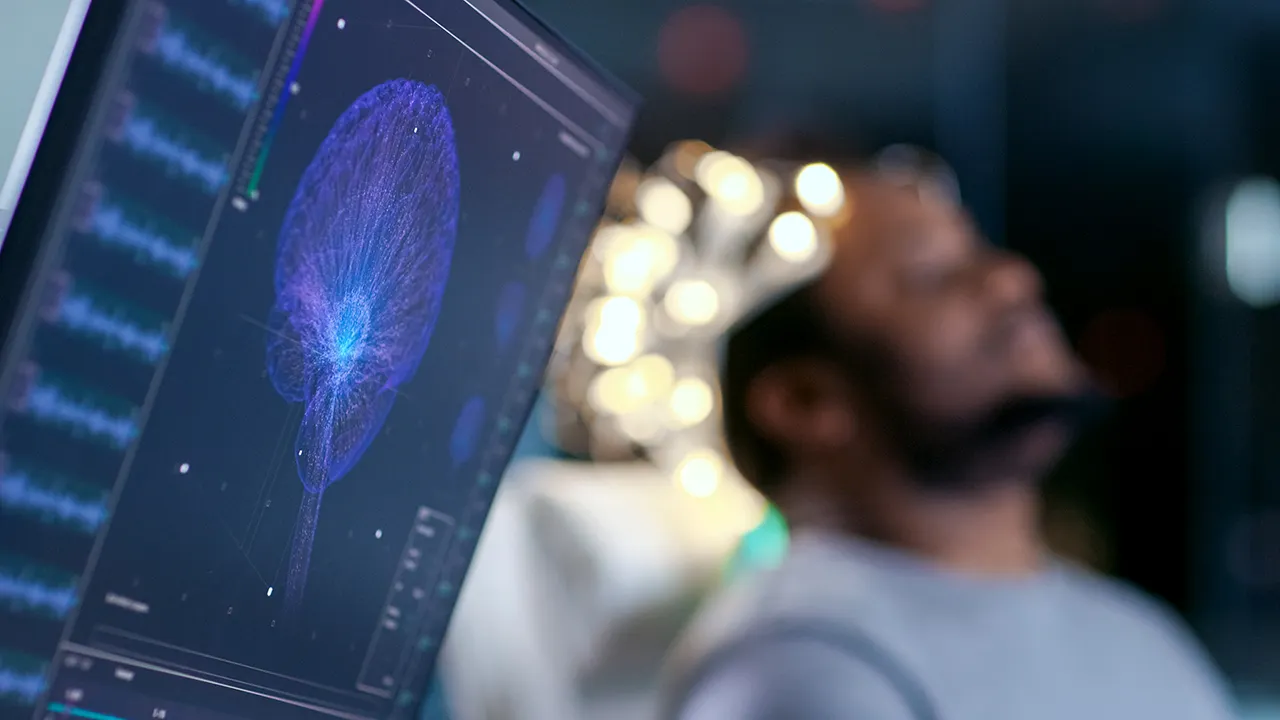
The researchers trained SleepFM using polysomnography, considered the gold standard of sleep measurement. This comprehensive approach tracks brain and heart activity along with breathing, leg movements, and eye movements during sleep. The team then paired this sleep data with participants’ electronic health records, which provided up to 25 years of medical history.
After analyzing 1,000 disease categories in these health records, the AI model discovered 130 diseases that it could predict with “reasonable accuracy,” according to the university’s press release.
“By analyzing a single night of sleep with powerful AI, we found that patterns in sleep can predict the risk of over 100 different diseases years before diagnosis,” Zou explained. The model showed particular strength in predicting cancers, pregnancy complications, circulatory conditions, and mental disorders.
Among the conditions that SleepFM could potentially forecast were dementia, heart disease, stroke, kidney disease, and even overall mortality risk. This breakthrough suggests that sleep monitoring could become an important preventive health tool in the future.
The study, partly funded by the National Institutes of Health, was published in the prestigious journal Nature Medicine and represents a significant advancement in using AI for preventive healthcare.
While the AI doesn’t explain its findings in human language, the research team has developed interpretation techniques to understand what specific patterns the model identifies when making disease predictions. This could potentially help medical professionals understand the biological mechanisms connecting sleep patterns to disease development.
Dr. Harvey Castro, a board-certified emergency medicine physician and AI expert from Dallas who wasn’t involved in the study, cautioned about the current limitations of the technology. “A significant signal doesn’t equal ready medicine,” he said. “SleepFM is a breakthrough, not yet a bedside tool.”
Castro emphasized an important distinction: “Ranking risk isn’t the same as predicting outcomes, and patients live in outcomes.” Before such technology can be implemented in clinical settings, he noted it must be proven to work reliably outside laboratory conditions.
The Stanford researchers themselves acknowledged several limitations to their work. “There’s still much that we don’t understand,” Zou noted. “Most analysis focuses on narrow tasks like sleep staging and apnea detection.”
The team cautioned that this remains a research project and isn’t intended to provide specific medical advice beyond emphasizing the importance of sleep. One technical limitation is that the study used sophisticated multi-modal sleep recordings that capture very strong signals from the brain, heart, and respiratory system—technology that isn’t readily available to consumers.
Looking ahead, the researchers hope to extend their work to collect data from wearable devices, which could make the technology more accessible while helping researchers better understand exactly what patterns the AI model is identifying.
This research highlights the growing intersection of artificial intelligence and healthcare, particularly in preventive medicine. As wearable technology continues to evolve, the potential for everyday sleep monitoring to provide early warning of health risks becomes increasingly feasible.
For now, the technology is being tested only in research settings and is not yet available to consumers, though it points to a future where AI-powered health monitoring may become a routine part of preventive healthcare.
Fact Checker
Verify the accuracy of this article using The Disinformation Commission analysis and real-time sources.

14 Comments
This is really fascinating work at the intersection of sleep science, AI, and predictive healthcare. I’m curious to learn more about the specific disease categories the model was able to forecast, and whether certain sleep patterns were more strongly correlated with certain conditions.
Great point. Understanding the nuances and specifics of the model’s predictive capabilities will be crucial as this technology gets further developed and potentially applied in clinical settings.
Wow, the sheer scale of the data used to train this AI model is really impressive. 600,000 hours of sleep data from over 60,000 participants is an enormous sample size. I’m curious to know more about how the researchers ensured the diversity and representativeness of that dataset.
Good question. The diversity and quality of the training data will be critical to ensuring the model’s predictions are accurate and applicable across different demographics and populations.
As someone with a family history of dementia, the prospect of using sleep data to detect early warning signs is very intriguing. I hope this research leads to more personalized and proactive approaches to managing neurodegenerative diseases.
As someone who has struggled with sleep issues, I’m really intrigued by the idea that my sleep patterns could reveal underlying health risks. This study highlights the untapped potential of sleep data to transform disease detection and management.
Absolutely, better understanding the connections between sleep and overall health is crucial. I hope this research inspires more work in this area to help people take a proactive approach to their wellbeing.
Very interesting that the researchers used polysomnography, the gold standard for sleep measurement, to train their AI model. That comprehensive sleep data must have been critical to detecting the subtle patterns that predict disease risk. I wonder what other types of sleep monitoring could also provide useful insights.
Good point. As consumer-grade sleep tracking devices become more advanced, it would be worth exploring whether that data could also feed into predictive models, albeit likely with less precision than the lab-based polysomnography.
It’s remarkable that an AI model could analyze such a vast amount of sleep data to uncover links to over 100 different health conditions. This kind of predictive capability could be transformative for healthcare, if the findings can be validated and scaled effectively.
While the potential applications of this technology are exciting, I share some concerns about the privacy and ethical implications. Sleep data is highly personal, and I hope robust safeguards are in place to protect individuals’ information and prevent misuse.
While the potential implications of this research are exciting, I would caution against over-hyping the findings until larger-scale validation studies have been conducted. Predicting health risks from sleep alone seems like a bold claim that requires rigorous further testing.
Fascinating research on the potential of sleep patterns to predict health risks. I’m curious to learn more about how the AI model was trained and what types of insights it can provide to help people get ahead of serious conditions.
Agreed, the ability to spot early warning signs from sleep data could be a real game-changer for preventative healthcare. Looking forward to seeing how this technology develops.