


Listen to the article
Scientists have discovered a 5,000-year-old bacterium from a Romanian ice cave that shows resistance to multiple modern antibiotics, raising new questions about the natural evolution of antibiotic resistance long before human medical intervention.
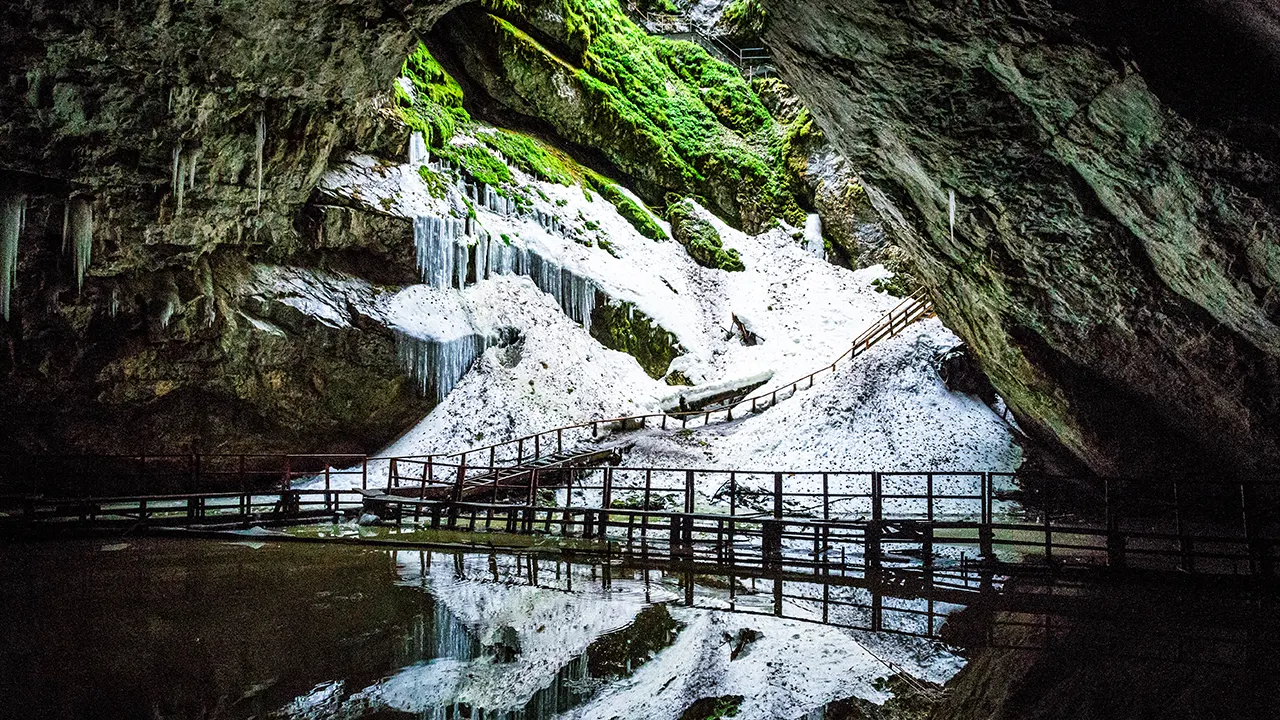
The remarkable finding came from the Scarisoara Ice Cave in Romania, where researchers extracted a 25-meter ice core representing approximately 13,000 years of frozen history. The research team, led by scientists from the Institute of Biology Bucharest of the Romanian Academy, published their findings in the journal Frontiers in Microbiology.
To maintain the integrity of their samples, researchers implemented strict protocols during extraction and transportation, keeping the ice frozen until it reached laboratory facilities. From these pristine samples, scientists isolated a bacterial strain identified as Psychrobacter SC65A.3.
Despite being sealed away for five millennia, the ancient microorganism demonstrated resistance to ten commonly used antibiotics, including rifampicin, vancomycin, and ciprofloxacin—medications routinely prescribed to treat serious bacterial infections today.
“The ten antibiotics we found resistance to are widely used in oral and injectable therapies used to treat a range of serious bacterial infections in clinical practice,” explained Cristina Purcarea, senior scientist at the Institute of Biology Bucharest of the Romanian Academy.
The ancient strain also showed resistance to trimethoprim, clindamycin, and metronidazole, which doctors regularly prescribe for infections affecting the lungs, urinary tract, skin and reproductive system. These medications represent cornerstone treatments in modern medicine’s arsenal against bacterial diseases.
The research team conducted comprehensive testing, challenging the ancient bacterium against 28 antibiotics from ten different drug classes. Their genetic analysis identified more than 100 genes linked to antibiotic resistance within the organism’s genome.
The discovery provides compelling evidence that antibiotic resistance mechanisms evolved naturally in environmental bacteria long before humans began developing and using antimicrobial drugs in the 20th century.
“Studying microbes such as Psychrobacter SC65A.3 retrieved from millennia-old ice cave deposits reveals how antibiotic resistance evolved naturally in the environment, long before modern antibiotics were ever used,” Purcarea noted.
This finding adds important context to the growing global concern about antibiotic resistance, which the World Health Organization has identified as one of the most pressing threats to global health. While overuse of antibiotics in healthcare and agriculture has accelerated resistance in recent decades, this research suggests that the genetic foundations for resistance have existed in bacterial populations for thousands of years.
The study does have limitations that the researchers acknowledge. It examined just one bacterial strain from a single cave sample, and there is currently no evidence that this ancient microbe poses any threat to human health or is capable of spreading among modern populations.
Experts also point out that Psychrobacter is primarily an environmental bacterium rather than a common human pathogen. Unlike clinical bacterial strains, it lacks established antibiotic “breakpoints”—the standardized measurements that help doctors determine whether a bacterium is officially classified as “resistant” to a particular antibiotic.
This distinction is important, as it means the resistance observed in laboratory settings cannot be directly compared to the clinical resistance seen in hospital settings with dangerous pathogens. Nevertheless, the genetic mechanisms identified could potentially inform our understanding of how resistance develops and spreads.
The Scarisoara Ice Cave represents a unique research environment—a natural time capsule preserving microorganisms from long before human medical intervention. As global warming threatens such ice repositories around the world, scientists are working to study these environments before they disappear, potentially taking with them ancient microbial DNA and the evolutionary insights they contain.
This discovery highlights the complex relationship between humans and the microbial world, reminding us that many of the challenges we face in modern medicine have deep evolutionary roots.
Fact Checker
Verify the accuracy of this article using The Disinformation Commission analysis and real-time sources.

14 Comments
Kudos to the research team for this impressive find! Uncovering such an ancient bacterium and characterizing its antibiotic resistance profile is no easy feat. It really underscores how pervasive this problem is, and how crucial it is that we continue investing in innovative antimicrobial solutions.
Well said. This discovery is a powerful reminder that the battle against antibiotic resistance is an ancient one, and that we must remain vigilant and creative in our approach. Relying on the same old drugs is clearly not a sustainable strategy.
This is a remarkable scientific discovery, but also a concerning one. The fact that this 5,000-year-old bacterium demonstrates resistance to a wide range of modern antibiotics is a stark reminder of the timeless evolutionary battle between microbes and antimicrobials. We must heed this warning and redouble our efforts to stay one step ahead.
Well said. This finding underscores that the problem of antibiotic resistance is not a new one, but has deep evolutionary roots. As we work to develop new antimicrobial solutions, we must also focus on preserving the effectiveness of our current drugs through responsible stewardship. It’s a multi-faceted challenge, but one that is crucial for protecting public health.
This is a sobering reminder that the problem of antibiotic resistance predates modern medicine. It’s concerning to think that even millennia-old bacteria can show resistance to our current arsenal of antibiotics. We’ll need to get very creative to stay ahead of these ancient adaptations.
Absolutely. Developing new classes of antibiotics is crucial, but we may also need to explore alternative treatment approaches to complement them, like phage therapy or engineered probiotics. The evolutionary arms race is only going to get tougher.
Fascinating discovery! It’s amazing to think this ancient bacterium has managed to survive and evolve such robust antibiotic resistance over thousands of years. I wonder what other long-dormant microbes might be lurking in untouched environments like this ice cave.
Indeed, it really highlights how pervasive antibiotic resistance is in nature, even without human intervention. This is a valuable lesson as we continue to grapple with the growing threat of superbugs.
What an incredible find! I’m curious to learn more about the specific mechanisms this bacterium uses to resist such a wide range of antibiotics. Understanding the genetic basis could provide valuable insights for future drug development.
Good point. Studying the genomic and biochemical adaptations of this ancient microbe could unlock new strategies for overcoming antibiotic resistance. This discovery is a reminder that nature has had a long head start in this evolutionary race.
Wow, this is a fascinating and unsettling finding. To think that microbes from thousands of years ago already had the capacity to resist modern antibiotics is really eye-opening. It highlights how urgently we need to develop new antimicrobial treatments and strategies to stay ahead of these evolutionary adaptations.
Absolutely. This discovery is a wake-up call that we can’t take our current antibiotics for granted. We need a multi-pronged approach – investing in novel drug development, promoting responsible use of existing antibiotics, and exploring alternative therapies. The stakes are high, but this ancient bacterium shows we have no choice but to rise to the challenge.
This is both fascinating and concerning. On one hand, it’s remarkable that this bacterium has remained viable for 5,000 years. On the other, the implications for modern medicine are quite worrying. We need to redouble our efforts to develop new classes of antimicrobials before these ancient superbugs spread.
I agree. While this discovery is a remarkable scientific achievement, it also serves as a stark warning. We can’t afford to be complacent – the threat of antimicrobial resistance is only going to grow as more of these resilient microbes are unearthed.