


Listen to the article
Red Light Therapy Shows Promise in Reducing Brain Inflammation from Head Trauma
Red light therapy has demonstrated significant potential in protecting people who experience head trauma from long-term health consequences by reducing brain inflammation, according to a groundbreaking study from the University of Utah.
Brain damage resulting from repeated impacts over time is known to cause a spectrum of cognitive symptoms, from memory issues to dementia, with soldiers and athletes being particularly vulnerable populations. This new research offers hope for a non-invasive treatment option that could help mitigate these devastating effects.
Chronic traumatic encephalopathy (CTE), a progressive and degenerative brain disease, is linked to repeated head impacts rather than a single injury, according to Mayo Clinic. The condition has gained significant attention in recent years, with more than 100 former NFL football players having been posthumously diagnosed with CTE, as noted in the study published in the Journal of Neurotrauma.
Similar cognitive issues have been observed in military personnel exposed to active combat situations, as well as first responders and veterans, highlighting the widespread nature of the problem beyond sports.
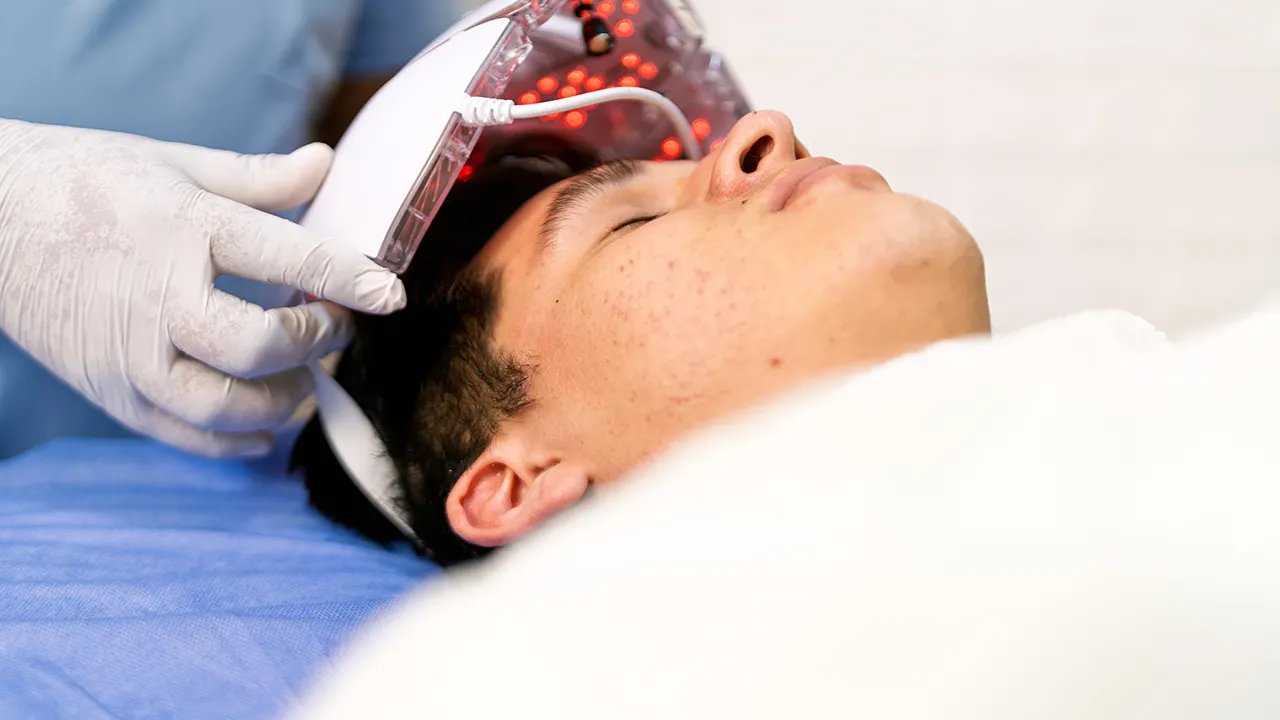
In this innovative study, researchers recruited 26 current football players to evaluate the effects of red light therapy on brain injuries. Participants were divided into two groups: one receiving actual red light therapy delivered through a specialized headset and intranasal device, and a control group receiving a placebo treatment with identical-looking devices that did not emit light.
The treatment regimen consisted of self-administered therapy sessions three times weekly for 20 minutes each, spanning a 16-week period. The specialized equipment was designed to penetrate the skull and deliver specific wavelengths of light to the brain tissue.
“My first reaction was, ‘There’s no way this can be real,'” said first author Hannah Lindsey, Ph.D., in the university press release, describing the striking nature of the results.
The findings were remarkable. Players in the placebo group showed increased brain inflammation over the course of the football season. Magnetic resonance imaging (MRI) scans taken at the conclusion of the season revealed significantly more inflammatory markers compared to baseline scans at the season’s start.
In stark contrast, players who received the red light therapy showed no increase in brain inflammation whatsoever during the same period, suggesting a protective effect against the normal inflammatory response triggered by repeated head impacts during football activities.
Previous research has established that red light, when sufficiently powerful, can penetrate the skull and reach brain tissue. Scientists believe the mechanism involves the light reducing inflammation-related molecules in the brain, potentially disrupting the pathological cascade that leads to conditions like dementia and other cognitive disorders.
“When we first started this project, I was extremely skeptical,” admitted Elisabeth Wilde, Ph.D., the study’s senior author. “But we’ve seen consistent results across multiple of our studies, so it’s starting to be quite compelling.”
The researchers acknowledged some limitations to their work, notably the small sample size, which resulted in different baseline levels of inflammation between the treatment and control groups. They emphasized that larger randomized clinical trials will be crucial to validate these preliminary findings across more diverse and extensive populations.
Looking ahead, the research team plans to scale up their investigation significantly. They aim to recruit 300 participants who suffer from persistent symptoms of traumatic brain injury (TBI) or concussion for a comprehensive randomized controlled trial scheduled for 2026. This expanded study will focus particularly on first responders, veterans, and active-duty service members.
“We’ve been trying to figure out how to make sports safer, so that our kids, friends and family can participate in sports safely for the long term while they’re involved in activities that give them happiness and joy,” said Carrie Esopenko, Ph.D., second author of the study. “And this really feels like part of the hope for protecting the brain that we’ve been searching for.”
The potential implications of this research extend far beyond athletics, potentially offering a revolutionary approach to brain injury treatment and prevention for millions of people exposed to head trauma through various occupations and activities.
Fact Checker
Verify the accuracy of this article using The Disinformation Commission analysis and real-time sources.

10 Comments
This is really promising news. Anything that can help protect the brain and prevent debilitating conditions like CTE is worth pursuing. The non-invasive nature of red light therapy also makes it an attractive option compared to more complex medical interventions.
I wonder if this could also have applications beyond just head trauma, like for other neurological conditions. Either way, it’s great to see continued advancements in this area.
As someone who has followed the growing awareness around CTE, this study provides a glimmer of hope. Reducing brain inflammation through red light therapy could be a major breakthrough, especially for vulnerable populations like athletes and veterans. I hope to see more research in this area.
The potential to mitigate the devastating long-term effects of head trauma is incredibly important. This non-invasive treatment approach is really intriguing and worth exploring further.
This is a really exciting development in the field of brain health research. Anything that can help protect the brain and reduce the risk of conditions like CTE is hugely valuable, especially for those at high risk like athletes and military personnel. I’m eager to see how this therapy progresses.
The non-invasive nature of red light therapy makes it a particularly appealing option compared to more complex medical interventions. I hope this leads to further advancements in this area.
Fascinating research on the potential benefits of red light therapy for brain health, especially for at-risk populations like athletes and military personnel. Reducing inflammation and mitigating long-term cognitive impacts from head trauma could be a game-changer.
I’m curious to see how this therapy may be implemented in clinical settings and what the larger implications could be for treating or even preventing conditions like CTE.
As someone with a keen interest in brain health, I’m really encouraged by the findings of this study. Reducing inflammation through red light therapy could be a game-changer for protecting the brain, especially for vulnerable populations. I look forward to seeing how this research develops.
The potential implications for treating or even preventing conditions like CTE are incredibly important. I hope this leads to further breakthroughs in this critical area of medicine.