


Listen to the article
Family Estrangement Epidemic: Rising Trend Leaves Millions of Parents Struggling
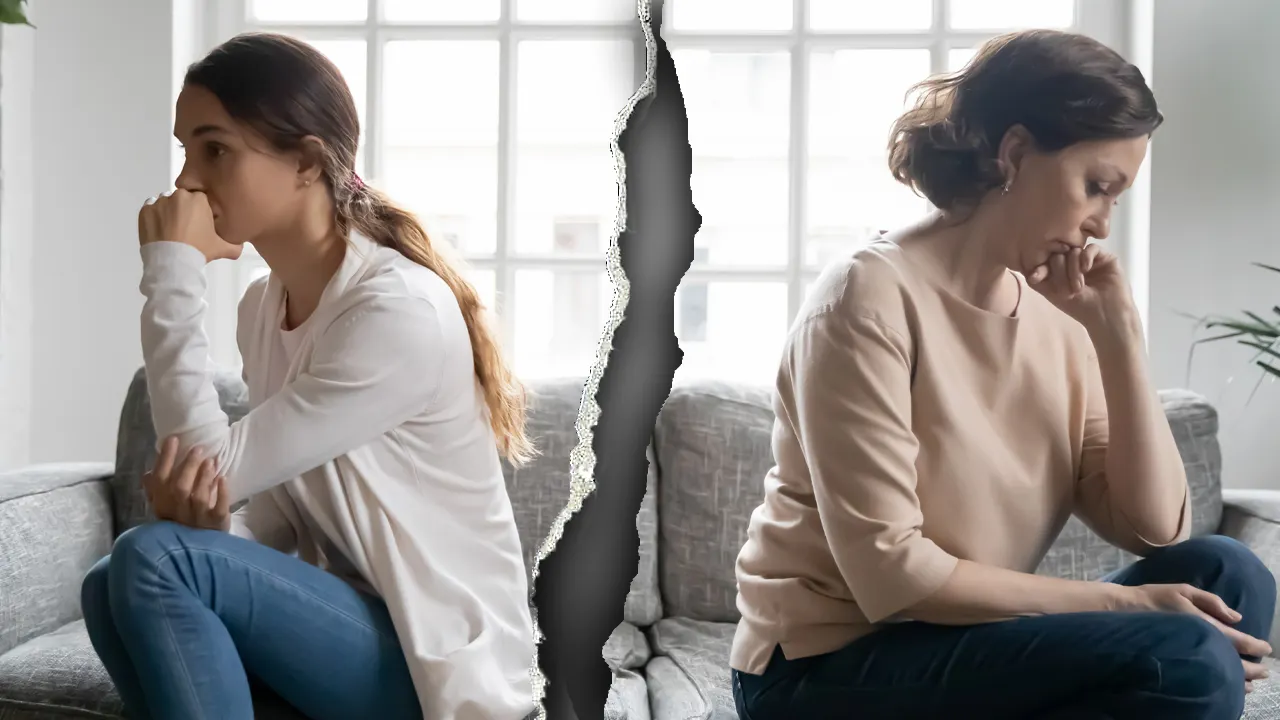
A Cornell University study has revealed a startling statistic: more than a quarter of Americans—approximately 67 million people—report being estranged from a family member. While Brooklyn Beckham’s recent social media feud with his parents brought the issue into the headlines, experts say family estrangement has been silently growing for years.
Laura Wellington, a Connecticut mother known on social media as “Doormat Mom,” has become the unexpected face of this phenomenon. Unlike many estrangements that develop gradually, Wellington describes hers as sudden and devastating. After initially being involved in her daughter’s wedding plans, she was abruptly uninvited and subsequently blocked from all contact when she questioned the decision.
“I was literally just completely blindsided by this,” Wellington told Fox News Digital. “The pain of being cut off—it’s a pain you can’t describe unless you feel it.”
The widowed mother of four turned to TikTok in August 2024 to express her raw emotions. “I just came out with a very heavy hand and said something to the effect of, ‘Were you a really good parent and you raised an ungrateful little b——d?'” she recalled.
Her candid approach struck a chord. Wellington was “flooded” with responses from parents worldwide—Germany, the UK, Australia, and beyond—who shared similar experiences. Many expressed profound grief, isolation, and even suicidal thoughts following estrangement from their adult children. Her social media following has since grown to nearly 150,000 across platforms.
“The parents were ashamed to talk about it,” Wellington explained. “Because they felt… that if they talked about it, if they spoke about it, then the first question they would get is, ‘Well, what did you do?'”
The Changing Nature of Family Rifts
According to Wellington, estrangement has become normalized as a first response to family tensions, even in cases where there is no abuse or neglect. She attributes this to several societal shifts, including deepening political and cultural divides.
“There’s a lack of foundation and traditional family values… loss of faith, loss of grounded principles, and the education that’s happening in our country,” Wellington said. “The way these things are being skewed today, cutting off your parent is the first go-to, not the last.”
Dr. Jonathan Alpert, a New York City psychotherapist, confirmed this trend in his practice. “I regularly work with families where estrangement isn’t driven by abuse or neglect as much as it is by political identity and voting behavior,” he told Fox News Digital. “Parents are cut off because of who they voted for, what news they watch or the views they express.”
The psychological framing of disagreements has also shifted dramatically, Alpert noted. “What would once have been handled as disagreement is now framed as moral injury,” he said. “Once a parent’s beliefs are labeled as ‘unsafe’ or ‘toxic,’ disengagement feels justified and necessary.”
The Emotional Toll
The impact of estrangement can be devastating for both parties. Parents typically experience “profound grief, confusion and shame,” according to Alpert. For adult children, the initial feeling of empowerment often gives way to “unresolved anger, rigidity, and a narrowing of emotional tolerance that affects other relationships as well.”
Alpert’s primary concern is that contemporary therapy language and political culture often “reward rupture over repair,” leading to prolonged family divisions. He emphasizes the critical distinction between setting boundaries—which allow relationships to continue with limits—and complete estrangement, which ends the relationship entirely.
In December 2024, on her daughter’s wedding weekend, Wellington released a self-published book titled “Doormat Mom, No More!” She describes the project as a turning point: “I married my new life, so to speak. It became not my personal story anymore—it became a story of many.”
Wellington acknowledges that in some cases, particularly those involving abuse or neglect, adult children are justified in severing ties. She has also heard from young adults seeking to repair broken parental relationships, noting, “There are some wonderful young people out there who really do want answers, they want to solve their problems, they want to have the relationship.”
Moving Forward
For parents struggling with estrangement, Wellington cautions against forcing reconciliation. “You can’t force them into a relationship with you,” she said. “Once you start running after them, you give up your autonomy. If they’re choosing to move away from you, you have to just let them go.”
Instead, she advises parents to focus on rebuilding their own lives. “Go on and create a life for yourself that you’re proud of, find your happiness,” she said. “If they do come back, they’ll see that you’re doing well and thriving.”
Despite her own painful experience, Wellington maintains hope for eventual reconciliation with her daughter. “I hope she realizes that the same woman who wants to use every ounce of her strength to keep this family going… is the same woman who created this platform to help others keep going,” she said.
Alpert agrees that reconciliation is possible, though more challenging when estrangement is “reinforced by social validation, online communities or political identity.” The key, he concludes, is developing “a shared belief that relationships can survive disagreement”—a perspective that seems increasingly rare in today’s polarized social landscape.
Fact Checker
Verify the accuracy of this article using The Disinformation Commission analysis and real-time sources.

20 Comments
Family estrangement is a devastating experience. I hope the increased attention on this issue leads to more effective interventions and support systems.
This is a deeply personal and complex topic. While the reasons behind estrangement may vary, the emotional toll on parents is undoubtedly immense.
This is a heartbreaking trend. Family estrangement can be so painful for parents. I hope more support and understanding becomes available for those affected.
It’s difficult to understand the reasons behind sudden estrangement. More research is needed to address this growing issue compassionately.
The statistics on family estrangement are truly sobering. I hope this growing trend can be better understood and addressed through further research and advocacy.
It’s encouraging to see this issue gaining more public awareness. Sharing personal experiences can help reduce the stigma and isolation felt by affected families.
As a parent, I can’t imagine the heartbreak of being suddenly cut off from a child. My heart goes out to those dealing with this type of loss and trauma.
Relationship breakdowns within families are always complex. I hope more resources become available to help navigate these delicate situations.
The statistics on family estrangement are truly staggering. This problem seems to be impacting millions. I wonder what factors are driving this concerning rise.
It’s good to see this issue getting more attention. Sharing personal stories can help raise awareness and destigmatize a very sensitive topic.
The scale of this problem is truly staggering. I wonder what societal shifts or cultural factors may be contributing to the rise in family estrangement.
It’s important that we approach this issue with empathy and understanding. Providing more resources and support for affected families could make a real difference.
Family estrangement seems to be a growing crisis. I wonder what interventions or support systems could be implemented to address the root causes.
This is a deeply personal issue, but increased public dialogue may help reduce the stigma and isolation felt by affected parents and families.
This is a heartbreaking situation for any parent to endure. I hope resources and support become more widely available for those navigating family estrangement.
Family relationships can be incredibly complex. While the reasons behind estrangement may vary, the pain felt by parents is undoubtedly profound.
The statistics on family estrangement are eye-opening. It’s troubling to see this trend affecting so many people. I hope more research can uncover solutions.
It’s encouraging to see this issue being discussed more openly. Sharing personal stories can help build empathy and encourage necessary change.
Family estrangement is a heartbreaking issue that deserves more attention and support. I hope this trend can be better understood and addressed in the future.
This is a deeply personal and sensitive topic. While the reasons behind estrangement may vary, the emotional impact on parents is undoubtedly profound.