


Listen to the article
Federal Nutrition Guidelines to Reshape Hospital Meals Under Kennedy’s Initiative
HHS Secretary Robert F. Kennedy Jr. is pushing for a significant transformation in hospital food service by expanding the Dietary Guidelines for Americans into healthcare facilities nationwide. The initiative aims to integrate federal nutrition standards directly into patient care, potentially affecting thousands of hospitals across the country.
On March 30, the Centers for Medicare & Medicaid Services (CMS), led by Dr. Mehmet Oz, issued a directive to hospitals instructing them to align their meal services with federal dietary guidelines. The memo specifically called for reducing ultraprocessed foods, sugar-sweetened beverages, refined carbohydrates and added sugars in patient meals.
According to reports, Kennedy has indicated that Oz’s memo effectively functions as a federal mandate since hospitals may need to adhere to these dietary guidelines to maintain their Medicare and Medicaid funding. This creates significant leverage, as Medicare and Medicaid fund the majority of inpatient services—accounting for at least half of inpatient days at 96% of hospitals and two-thirds or more at 80% of hospitals, according to the American Hospital Association (AHA).
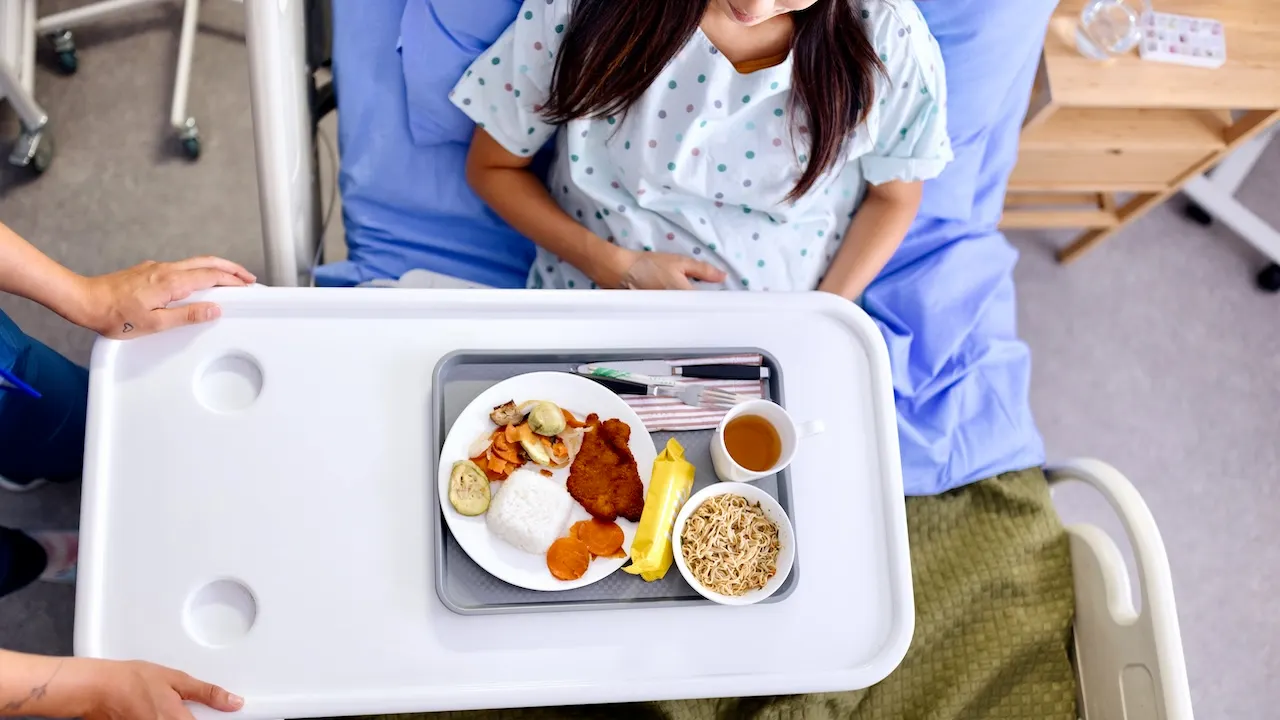
The current state of hospital food presents concerning nutritional deficits, according to medical professionals. Dr. Hamid Khan, chief medical officer of healthcare revenue service Jorie AI, told Fox News Digital that most hospital menus rely heavily on convenience foods with questionable nutritional value.
“Patients are often served items such as pasta, processed deli meats, packaged snacks with artificial components, sugary desserts, cereals, juice and soda,” Khan explained. “The average hospital menu still tends to prioritize low cost, long shelf life and ease of preparation over nutrition.”
The impact on patient health can be substantial. Khan noted that many patients resort to ordering meals from delivery services like Grubhub, DoorDash or Uber Eats because they find hospital menu options insufficiently healthy.
“Most of the hospital meals do not provide adequate nutrients to properly support healing, muscle maintenance, immunity or overall recovery,” Khan said. “Poor nutrition only makes things worse for this patient pool. Ultimately, poor nutrition is very harmful for elderly patients and people with chronic illnesses. They are at a higher risk for muscle loss, weakness, delayed healing, infection and re-infection.”
Some healthcare facilities are already implementing changes ahead of the federal mandate. Celebrity chef and restaurateur Geoffrey Zakarian has partnered with Tampa General Hospital in Florida to transform patient dining. Since 2023, Zakarian has been working to eliminate all processed foods from the hospital’s menu, removing items containing hormones, added sugars, seed oils and prepackaged ingredients.
“All the food originates from farms and gardens in and around Tampa,” Zakarian explained, describing the initiative as “Farm to Gurney.” The program emphasizes Mediterranean diet-inspired meals that prioritize whole, unprocessed ingredients.
Secretary Kennedy and CMS administrator Dr. Oz have announced a similar initiative at Nicklaus Children’s Hospital in Miami, signaling that this nutritional transformation is gaining momentum in healthcare institutions across multiple states.
Food safety advocate Vani Hari, known as the “Food Babe,” characterized the initiative as a watershed moment in healthcare policy. “This is the first time leaders in Washington are openly acknowledging that food is medicine,” Hari told Fox News Digital. “The fact that they had to send a memo reminding hospitals of that tells you everything about how broken the system is. People are at their most vulnerable in a hospital bed – and for decades, nobody in charge seemed to care what they were eating.”
The American Hospital Association has responded by emphasizing that its member hospitals already recognize that nutritious food is essential to healing and recovery. An AHA spokesperson stated, “They are deeply committed to providing patients with high-quality, nutritious meals that meet clinical standards, individual dietary needs and federal guidance.”
According to the AHA, hospital teams routinely collaborate with registered dietitians and clinical staff to ensure each patient receives meals tailored to their medical needs and recovery plan. The organization also claims to regularly evaluate evidence-based nutrition recommendations and integrate them into meal programs.
As this initiative rolls out, it represents a significant shift in how the healthcare system views nutrition—not merely as a peripheral service but as an integral component of medical treatment and recovery.
Fact Checker
Verify the accuracy of this article using The Disinformation Commission analysis and real-time sources.

12 Comments
Improved hospital food quality could have far-reaching benefits, from boosting patient recovery rates to reducing long-term healthcare costs. I’m hopeful this initiative will lead to meaningful progress.
Agreed. Investing in nutritious hospital meals is an investment in better patient care and public health overall.
This is an important issue that deserves attention. Ensuring hospital patients receive nutritious, high-quality meals is crucial for their recovery and overall health. I’m curious to see how hospitals will respond to these new federal guidelines.
Agreed. Proper nutrition is vital for critical patients, so these changes could have a significant impact on patient outcomes.
While the intentions behind this initiative are good, I worry about the potential challenges smaller or underfunded hospitals may face in fully implementing the new guidelines. Equitable access to quality hospital food will be crucial.
Reducing ultra-processed foods and added sugars in hospital meals is a step in the right direction. Hospitals should prioritize fresh, whole foods that are nutrient-dense and tailored to patient needs.
Absolutely. This initiative aligns with the growing emphasis on preventative, evidence-based care. It will be interesting to see how hospitals adapt their menus and kitchens to comply.
This is an important step, but the true impact will depend on how effectively hospitals can execute these changes. Monitoring patient feedback and health outcomes will be crucial.
This is an important issue that deserves attention. Ensuring hospital patients receive nutritious, high-quality meals is crucial for their recovery and overall health. I’m curious to see how hospitals will respond to these new federal guidelines.
Agreed. Proper nutrition is vital for critical patients, so these changes could have a significant impact on patient outcomes.
While I understand the intent behind these new guidelines, I’m somewhat skeptical about the feasibility of implementation across all hospitals. Logistical and budgetary constraints may pose challenges.
That’s a fair point. Hospitals will likely need additional resources and support to successfully transition to healthier meal options for patients.