


Listen to the article
Invasive Joro Spiders Expand Territory Across Eastern U.S.
Large, palm-sized spiders with striking golden webs are becoming an increasingly common sight across parts of the southeastern United States, with experts confirming these arachnid visitors are likely permanent residents.
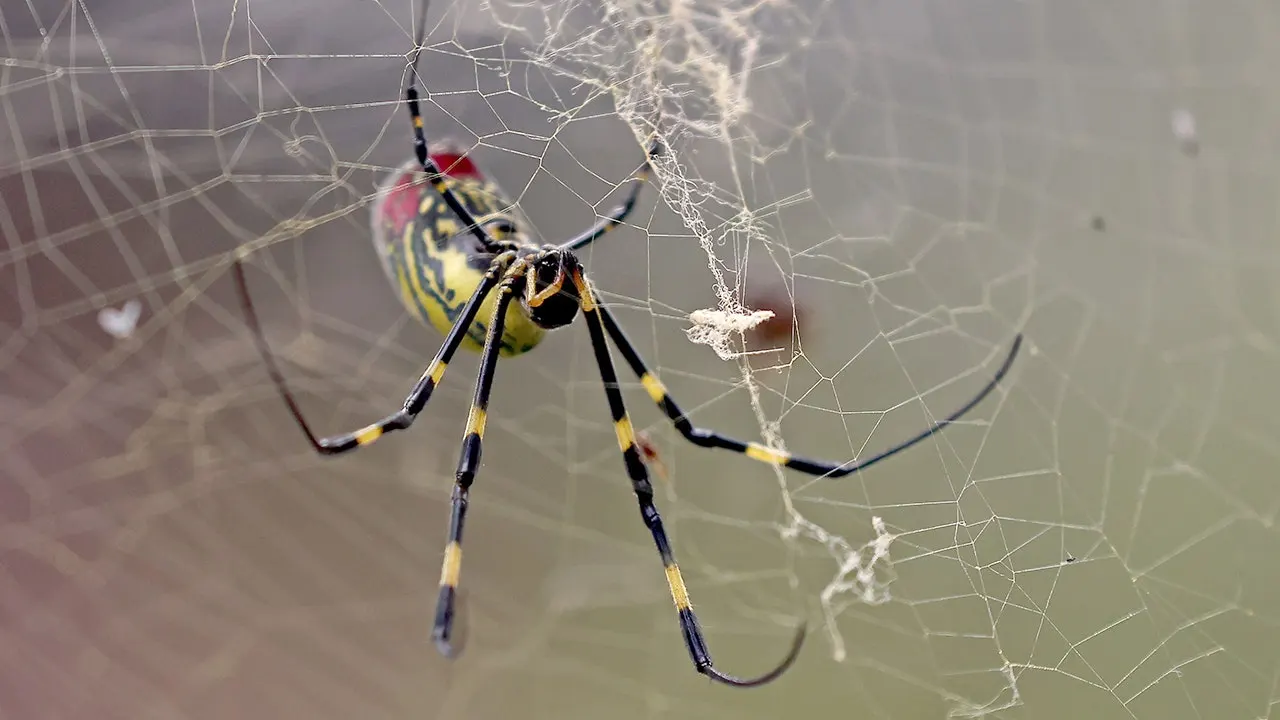
The Joro spider, characterized by its impressive 4-inch leg span and vibrant neon yellow, blue-black and red markings, was first documented in Georgia in 2013. Scientists believe the species arrived as an unwitting hitchhiker on shipping containers or aircraft from its native Asia.
Since its initial appearance, the spider has steadily expanded its territory northward. Currently established populations have been confirmed in Georgia, North Carolina, South Carolina and Tennessee, with researchers at Penn State predicting further spread throughout eastern North America—potentially reaching as far north as Pennsylvania and along warmer coastal regions.
The Joro’s remarkable mobility comes from a dispersal technique known as “ballooning,” where young spiders release fine silk threads that catch air currents, effectively creating natural parachutes that can carry them considerable distances. This efficient travel method has accelerated their territorial expansion.
“They’re quite intimidating-looking spiders, and they make very large webs,” said Ian Williams, an entomologist with pest control company Orkin, who reported counting approximately 200 adult spiders on his one-acre property near Atlanta by September last year. “The webbing itself, if it catches the sunlight, has a golden hue to it. And it’s very strong.”
Despite their imposing appearance, experts emphasize that public concern should be minimal. Research indicates the Joro is among the most timid spider species ever studied. When disturbed, these arachnids typically remain motionless for extended periods rather than displaying aggressive behavior.
“While they’re large spiders, they don’t have large fangs. And so, it’s difficult for them to bite humans,” Williams explained. In the rare instance a bite does occur, the venom produces only mild localized effects comparable to a bee sting and is considered to have “no medical importance.”
The ecological impact of this invasive species remains under investigation by scientists. One primary concern involves potential competition with native spider populations.
“One of the big concerns is that they potentially out-compete native species of spiders,” Williams noted. As prolific hunters, Joro spiders consume everything from mosquitoes to substantial insects like cicadas. Researchers are still determining whether they significantly impact food availability for native garden spiders.
Joros prefer to construct their distinctive golden webs in elevated locations near houses, trees, and even power lines. For homeowners looking to discourage these spiders from establishing residence on their property, experts recommend physical removal rather than chemical interventions.
“Spiders may get the message, ‘Hey, I’m not going to keep remaking my same web in the same area,'” Williams advised, suggesting the use of a broom or long pole to disrupt the webs. This mechanical approach proves more effective than pesticides, which often fail to reach spiders in their high, open-air webs.
The continued northward expansion of the Joro spider represents another chapter in the ongoing story of non-native species introductions to North America through global trade and travel. Wildlife officials encourage citizen scientists to document new Joro spider sightings through nature observation apps like iNaturalist, which helps researchers track their migration patterns and population density.
While their dramatic appearance and rapid spread might cause initial alarm, experts continue to emphasize that these newcomers pose little threat to human health, though their long-term ecological impact remains to be fully understood as they establish themselves across the eastern United States.
Fact Checker
Verify the accuracy of this article using The Disinformation Commission analysis and real-time sources.

10 Comments
Interesting update on Giant Golden Spiders May Spread This Summer, Health Risks Minimal. Curious how the grades will trend next quarter.
Nice to see insider buying—usually a good signal in this space.
Good point. Watching costs and grades closely.
I like the balance sheet here—less leverage than peers.
Good point. Watching costs and grades closely.
Good point. Watching costs and grades closely.
Nice to see insider buying—usually a good signal in this space.
Good point. Watching costs and grades closely.
Good point. Watching costs and grades closely.
I like the balance sheet here—less leverage than peers.