


Listen to the article
Elite Rock Climber Conquers Taipei 101 Without Ropes as Science Reveals His Unique Brain
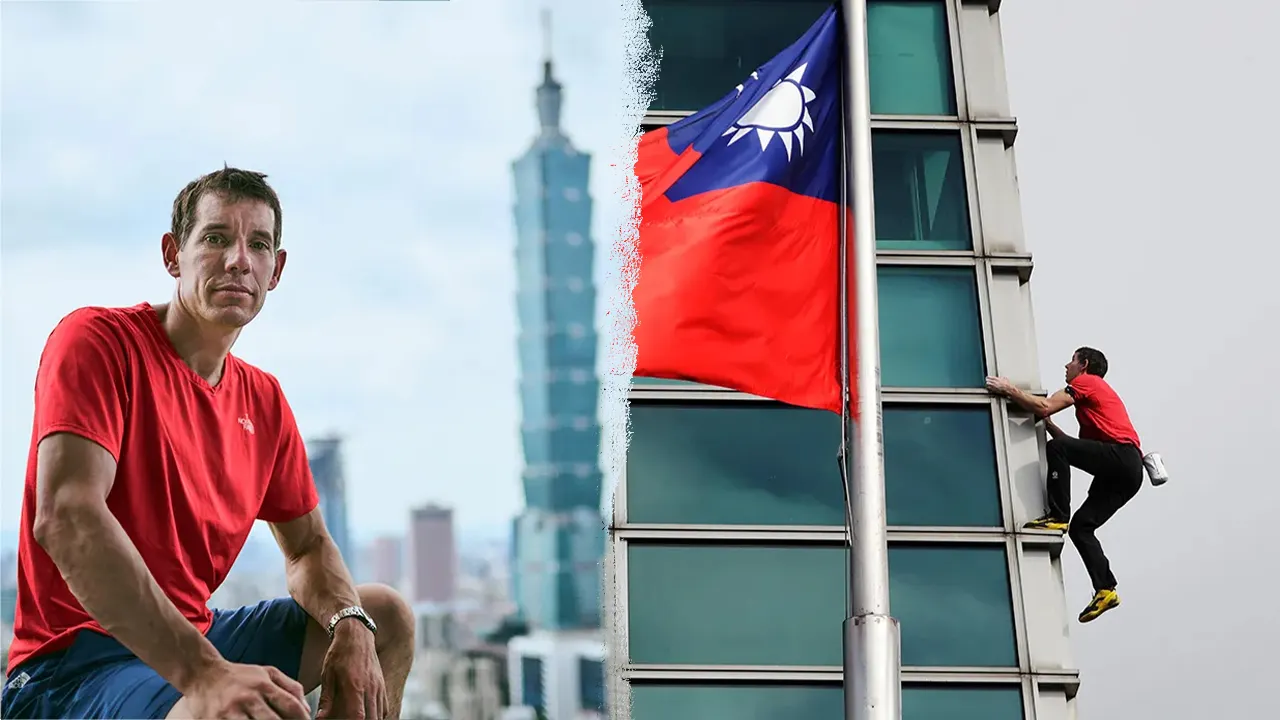
U.S. professional rock climber Alex Honnold successfully scaled the 101-story Taipei 101 skyscraper in Taiwan on January 25 without ropes or protective equipment, completing the daring ascent in just one hour and 31 minutes. The feat, which was streamed live on Netflix, marks another extraordinary achievement in Honnold’s already impressive climbing career.
Upon reaching the summit of the steel structure, Honnold celebrated by waving his arms in victory. Despite windy conditions at the top, he later described the view as “amazing.”
The Taiwan climb represents the latest in a series of remarkable conquests for Honnold, whose previous achievements include scaling major mountain ranges across the United States and Greenland’s massive sea cliffs, which stand at three times the height of the Empire State Building.
What makes Honnold’s feats even more remarkable is the unusual functioning of his brain, which has been documented through scientific research. In 2016, neuroscientist Jane Joseph conducted an experiment to understand what drives Honnold’s extraordinary risk-taking behavior by examining his brain through functional magnetic resonance imaging (fMRI).
Joseph’s team was among the first to perform fMRI scans on “high sensation seekers.” Their findings were striking: Honnold’s amygdala—the brain region typically associated with processing fear—showed remarkably little activity when presented with images that would normally trigger fear and stress responses in most people.
“Nowhere in the fear center of Honnold’s brain could the neuroscientist spot activity,” according to a Nautilus report on the research.
The researchers then attempted to elicit brain activity through a reward task where Honnold could win money. While a typical subject’s amygdala and other brain structures would “look like a Christmas tree lit up” during such tasks, according to Joseph, Honnold’s brain remained “lifeless in black and white,” showing activity only in regions that process visual input.
“There’s just not much going on in my brain,” Honnold told Joseph after viewing the results. “It just doesn’t do anything.”
Dr. Daniel Amen, founder of Amen Clinics and an expert in brain imaging, though not directly involved with Honnold’s case, has observed similar patterns in other extreme athletes and adrenaline seekers. These individuals typically show lower baseline activity in the prefrontal cortex, which governs fear inhibition, impulse control, and risk evaluation.
“Their brains are less easily ‘scared’ and more strongly driven by challenge and novelty,” Dr. Amen explained. “High stimulation feels normal—or even necessary—for them to feel engaged.”
Dr. Amen also noted that such individuals often demonstrate reduced reactivity in the amygdala, meaning “situations that trigger fear in most people don’t produce the same alarm response” in their brains.
Based on nearly 300,000 brain scans conducted at Amen Clinics, Dr. Amen identified key differences between elite extreme performers like Honnold and average individuals. The most significant distinction is what he calls “exceptional top-down control.”
“The prefrontal cortex stays online and organized under stress, allowing precise focus, emotional regulation and decision-making in high-risk environments,” he said. “Fear circuits activate just enough to sharpen attention—but not enough to overwhelm performance.”
These unique brains also demonstrate remarkable efficiency in sensory-motor integration, enabling vision, balance, and motor planning to work seamlessly together. “Instead of panic, the brain enters a highly regulated, flow-state pattern where attention is narrow, calm and precise,” Dr. Amen explained.
By contrast, in the average brain, fear circuits activate faster and more intensely, while the prefrontal cortex tends to shut down under threat, resulting in hesitation, overthinking, or panic—responses that are protective for survival but limiting for extreme performance.
“For the average person, high adrenaline disrupts accuracy and judgment; for extreme athletes, it organizes the brain,” Dr. Amen concluded. “Their brains are not reckless—they are better regulated under stress, whereas the average brain prioritizes safety and avoidance.”
Honnold’s successful free-solo climb of Taipei 101 not only demonstrates his extraordinary physical abilities but also highlights the fascinating neurological differences that enable such remarkable feats of human achievement.
Fact Checker
Verify the accuracy of this article using The Disinformation Commission analysis and real-time sources.

10 Comments
This is a fascinating look into the mind of a true daredevil. Honnold’s ability to override fear and remain calm under extreme pressure is both inspiring and a little unsettling. I hope the scientific research can shed more light on the neurological basis for his fearlessness.
Agreed. Understanding the physiological and psychological factors that allow Honnold to perform such death-defying stunts could have important implications beyond the world of extreme sports.
Fascinating insights into the unique brain of this elite climber. It’s amazing how his lack of fear and risk perception allows him to accomplish such death-defying feats. I wonder what other applications this neurological profile could have beyond extreme sports.
That’s a great point. His brain functioning could potentially be leveraged in high-pressure, high-stakes fields like emergency response, military operations, or even certain business leadership roles.
While I respect Honnold’s incredible skills, I can’t help but feel that free-soloing such massive structures is an unnecessary and reckless risk. Even the most talented climbers can make mistakes, and the consequences would be catastrophic. I hope he considers his safety more carefully going forward.
I understand your concern. Honnold’s exploits do push the boundaries of what’s safe, even for an elite climber. At the same time, his unique abilities seem to give him a level of control and composure that most people can’t fathom.
As someone with a healthy fear of heights, I find Honnold’s climbing exploits both thrilling and terrifying. I’m in awe of his ability to override the natural human response to danger. Neuroscience must have a lot to learn from his unique brain.
I agree completely. His case could provide invaluable insights into the neurobiology of risk-taking and fear perception. Very interesting stuff.
Wow, climbing Taipei 101 without ropes is mind-blowing. I can’t even imagine the focus, discipline, and physical skill required to pull that off. This guy must have ice water in his veins.
Seriously, the mental fortitude to stay calm and composed at those heights is just unreal. It’s almost superhuman.