


Listen to the article
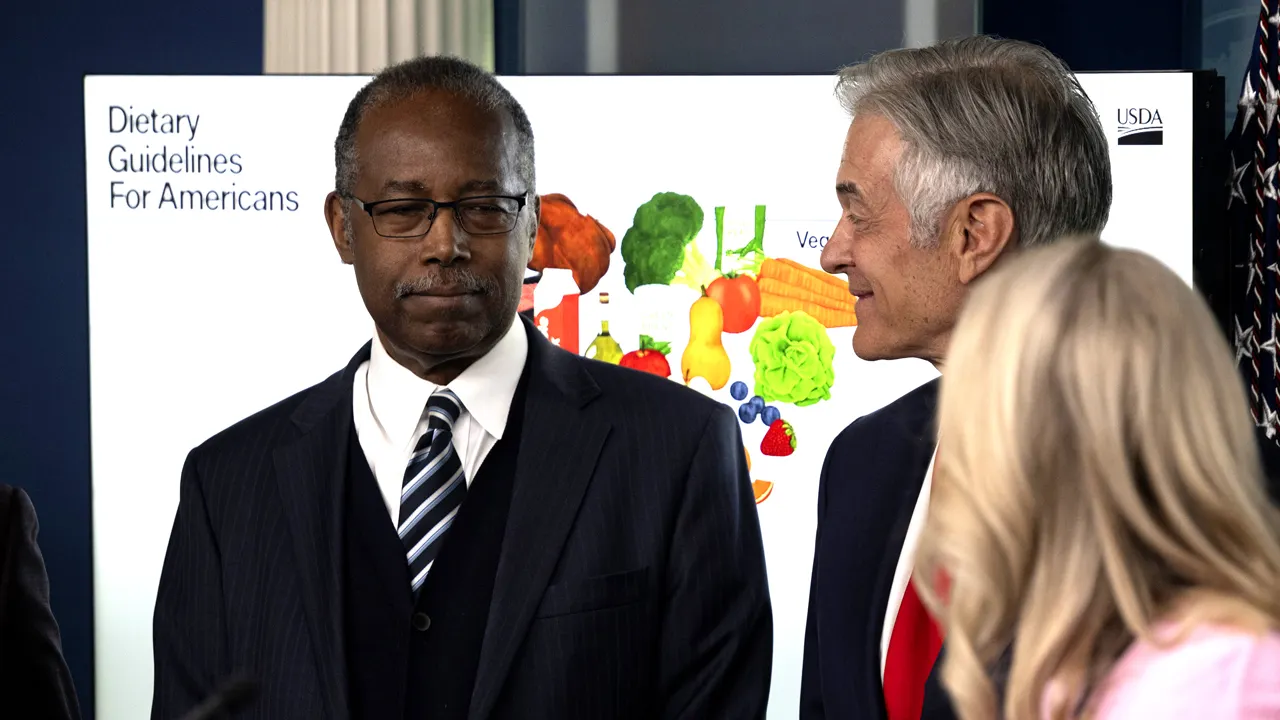
Federal officials have unveiled a significant overhaul of America’s dietary guidelines, flipping the traditional food pyramid to prioritize meat, dairy and vegetables while relegating whole grains to the bottom tier. The restructured nutritional framework represents a dramatic shift in the government’s approach to healthy eating recommendations.
Dr. Ben Carson, who serves as the USDA’s national advisor for nutrition, health and housing, explained that the original dietary guidelines introduced in 1980 were intended to educate Americans about nutrient-rich foods. “Over the course of time, [we have] deviated from those goals,” Carson told Fox News Digital. “And [we] started rubber-stamping all of these highly processed foods, these quick things. It has not been good for us.”
The new guidelines emphasize protein consumption, with recommendations of approximately 0.54-0.73 grams of protein per pound of body weight daily. Dairy products and healthy fats also feature prominently in the updated recommendations, marking a significant departure from previous iterations that placed greater emphasis on carbohydrates.
Carson employed an automotive analogy to explain the importance of proper nutrition. “You are what you eat,” he said, suggesting Americans should treat their bodies like high-performance vehicles. “You’re going to put premium gasoline in it, because you want premium performance. If you decide to dilute it, it’s not going to go as far or as fast.”
When addressing concerns about the potentially higher cost of nutritious foods, Carson extended his vehicle metaphor: “Maybe the premium gasoline costs a little bit more, but how much does it cost down the road when you have to replace the engine, when you haven’t put the right things into it? So we’re really trying to bring some logic and common sense back.”
The dietary shift comes at a time when American eating habits continue to evolve. According to the Vegetarian Resource Group, approximately 16 to 20 million Americans—between 4% and 6% of the population—identify as vegetarians or vegans who consume exclusively plant-based foods. Interestingly, Carson himself acknowledged that he “seldom” eats meat yet considers himself “reasonably healthy.”
Carson also referenced “blue zones”—regions where populations are known for exceptional longevity and typically follow plant-based diets. With characteristic candor, he noted, “Some people say, you see these skinny people because they’re vegetarians. Have you ever seen a skinny elephant? You know they’re vegetarian.”
Beyond recommending whole, nutrient-dense foods, Carson expressed caution about relying on pharmaceutical interventions for weight management. He specifically warned against dependence on GLP-1 medications such as Ozempic for weight loss. “All these artificial methods don’t last a very long time. You have to keep taking them, and they’re expensive,” he explained.
The prevalence of these medications has grown substantially in recent years. Approximately one in eight American adults—about 12%—have used GLP-1 drugs to address obesity and diabetes, with roughly 6% currently taking them, according to previous reports.
Carson emphasized that weight management extends beyond dietary choices to include physical activity. “It’s not just a matter of what you eat. It’s a matter of how many calories you burn,” he said. “If you have more calories going out than you’re taking in, you’re going to lose weight.”
This comprehensive revamp of nutritional guidance reflects a broader reconsideration of dietary science and public health approaches. The new pyramid structure signals a potential paradigm shift in how Americans are encouraged to think about food choices and their relationship with overall health and wellness.
Fact Checker
Verify the accuracy of this article using The Disinformation Commission analysis and real-time sources.

8 Comments
While protein is crucial, I hope the new guidelines don’t overlook the importance of whole grains, fruits, and vegetables. A truly balanced diet should include a diverse range of nutrient-dense plant-based foods.
Agreed, a holistic approach is key. Overemphasizing any single food group could lead to unintended health consequences.
Dr. Carson’s analogy about the original guidelines being ‘rubber-stamped’ is thought-provoking. Curious to learn more about the science and rationale behind these new recommendations, especially the emphasis on dairy and meat.
I appreciate the USDA’s effort to update the dietary recommendations, but I’m cautious about the heavy focus on animal-based protein. Plant-based alternatives can provide excellent nutrition too. Curious to see how this plays out.
Agreed, a balanced approach incorporating more plant-based options could be beneficial. The sustainability angle is important to consider as well.
Interesting to see the USDA shifting away from the old food pyramid. More emphasis on protein and healthy fats makes sense, though I wonder how they’ll handle concerns over environmental sustainability of meat and dairy production.
Good point. The tradeoffs between individual health and environmental impacts will be a key challenge to balance in the new guidelines.
It will be interesting to see how the public responds to these changes. Some may welcome the shift, while others may be concerned about the environmental and ethical implications of increased meat and dairy consumption.