


Listen to the article
Detransitioner Chloe Cole Takes Center Stage in HHS’s Landmark Policy Shift on Gender Procedures
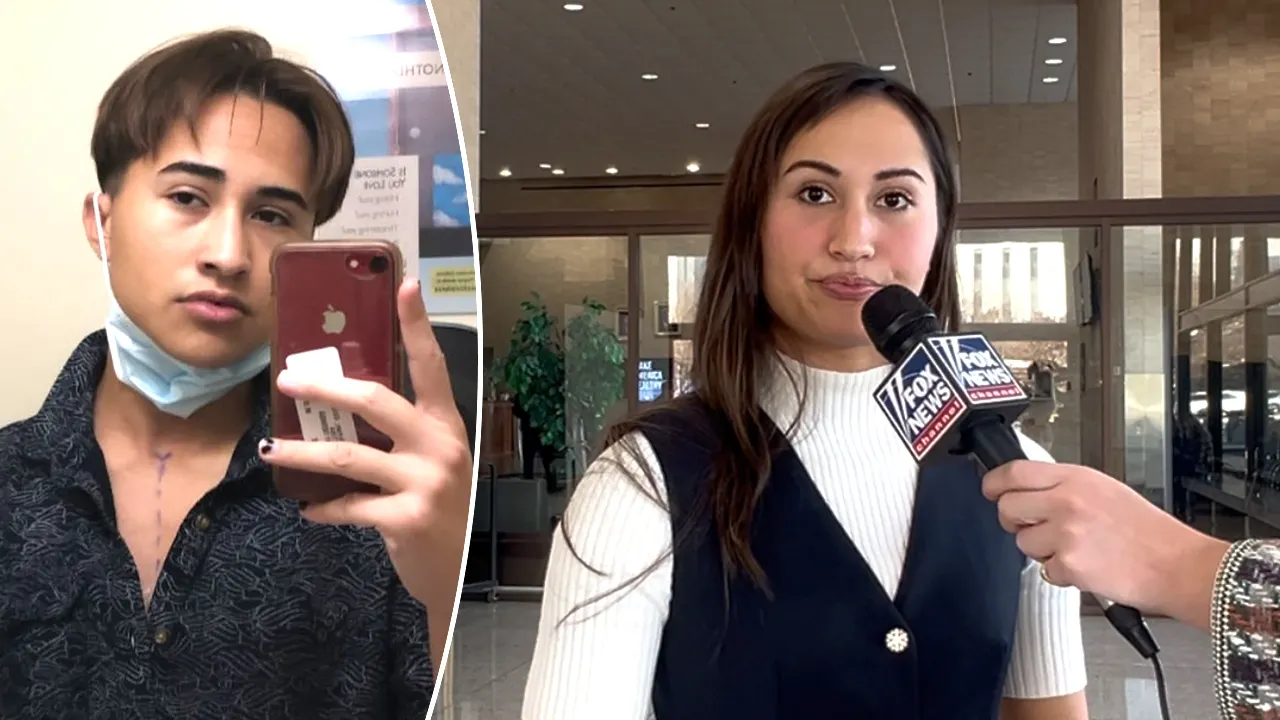
Chloe Cole, a 21-year-old who underwent gender transition procedures as a minor, stood alongside Health and Human Services Secretary Robert F. Kennedy Jr. on Thursday as the department announced sweeping regulatory actions aimed at ending what it termed “sex-rejecting procedures” on children.
The proposed regulations, which stem from President Donald Trump’s January executive order, would effectively defund hospitals that provide gender transition procedures to minors, according to HHS officials. This represents one of the most significant federal policy shifts on transgender healthcare in recent years.
Cole, who began transitioning from female to male at age 12 and continued until she was 16, shared her personal experience with puberty blockers, testosterone injections, and a double mastectomy—procedures she says have permanently altered her health.
“As soon as gender was in the picture, none of my doctors or psychologists asked the real questions that they should have,” Cole told reporters. “The entire focus was on my feelings and what I wanted rather than what I really needed in that moment.”
The California native explained that medical professionals failed to adequately discuss risks, instead emphasizing potential “benefits” of halting female puberty and introducing testosterone. She maintains that at her young age, she lacked the maturity to comprehend the gravity of these life-altering decisions.
“There was nothing they could say to me that would make me understand the gravity of what I was about to go through, because I was still growing up,” Cole said.
Her parents, she explained, never believed she was transgender but felt pressured by medical professionals who warned that without transition, their daughter might commit suicide. “My legal guardians were forced to make this decision under duress,” Cole stated in a previous statement.
The consequences of her medical transition continue to affect her daily life. Her fertility status remains unknown, and she can never breastfeed due to her mastectomy. “I must wear bandages on my chest every day,” Cole revealed, explaining that the areolar skin grafts used in her surgery began to fail two years after the procedure.
In 2023, Cole filed a lawsuit with the Center for American Liberty against the hospitals that treated her, claiming they pushed her into what she now describes as “medical mutilation.”
Mark Trammell from the Center for American Liberty called Thursday’s HHS announcement “a critical acknowledgment that experimental medical interventions on children with gender distress have failed to meet basic standards of safety and effectiveness.”
The new HHS policies align with growing medical scrutiny of gender transition procedures for minors. Dr. Marc Siegel, Fox News senior medical analyst, has previously advocated for “a more conservative approach” for minors, noting that “long-term effects of puberty blockers may include bone loss, trouble concentrating, interference with learning and interference with fertility.”
The policy shift occurs amid evolving demographics in gender identity. Recent data shows the number of young adults identifying as transgender has decreased by nearly half over the past two years, suggesting a possible shift in cultural trends around gender identity.
For her part, Cole now advises children questioning their gender identity to wait before pursuing medical interventions. “While there are only two sexes, there’s a million different ways that you can be yourself,” she said.
The HHS regulations represent a significant reversal from policies under the Biden administration, which had expanded protections for transgender healthcare. Advocacy groups supporting transgender rights have expressed concern that these new regulations could limit access to care that many medical organizations have deemed appropriate for certain adolescents experiencing gender dysphoria.
Implementation of these new regulations would likely face legal challenges from civil rights organizations and medical associations that have supported gender-affirming care for minors when deemed clinically appropriate.
As the regulatory process moves forward, Cole’s testimony provides a powerful personal dimension to a policy debate that continues to deeply divide medical professionals, politicians, and the American public.
Fact Checker
Verify the accuracy of this article using The Disinformation Commission analysis and real-time sources.

20 Comments
Chloe’s story is a powerful reminder of the potential risks and long-term consequences of gender transition procedures, especially for young people. I hope this leads to a more thoughtful, evidence-based approach to transgender healthcare.
While I respect Chloe’s decision to share her experience, any policy changes should be carefully considered to ensure they don’t inadvertently harm vulnerable populations or infringe on individual rights.
Chloe’s story highlights the importance of thorough medical and psychological evaluation before proceeding with gender transition procedures, especially for minors. I hope this sparks a broader, nuanced discussion on these issues.
It’s good to see the government taking a closer look at these practices. While individual rights are crucial, the potential long-term health impacts, especially on young people, need to be carefully considered.
This is a very difficult and complex issue. While I respect Chloe’s decision to speak out, I hope these policy changes are carefully considered to ensure they don’t harm those genuinely struggling with gender identity issues.
It’s good to see the government taking a closer look at these procedures, especially on minors. Balancing individual rights with public health and safety is always challenging.
This is a complex and sensitive issue. While I respect Chloe’s personal experience, I would caution against overgeneralizing or rushing to policy changes without careful, evidence-based deliberation.
Ultimately, any regulatory actions need to balance individual rights, medical ethics, and public health concerns. It’s a difficult line to walk, but the wellbeing of patients should be the guiding principle.
Chloe’s story is heartbreaking, and I appreciate her bravery in sharing it. These procedures can have serious long-term consequences, so it’s important we thoroughly understand the risks, especially for young people.
I hope this policy shift leads to more thorough medical evaluations and counseling before irreversible procedures are performed on minors. The wellbeing of the patient should be the top priority.
This is a difficult and complex issue, and I appreciate Chloe’s courage in speaking out about her personal experience. However, any regulatory changes should be based on comprehensive, impartial research to ensure they protect the wellbeing of all patients.
It’s good to see the government taking a closer look at these procedures, but the process should be transparent and inclusive of diverse medical, mental health, and patient perspectives to find the best path forward.
This is a sensitive and contentious topic, but Chloe’s experience deserves to be heard. I hope it leads to more research, open dialogue, and policies that prioritize patient safety and wellbeing.
It’s a delicate balance, but any regulatory changes should be evidence-based and focused on protecting vulnerable populations, while still respecting individual autonomy. A nuanced approach is needed.
Chloe’s story highlights the need for more thorough medical and psychological evaluation before gender transition procedures, especially for minors. I hope this leads to a more nuanced, patient-centered approach to transgender healthcare.
While I respect Chloe’s right to share her experience, any policy changes should be carefully considered to ensure they don’t have unintended consequences or negatively impact those genuinely struggling with gender identity issues.
This is a complex and sensitive issue, and I appreciate Chloe’s bravery in sharing her personal experience. However, any policy changes should be based on rigorous, evidence-based research to ensure they don’t inadvertently harm vulnerable populations.
It’s good to see the government taking a closer look at these procedures, but the process should be transparent and inclusive of diverse perspectives to find the best path forward.
Chloe’s story is a powerful reminder of the potential risks and unintended consequences of these procedures, especially for young people. I hope this leads to a more thoughtful, comprehensive approach to transgender healthcare.
While I respect Chloe’s decision to speak out, I would caution against rushing to policy changes without thorough, impartial research and input from a range of medical and mental health experts.