


Listen to the article
Colorado has declared a disaster emergency following a presumptive outbreak of highly pathogenic avian influenza (HPAI) at a major egg production facility in Weld County, north of Denver.
Lt. Governor Dianne Primavera issued the declaration on Thursday after the Colorado Department of Agriculture (CDA) reported a presumptive positive test for bird flu at a facility housing approximately 1.3 million chickens. Officials began testing after receiving an “elevated mortality report” from the facility, though the exact number of potentially infected birds has not yet been disclosed.
The declaration activates Colorado’s State Emergency Operations Plan and authorizes the Office of Emergency Management to mobilize resources, enter into emergency contracts, and access disaster emergency funds to address the outbreak. Lt. Governor Primavera was serving as acting governor when the declaration was issued, as Governor Jared Polis was in Washington, D.C. for Colorado River negotiation meetings, though the governor’s office confirmed the decision was made in coordination with Polis.
This latest incident comes amid ongoing concerns about bird flu’s spread across the United States. HPAI was first detected in the U.S. in February 2022 and has since affected both wild bird populations and commercial poultry operations nationwide.
Weld County has faced previous HPAI outbreaks in recent months. CDA records show that in July 2024, three commercial poultry facilities in the county were affected, impacting nearly 3.4 million chickens in total. One of those facilities reported housing 1,313,800 chickens, though it remains unclear if this is the same operation facing the current outbreak.
The recurring outbreaks in Weld County raise concerns about the region’s poultry industry, which represents a significant economic sector in northeastern Colorado. The area has a high concentration of commercial egg-laying operations that supply markets throughout Colorado and neighboring states.
Bird flu outbreaks carry substantial economic implications for poultry producers. When HPAI is confirmed, standard protocols typically require the culling of entire flocks to prevent further spread, resulting in significant financial losses and potential market disruptions. The U.S. Department of Agriculture often provides compensation to affected producers, but these payments rarely cover all economic damages.
Consumer impacts could follow if the outbreak affects a significant portion of the region’s egg production. Previous large-scale HPAI outbreaks across the country have contributed to temporary egg shortages and price increases in retail markets.
Public health officials maintain that the risk to human health from current strains of avian influenza remains low. The USDA and state agricultural departments regularly emphasize that properly handled and cooked poultry products remain safe for consumption, even during outbreaks.
The Colorado emergency declaration allows state agencies to coordinate more effectively with federal partners like the USDA’s Animal and Plant Health Inspection Service (APHIS), which leads national responses to animal disease outbreaks.
Nearby states are likely monitoring the situation closely, as bird flu can spread rapidly between facilities through various vectors including wild birds, equipment, and personnel movement. Commercial poultry operations throughout the region will likely implement enhanced biosecurity measures to protect their flocks.
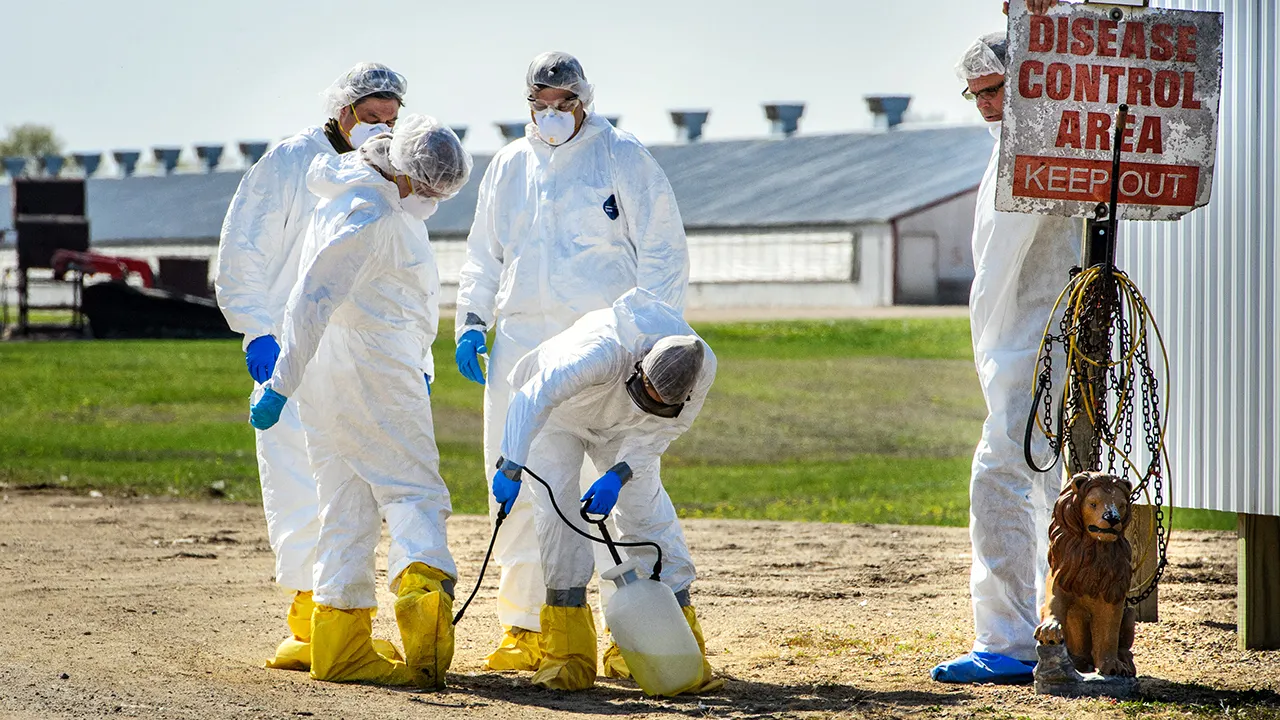
The emergency response will focus on containment, proper disposal of affected birds, and decontamination of facilities to prevent further spread of the highly contagious virus.
Fact Checker
Verify the accuracy of this article using The Disinformation Commission analysis and real-time sources.

13 Comments
This is a concerning development for Colorado’s agricultural industry. Aggressive containment efforts will be essential to limit the spread and prevent further disruptions to the state’s poultry production.
Concerning to see another bird flu outbreak in the US, especially at a facility with over a million chickens. Hopefully the disaster declaration will help contain the spread and minimize the impact on the poultry supply chain.
Yes, avian flu outbreaks can be very disruptive. Coordinating the emergency response across state agencies and resources will be key to controlling this situation.
The scale of this bird flu outbreak at a 1.3 million-bird facility is quite worrying. The state’s emergency response will be closely watched as a model for managing similar situations elsewhere.
Yes, this will serve as a test case for the effectiveness of the state’s emergency preparedness plans. Careful coordination between agencies will be key.
It’s unsettling to see another major poultry facility hit with avian influenza. Kudos to Colorado officials for moving swiftly to declare an emergency and mobilize resources to address this outbreak.
Agreed. Decisive action is critical to protect the health of the flock and ensure poultry supply stability in the region.
Hopefully the swift declaration of a disaster emergency will enable Colorado to quickly mobilize the necessary resources to contain this avian flu outbreak and minimize the impact on poultry producers.
With over a million chickens potentially exposed, the economic and supply chain implications of this bird flu outbreak could be significant. Hopefully the emergency declaration provides the tools needed to contain it.
This is a challenging situation for Colorado’s agriculture sector. The governor’s emergency declaration demonstrates the seriousness with which officials are treating this bird flu outbreak.
Agreed. Proactive steps to coordinate the response and access emergency funds will be critical to controlling the spread of the virus.
This is a challenging situation for Colorado’s agriculture sector. The governor’s quick action to activate emergency resources and funding is prudent to address the outbreak before it worsens.
Indeed, proactive measures are crucial to limit the spread of highly pathogenic bird flu. Monitoring the situation closely will be important in the weeks ahead.