


Listen to the article
Kennedy’s Granddaughter Reveals Terminal Leukemia Diagnosis, Highlighting Rare Cancer’s Warning Signs
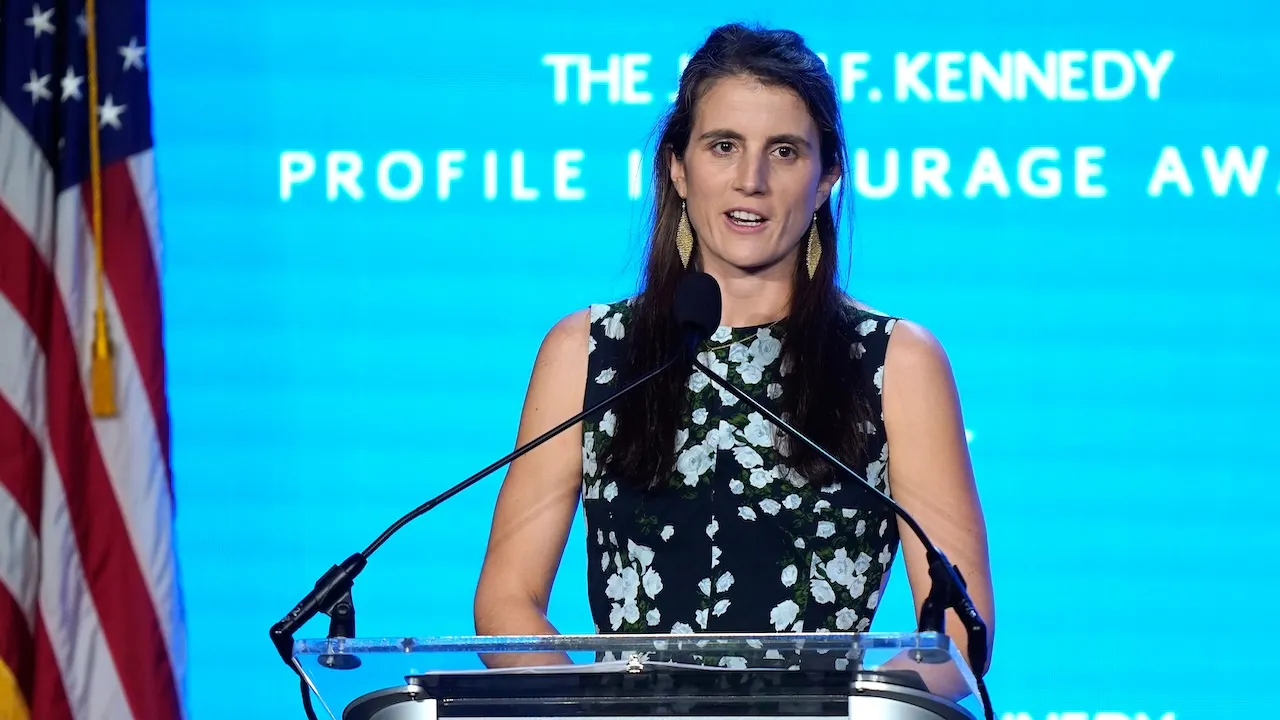
Tatiana Schlossberg, the 35-year-old granddaughter of President John F. Kennedy, has revealed her battle with terminal acute myeloid leukemia (AML) in a poignant essay published in The New Yorker last week. Schlossberg, daughter of Caroline Kennedy and Edwin Schlossberg, was diagnosed with the aggressive blood cancer in May 2024, just hours after giving birth to her second child.
In her essay, Schlossberg shared that doctors discovered her condition after detecting an abnormally high white blood cell count during routine postpartum testing. One physician predicted she would live for approximately one year, due to the particularly rare and resistant form of leukemia she faces.
Medical experts have identified Schlossberg’s AML as stemming from a rare gene mutation known as inversion 3, an abnormality of chromosome 3 in leukemia cells. This specific genetic marker significantly complicates treatment options.
“Inversion 3 correlates with a very high rate of resistance to standard chemotherapy treatments and, therefore, very poor clinical outcomes,” explained Dr. Stephen Chung, a leukemia expert and oncologist at UT Southwestern Medical Center in Dallas, Texas, who is not involved in Schlossberg’s care.
Acute myeloid leukemia begins in the bone marrow, the soft inner tissue of certain bones where blood cells are produced. Unlike some slower-progressing cancers, AML typically advances rapidly from the bone marrow into the bloodstream and can spread to various organs including lymph nodes, liver, spleen, brain, spinal cord, and testicles, according to the American Cancer Society. In some cases, leukemia cells form solid masses called myeloid sarcomas.
Recognizing the warning signs of AML can be challenging, as symptoms often mimic other common conditions. Dr. Pamela Becker, professor in the Division of Leukemia at City of Hope cancer research center in California, notes that the most common indicators include sudden onset of severe fatigue, shortness of breath during physical exertion, unusual bleeding or bruising, fever, and recurring infections.
“AML can sometimes resemble a severe flu with a generally unwell feeling,” added Dr. Robert Sikorski, chief medical officer of Cero Therapeutics. “Some patients also experience bone pain or night sweats.”
Risk factors for developing AML include prior chemotherapy or radiation treatment, smoking, long-term benzene exposure, and certain inherited syndromes. However, most cases occur without any identifiable cause. Recent research suggests that inherited mutations leading to familial AML may be more common than previously thought.
“We used to only check for this in younger AML patients, but we now believe all patients should be screened for these mutations,” Dr. Chung emphasized.
Standard treatment for AML typically involves intensive chemotherapy with a combination of drugs. For higher-risk forms of the disease, chemotherapy is often followed by a stem cell (bone marrow) transplant from a matched donor, frequently a family member, to prevent relapse.
“This is a much more involved process that usually involves another month in the hospital, followed by close follow-up for many months, as well as a much higher risk for treatment-related side effects,” explained Dr. Chung.
For Schlossberg’s specific chromosome abnormality, there is currently no consistently effective treatment, though medical experts note that promising new cellular therapies and immunotherapies are under investigation. Older patients or those unable to tolerate intensive chemotherapy may receive combination therapy using venetoclax and azacytidine, which can sometimes achieve extended remission.
Despite the grim prognosis for Schlossberg’s specific condition, there are encouraging developments in the broader field of AML treatment. According to Dr. Sikorski, “AML treatment has advanced more in the past decade than in the previous 30 years.”
These advances include newly approved targeted drugs for several AML subtypes and early-stage work in immune-based therapies, including CAR-T and other engineered cell approaches that are beginning to reach clinical trials. Improvements in supportive care have also helped patients better tolerate treatment regimens.
While there is not yet a drug specifically tailored to target inversion 3, numerous clinical studies focused on high-risk AML are actively enrolling patients with this condition, and researchers continue to expand the treatment landscape for this challenging disease.
Fact Checker
Verify the accuracy of this article using The Disinformation Commission analysis and real-time sources.

14 Comments
This is a devastating health crisis for the Kennedy family. Tatiana Schlossberg’s AML diagnosis, especially with the added challenge of the inversion 3 genetic marker, must be incredibly overwhelming. I admire her courage in sharing her story.
Raising awareness around cancer warning signs and the need for prompt medical attention is so important. I hope Tatiana’s openness about her journey can help others recognize concerning symptoms and seek care.
The details around Tatiana Schlossberg’s AML diagnosis and the specific genetic marker are quite sobering. Inversion 3 leukemia seems incredibly difficult to treat effectively. I hope the medical community can make progress in addressing this rare form of the disease.
It’s understandable that Tatiana’s prognosis is so poor, given the complications of her AML subtype. My heart goes out to her and her loved ones during this unimaginably difficult time.
This is a very sad and difficult diagnosis for JFK’s granddaughter. Acute myeloid leukemia is an aggressive and challenging blood cancer to treat, especially with the rare inversion 3 genetic marker. My heart goes out to Tatiana Schlossberg and her family during this incredibly challenging time.
The awareness and discussion around cancer warning signs is so important. I hope her story helps others recognize the need for prompt medical attention and testing, even after major life events like childbirth.
This is an incredibly difficult and heartbreaking situation for the Kennedy family. My thoughts are with Tatiana Schlossberg as she battles this aggressive cancer diagnosis so soon after welcoming her second child.
It’s admirable that Tatiana is choosing to share her story publicly. Raising awareness around warning signs and the challenges of rare blood cancers like AML can make a real difference.
This is a truly tragic situation for the Kennedy family. Tatiana Schlossberg’s AML diagnosis, compounded by the rare inversion 3 genetic marker, sounds incredibly difficult to treat effectively. I admire her courage in sharing her story to raise awareness.
The medical details provided in the article, like the physicians’ explanations of Tatiana’s poor prognosis due to the inversion 3 abnormality, are quite informative. I hope this helps others understand the complexities of rare blood cancers.
Acute myeloid leukemia is an extremely aggressive and difficult-to-treat blood cancer, as evidenced by the details around Tatiana Schlossberg’s diagnosis and prognosis. My heart goes out to her and her family during this unimaginably difficult time.
I’m glad the article is providing technical insights from medical experts on the complexities of Tatiana’s specific AML subtype. Educating the public on rare and challenging cancer cases like this is so valuable.
It’s admirable that Tatiana Schlossberg is sharing her personal health journey in The New Yorker. Shedding light on rare and difficult cancers like AML can help drive research and support for patients facing similarly daunting prognoses.
The medical experts’ insights on the complexities of Tatiana’s specific gene mutation and treatment options are quite informative. I’m glad the article is providing that level of technical detail.